


The year was 1991, and the world witnessed a historic moment of unity as a coalition of 34 nations, led by the United States, joined forces to liberate Kuwait from the clutches of Saddam Hussein's Iraq. This marked the beginning of the Gulf War, a military operation that would forever change the course of Middle Eastern politics and global diplomacy.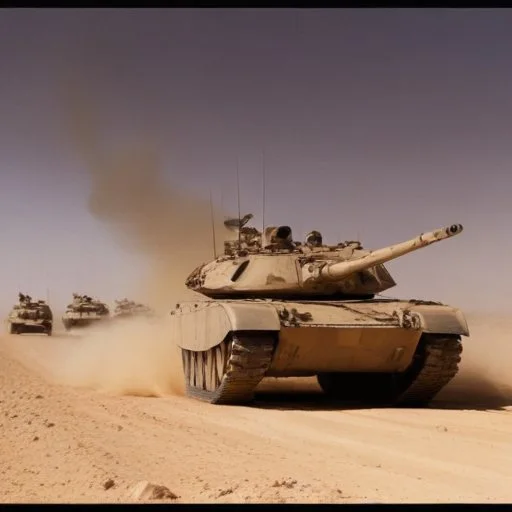
The crisis began on August 2, 1990, when Iraq, under the pretext of reclaiming its "lost territory," invaded Kuwait, a small oil-rich nation. The international community was swift to respond, with the United Nations Security Council passing Resolution 660, condemning the invasion and demanding Iraq's immediate withdrawal.
As the deadline for Iraq's withdrawal approached, a coalition of nations, led by the United States, began to assemble. This diverse group of countries, including Arab states, European nations, and Asia-Pacific allies, shared a common goal: to restore Kuwait's sovereignty and protect the region from Iraqi aggression.
At the helm of the coalition forces was General Norman Schwarzkopf Jr., a seasoned military strategist with a reputation for brilliance. His leadership and tactical prowess would prove instrumental in the war's success, earning him the nickname "Stormin' Norman."
On January 16, 1991, the coalition launched a daring air campaign, codenamed Operation Desert Storm. A barrage of precision-guided munitions, stealth fighters, Apache helicopters, and Tomahawk cruise missiles rained down on Iraqi targets, crippling the country's air defenses and command structures.
After weeks of relentless bombing, the coalition launched a ground invasion on February 24, 1991. The Iraqi army, once feared for its size and might, crumbled under the pressure, as coalition forces, including the US Marines, swept across the border, liberating Kuwait and pushing deep into Iraq.
The ground war lasted a mere 100 hours, with the Iraqi army surrendering en masse. On February 28, 1991, President George H.W. Bush declared a ceasefire, and the Gulf War came to an end. Kuwait was free, and the world had witnessed a milestone in international cooperation.
The Gulf War marked a significant shift in global politics, demonstrating the effectiveness of collective action in the face of tyranny. It also highlighted the importance of international cooperation, as nations put aside differences to achieve a common goal.
"The liberation of Kuwait is a victory for freedom and justice. It is a victory for the principles of the United Nations Charter and for the rule of law in international relations." - United States Secretary of State, James A. Baker III
"We will not tolerate aggression. We will not be bullied. We will not be threatened." - General Norman Schwarzkopf Jr.
The Gulf War will forever be remembered as a testament to the power of collective action, a shining example of nations united against tyranny, and a beacon of hope for a more peaceful and just world.
The Gulf War marked a significant shift in the global political landscape, as the United States emerged as the sole superpower after the collapse of the Soviet Union. The war demonstrated the effectiveness of US leadership in coalition building and its ability to project power in a region critical to global energy security. The war also highlighted the importance of regional organizations, such as the Arab League and the Gulf Cooperation Council, in responding to security threats.
The war had significant implications for the Middle East, as it led to a increase in US military presence in the region and a greater emphasis on US-Saudi Arabia relations. The war also led to a increase in the importance of the United Nations Security Council, as it demonstrated the effectiveness of collective action in responding to security threats.

The roots of the Gulf War can be traced back to the Iran-Iraq War, which ended in 1988. The war left Iraq deeply in debt and seeking ways to rebuild its economy. Saddam Hussein's government believed that by annexing Kuwait, it could gain access to its oil reserves and improve its economic situation. However, this move was met with widespread international condemnation, and the United States, led by President George H.W. Bush, began building a coalition to prevent Iraq's aggression.
The crisis was further complicated by the fact that the Soviet Union, which had been Iraq's main ally, was in the process of disintegrating. This created a power vacuum that the United States was eager to fill, and the Gulf War marked the beginning of a new era of US dominance in the region.
General Norman Schwarzkopf Jr. was a seasoned military strategist who played a crucial role in the Gulf War. Born on August 22, 1934, Schwarzkopf graduated from the United States Military Academy at West Point and went on to serve in various combat zones, including Vietnam. His experience and leadership skills earned him the nickname "Stormin' Norman," and he was chosen to lead the coalition forces in the Gulf War.
Under Schwarzkopf's leadership, the coalition forces were able to liberate Kuwait in a remarkably short period of time, with minimal casualties. His tactical prowess and ability to work with coalition partners made him a hero of the war, and he retired from the military in 1992.
The Gulf War marked a significant milestone in the development of modern military technology. The war saw the debut of advanced precision-guided munitions, such as the Tomahawk cruise missile and the Apache helicopter, which revolutionized modern warfare.
The war also highlighted the importance of stealth technology, as the F-117 Nighthawk fighter jet was able to evade Iraqi radar and strike deep into enemy territory. These technological advancements gave the coalition forces a significant advantage over the Iraqi military and played a crucial role in the war's success.
The Gulf War had significant economic implications for the region and the world. The war led to a sharp increase in oil prices, which had a ripple effect on the global economy. The war also led to a significant increase in US military spending, which had long-term implications for the US economy.
The war also had significant implications for the region, as it led to a significant increase in economic development and modernization in countries such as Kuwait and Saudi Arabia. The war also led to an increase in foreign investment in the region, as countries sought to take advantage of the region's vast oil reserves.