


On April 5, 1951, the United States made history by sentencing a married couple, Ethel and Julius Rosenberg, to death for espionage. This verdict would go down as one of the most infamous cases of the Cold War, casting a dark shadow over the nation's psyche and fuelling fears of communist infiltration.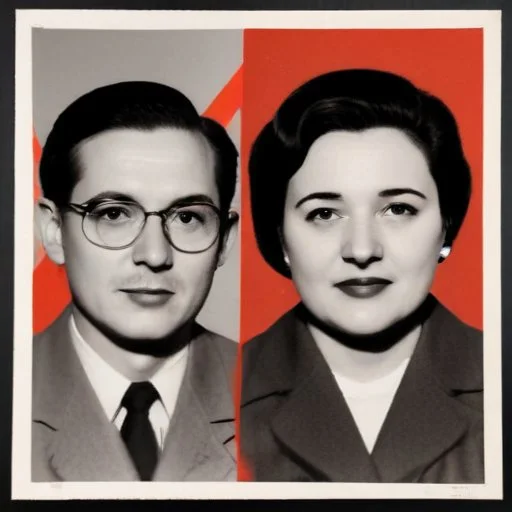
The Rosenbergs, both members of the American Communist Party, had been accused of stealing top-secret information about the atomic bomb and handing it over to the Soviets. The evidence revealed a complex network of spies, co-conspirators, and government informants that would keep the nation on the edge of their seats.
The highly publicized trial, which began on March 6, 1951, was a media sensation, with the courtroom drama captivating the nation. The prosecution, led by the ambitious and ruthless Irving Saypol, would stop at nothing to secure a conviction. The Rosenbergs, defended by the inexperienced Emanuel Bloch, seemed doomed from the start.
The guilty verdict, handed down on April 5, 1951, sent shockwaves across the country. The Rosenbergs' sentence was unprecedented – they were the first American civilians to be sentenced to death for espionage in peacetime. The sentence sparked heated debates about loyalty, patriotism, and the death penalty, with many questioning the fairness of the trial and the justice system as a whole.
Ethel Rosenberg, a devoted mother and housewife, was portrayed as a innocent bystander caught in the crossfire of her husband's deceit. Julius, a machinist and member of the American Communist Party, was seen as a mastermind of espionage. However, as the case unfolded, it became clear that nothing was as black and white as it seemed.
The Rosenberg case marked the beginning of a new era of Red Scare hysteria, fueling fears of communist infiltration and sparking a wave of anti-communist sentiment across the nation. The case would go on to influence popular culture, inspiring films, books, and plays that would cement its place in American history.
"We are the first victims of American fascism!" - Julius Rosenberg, in a statement to the press after the verdict
"I am innocent! I am innocent!" - Ethel Rosenberg, in her final statement before the court
The Rosenberg case remains one of the most controversial in American history, with many questioning the fairness of the trial and the justice system as a whole. Debate continues to rage over the Rosenbergs' guilt, with some seeing them as martyrs of the anti-communist crusade, while others view them as traitors who betrayed their country.
The Rosenberg case was not an isolated incident, but rather a symptom of the escalating tensions between the United States and the Soviet Union during the Cold War. The early 1950s saw a surge in anti-communist sentiment, fueled by the Korean War and the rise of McCarthyism.
In this atmosphere of fear and paranoia, the Rosenberg case became a rallying cry for those seeking to root out perceived communist threats within the United States.
The trial and execution of the Rosenbergs sent a clear message to the American public: the government was committed to protecting national security, even if it meant sacrificing due process and civil liberties.

Emanuel Bloch, the Rosenbergs' defense attorney, was an unlikely hero in the drama that unfolded.
A relative unknown in the legal world, Bloch was tasked with defending the indefensible – a situation that would have intimidated even the most seasoned lawyers.
Despite his inexperience, Bloch's passion and conviction inspired a generation of lawyers and activists, who saw him as a champion of justice and a beacon of hope in a climate of fear and repression.
The Rosenberg case captured the American imagination, inspiring a slew of films, books, and plays that probed the complexities of the case and its implications for American society.
From Sidney Lumet's 1966 film Daniel, starring Timothy Hutton as the fictionalized Isaacson (Julius Rosenberg), to the 1983 Broadway play The Rosenbergs, the case has continued to fascinate artists and audiences alike.
The Rosenberg case has also inspired numerous literary works, including novels, poetry, and essays, cementing its place in the American cultural consciousness.

The Rosenberg case has become a staple of American history curricula, serving as a powerful teachable moment for exploring the complexities of the Cold War era.
Teachers use the case to illustrate the dangers of McCarthyism, the importance of critical thinking, and the need to balance national security with individual rights and freedoms.
The case also provides a rich opportunity to explore the intersection of politics, law, and society, encouraging students to think critically about the role of the government and the media in shaping public opinion.
The Rosenberg case revolved around the theft of atomic secrets, a crime that had far-reaching implications for national security and the balance of power during the Cold War.
The stolen information, related to the design of the atomic bomb, was highly classified and potentially catastrophic in the wrong hands.
The case highlighted the importance of intelligence gathering and counter-intelligence operations in the nuclear age, leading to a significant overhaul of the US nuclear security apparatus.