


In the midst of the Cold War, the Soviet Union's attempt to starve West Berlin into submission was met with a daring response: the Berlin Airlift. On June 26, 1948, the first supply flights took to the skies, marking the beginning of a historic operation that would sustain the city for 15 long months.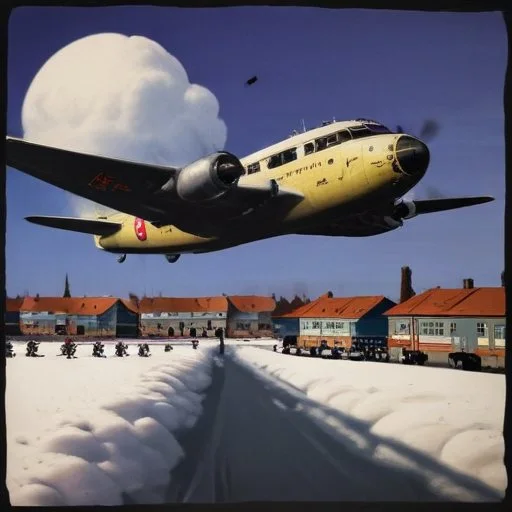
In the aftermath of World War II, Germany was divided into four occupation zones controlled by the United States, Great Britain, France, and the Soviet Union. Berlin, located deep within the Soviet zone, was also divided into four sectors. As tensions between the West and the Soviet Union escalated, the Soviet Union sought to gain control over West Berlin, which was governed by the United States, Great Britain, and France.
In June 1948, the Soviet Union blocked all land and water routes to West Berlin, effectively cutting off the city from the rest of the world. This move was seen as an attempt to force the Western powers to abandon their zones in Berlin and allow the Soviet Union to take control. The blockade left West Berlin's 2.5 million residents without access to essential supplies, including food, coal, and medicine.
In response to the blockade, the United States and Great Britain launched Operation Vittles, a massive airlift operation that would supply West Berlin with the necessities of life. On June 26, 1948, the first planes took off from airbases in Western Germany, carrying 80 tons of milk, flour, and medicine into Berlin's Tempelhof Airport.
The Berlin Airlift was a testament to the bravery and ingenuity of the pilots, ground crew, and maintenance personnel who worked tirelessly to keep the operation going. The airlift:
The Berlin Airlift had a profound impact on the cultural and social fabric of West Berlin. The operation:
The Berlin Airlift remains an iconic symbol of freedom and determination, inspiring generations to come. Today, the Tempelhof Airport, where the airlift operation was based, is a symbol of Berlin's rich history and a testament to the power of international cooperation.
The Berlin Airlift was not the first time the Allies had used mass airborne resupply to sustain a besieged city. During the Soviet siege of Warsaw in 1944, the Polish resistance and the British Royal Air Force (RAF) collaborated to airlift supplies into the city. This earlier operation, codenamed "Operation Frantic," was much smaller in scale but demonstrated the feasibility of using air power to defy a blockade.
Similarly, the Berlin Airlift drew inspiration from the Allied airlift of supplies to the Dutch city of Leiden during the Netherlands' "Hunger Winter" of 1944-1945. In both cases, the ability to sustain a city through airlift operations was a key factor in maintaining morale and demonstrating resolve in the face of adversity.

General Curtis LeMay: The unsung hero of the Berlin Airlift
While General Lucius D. Clay is often credited with masterminding the Berlin Airlift, another key figure played a crucial role in the operation's success: General Curtis LeMay. As the commander of the United States Air Forces in Europe, LeMay was responsible for overseeing the airlift's logistical and tactical aspects.
LeMay's leadership was instrumental in streamlining the airlift operation, increasing efficiency, and reducing costs. His innovative approaches to aviation and logistics, honed during his experience in World War II, proved invaluable in the face of the Soviet blockade.
The Berlin Airlift had a profound impact on the cultural identity of West Berlin, fostering a sense of community and solidarity among its residents. The airlift became a powerful symbol of resistance against Soviet oppression, and the city's residents came together to support the operation.
The airlift also inspired a wave of artistic expression, with Berliners creating songs, poems, and artwork celebrating the operation. The "Raisin Bombers," as the pilots and aircrew became known, were hailed as heroes, and their bravery inspired a new generation of West Berliners.
The Berlin Airlift was an expensive operation, with estimates suggesting that the United States and Great Britain spent over $200 million (approximately $2.2 billion in today's dollars) to sustain the airlift over 15 months.
Despite the considerable cost, the airlift had a significant positive impact on the economy of West Berlin. By keeping the city's economy afloat, the airlift prevented widespread unemployment and maintained the city's industrial base.
The airlift also had a ripple effect on the economies of Western Europe, as the operation helped to stimulate trade and economic growth in the region.
The Berlin Airlift marked a significant turning point in the Cold War, as the Soviet Union's failure to intimidate West Berlin weakened its grip on Eastern Europe.
The operation demonstrated the resolve of the Western powers to stand up to Soviet aggression, and the airlift's success emboldened other Eastern European nations to resist Soviet domination.
In the years that followed, the Berlin Airlift became a powerful symbol of Western resolve, inspiring a new era of cooperation and deterrence that would characterize the Cold War.