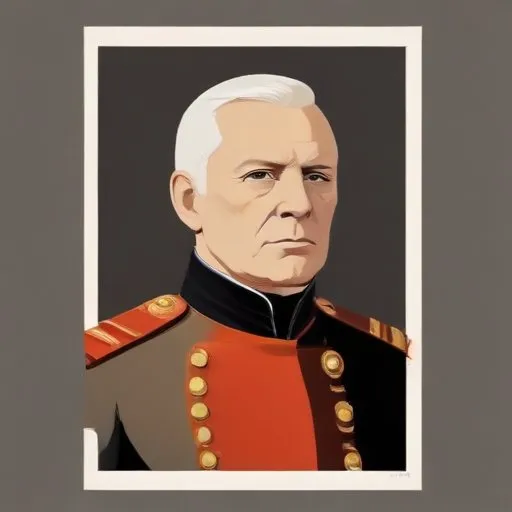
A Legendary Military Career>
Lucius D. Clay, a senior officer of the United States Army, is renowned for his exemplary administration of occupied Germany after World War II. He is credited with orchestrating the Berlin Airlift, a historic operation that saved West Berlin from the Soviet Union's blockade in 1948-1949.
Early Life and Education>
Clay was born on April 23, 1898, in Marietta, Georgia, to Alexander S. Clay, a United States Senator from 1897 to 1910. He graduated from West Point in 1918 and later taught there.
Rise to Prominence>
In the 1920s and 1930s, Clay held various civil and military engineering posts, directing the construction of dams and civilian airports. His work involved large government projects, allowing him to build close relationships with federal agencies and Congress. Notably, he worked closely with President Franklin Roosevelt's associate,
Harry Hopkins, and House Majority Leader and Speaker Sam Rayburn.
Achievements and Milestones>
- In 1943, Clay supervised the construction of the Denison Dam, the largest earthen dam in the world at the time.
- Between 1940 and 1941, he selected and supervised the construction of 450 airports, laying the foundation for America's civil aviation network.
World War II and the Berlin Airlift>
By March 1942, Clay had risen to the position of brigadier general, earning a reputation for operational efficiency. In 1945, he served as deputy to General
Dwight D. Eisenhower, and later became the deputy military governor of Germany. In 1946, he became the Commander in Chief, United States Forces in Europe and military governor of the United States Zone, Germany.
Clay's masterstroke was the Berlin Airlift, a massive operation that supplied West Berlin with essential goods during the Soviet Union's 11-month blockade. The airlift, which began on June 26, 1948, and ended on May 12, 1949, involved over 277,000 flights and delivered more than 1.5 million tons of cargo.
Legacy and Impact>
Lucius D. Clay's leadership and vision played a crucial role in shaping post-war Germany. His administration laid the groundwork for Germany's economic recovery, and his commitment to democracy and freedom helped to cement the country's position as a key ally of the United States. Clay's legacy extends beyond his military career, as his contributions to American history serve as a testament to his exceptional leadership and dedication to public service.
Awards and Honors>
- Distinguished Service Medal with Oak Leaf Cluster
- Legion of Merit with Oak Leaf Cluster
- Army Distinguished Service Medal
Personal Milestones and Key Life Events>
- Married to Marjorie McKeown Clay
- Father of two children, Lucius D. Clay Jr. and Marjorie Clay Stimson
- Passed away on April 16, 1978, at the age of 80
FAQ
What was Lucius D. Clays role in the United States military?
Lucius D. Clay was a prominent American general who played a significant role in the United States military during World War II and the Cold War. He served as the commander of the US occupation forces in Germany and played a key role in shaping post-war policy.
What were Lucius D. Clays contributions to military strategy?
Lucius D. Clay was a highly respected military strategist who made significant contributions to the development of US military doctrine. He was particularly known for his expertise in logistics and supply chain management.
What was Lucius D. Clays role in the Berlin Airlift?
Lucius D. Clay played a key role in organizing and executing the Berlin Airlift, a major logistical operation that supplied the city of Berlin during the Soviet blockade of 1948-1949.
How did Lucius D. Clays leadership shape US foreign policy?
Lucius D. Clays leadership had a significant impact on US foreign policy, particularly in relation to Germany and Europe. He was a strong advocate for a robust US presence in Europe and played a key role in shaping the countrys Cold War strategy.
What was Lucius D. Clays legacy in American military history?
Lucius D. Clays legacy in American military history is as a highly respected commander, strategist, and leader who played a key role in shaping the countrys military doctrine and foreign policy during the Cold War.