


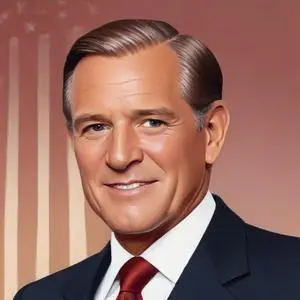
A key advisor to President Franklin D. Roosevelt, he played a crucial role in shaping New Deal policies and international relations during World War II.
Harry Hopkins was a renowned American statesman, public administrator, and presidential advisor, best known for his instrumental role in shaping the New Deal programs and serving as the right-hand man to President Franklin D. Roosevelt during World War II.
Hopkins' journey in public service began in New York City, where he worked with various social work and public health organizations. His leadership skills and dedication to social welfare earned him the position of president of the National Association of Social Workers in 1923.
In 1931, Hopkins became the executive director of the New York Temporary Emergency Relief Administration, where he demonstrated exceptional leadership skills, catching the attention of then-New York Governor Roosevelt. Following Roosevelt's presidential election victory in 1932, Hopkins was brought into his federal administration, marking the beginning of a lifelong partnership.
During the Great Depression, Hopkins played a crucial role in directing New Deal relief programs, including the Federal Emergency Relief Administration, the Civil Works Administration, and the Works Progress Administration. Under his supervision, the Works Progress Administration grew to become the largest employer in the United States, providing employment opportunities to millions of Americans.
Hopkins' unique ability to connect with people from all walks of life, combined with his exceptional administrative skills, made him an indispensable advisor to President Roosevelt. He enjoyed a close relationship with the president and First Lady Eleanor Roosevelt, often serving as a confidant and strategist.
As World War II unfolded, Hopkins assumed a leading foreign policy role, working closely with President Roosevelt to shape the alliance between the United States and the United Kingdom. He played a pivotal role in overseeing the $50 billion Lend-Lease program of military aid to the Allies, cementing his reputation as a master strategist.
As Roosevelt's personal envoy, Hopkins traveled extensively, meeting with world leaders, including Winston Churchill and Joseph Stalin, to negotiate key agreements and secure vital alliances. His diplomatic prowess helped shape the course of the war, earning him a reputation as one of the most influential advisors in American history.
Hopkins' contributions to American history are immeasurable. He played a vital role in shaping the New Deal, guiding the country through the Great Depression, and securing crucial alliances during World War II. His legacy serves as a testament to the power of dedicated public service, inspiring generations of leaders to follow in his footsteps.
Despite his many accomplishments, Hopkins faced significant personal challenges, including a long battle with stomach cancer that eventually took his life in 1946. His unwavering dedication to public service, even in the face of adversity, remains an inspiration to all who seek to make a positive impact in the world.
Hopkins' remarkable life serves as a beacon of hope, demonstrating the transformative power of dedicated public service, strategic vision, and unwavering commitment to the greater good.
Born in 1882
Led the United States through the Great Depression and World War II, implementing a series of reforms known as the New Deal and helping to establish the country as a global superpower.
Born in 1884
A humanitarian and politician who championed human rights, women's empowerment, and social justice, leaving a lasting impact on American politics and international relations.
Born in 1878
The Soviet Union's ruthless leader who ruled with an iron fist, implementing policies that led to widespread famine and purges, while also playing a crucial role in defeating Nazi Germany in World War II.
Born in 1871
Prolific writer of historical novels and adventure stories, also a talented landscape painter.
Born in 1880
A highly decorated military leader and statesman who played a crucial role in shaping post-WWII foreign policy and was awarded the Nobel Peace Prize for his efforts. He's most known for authoring the Marshall Plan, a massive economic aid program that helped rebuild war-torn Europe.
Born in 1871
A prominent diplomat who played a crucial role in establishing the United Nations and was awarded the Nobel Peace Prize in 1945 for his efforts to promote international cooperation. He served as Secretary of State from 1933 to 1944, implementing policies that helped shape the post-World War II world order.
Born in 1892
The 11th Under Secretary of State played a crucial role in shaping US foreign policy, particularly in Latin America, and is known for his "Good Neighbor Policy" towards the region.
Born in 1835
The 23rd Vice President of the United States was a skilled lawyer and politician who served under President Grover Cleveland from 1893 to 1897, known for his strong oratory skills and progressive policies. He played a key role in shaping the country's foreign policy during his tenure.
