


In the aftermath of World War II, Europe was left reeling from the devastating effects of war. Cities lay in ruins, economies were in shambles, and the Iron Curtain threatened to suffocate the continent. It was against this backdrop that United States Secretary of State George Marshall stepped onto the Harvard University stage on June 5, 1947, to deliver a speech that would change the course of history.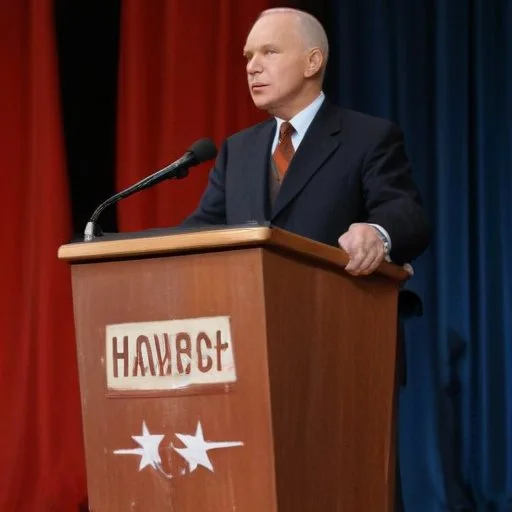
Marshall's clarion call was a proposal for massive economic aid to wartorn Europe, aimed at revitalizing the continent's economy and fostering a new era of cooperation. The plan, known as the Marshall Plan, was a bold initiative that sought to stabilize Europe, contain the spread of communism, and create a prosperous and peaceful world.
As the dust of war settled, the United States realized that a weakened Europe would be vulnerable to the spread of communism. The Soviet Union, under the leadership of Joseph Stalin, was rapidly consolidating its power in Eastern Europe, threatening to engulf the region in a communist quagmire. Marshall, a seasoned diplomat and military leader, recognized the urgency of the situation and sounded the alarm.
George Marshall was a man of unwavering dedication and unshakeable resolve. As the former Chief of Staff of the United States Army during World War II, he had earned a reputation as a brilliant strategist and leader. His leadership and vision were instrumental in shaping the Allied victory, and he was equally determined to steer Europe towards a path of peace and prosperity.
On that fateful day at Harvard University, Marshall's speech was a masterclass in statesmanship. He eloquently outlined the crisis that Europe faced, emphasizing the need for collective action to prevent the spread of communism. His words resonated deeply, inspiring a new era of cooperation between the United States and Europe. The speech was a clarion call to action, and it marked a turning point in the Cold War.
The Marshall Plan was initially met with skepticism by some, but Marshall's persuasive powers and the dire circumstances of Europe eventually won over the doubters. Over the next four years, the United States poured $13 billion into European economies, providing vital assistance in the form of food, machinery, and technical expertise. The plan was a resounding success, helping to stabilize economies, promote industrial growth, and foster a sense of unity among European nations.
The Marshall Plan was a beacon of hope in a war-torn Europe, offering a lifeline to a continent on the brink of collapse. It cemented the United States' position as a global leader, demonstrated the power of collective action, and paved the way for European integration. Today, the Marshall Plan remains a testament to the transformative power of diplomacy, generosity, and vision.
The primary goal of the Marshall Plan was to provide economic aid to wartorn Europe, stabilizing the continent's economy and containing the spread of communism.
The United States provided approximately $13 billion in aid to European economies over four years.
The Marshall Plan was a key component of the United States' strategy to contain the spread of communism, and it marked a turning point in the Cold War, as European nations began to align themselves with the West.
The Marshall Plan will forever be remembered as a shining example of international cooperation, statesmanship, and vision. Its legacy continues to inspire generations, serving as a powerful reminder of the transformative power of collective action.
In the months leading up to Marshall's speech, the United States had been grappling with the consequences of a weakened Europe. The winter of 1946-1947 was particularly harsh, with widespread famine and disease sweeping across the continent. Against this backdrop, Marshall's proposal took on added urgency, as policymakers recognized that the window for intervention was rapidly closing.
The European economy was in a state of near-collapse, with industrial production at a fraction of pre-war levels. The continent's agricultural sector was also in shambles, with crop yields plummeting and livestock herds decimated. In response, the Marshall Plan focused on providing emergency food aid, as well as technical assistance to help European nations rebuild their agricultural sectors.
The Human Cost of WarThe human toll of World War II was staggering, with estimates suggesting that upwards of 50 million people lost their lives. The Marshall Plan's emphasis on humanitarian aid was a direct response to this tragedy, as policymakers sought to alleviate the suffering of those who had survived the conflict.

George Marshall's leadership style was marked by a quiet confidence and a willingness to listen. As a seasoned diplomat and military leader, he had earned a reputation as a skilled mediator, able to bring together disparate groups and forge consensus.
Marshall's commitment to public service was unwavering, and he was driven by a strong sense of duty and responsibility. Throughout his career, he demonstrated a willingness to put the needs of others before his own, earning him the respect and admiration of his peers.
A Legacy of ServiceMarshall's selflessness was perhaps best exemplified by his decision to decline a presidential run in 1948. Despite being the front-runner for the Republican nomination, he opted to remain as Secretary of State, citing a sense of duty to the country and to the presidency.
The Marshall Plan can be seen as a direct response to the Soviet Union's own economic initiatives in Eastern Europe. The Molotov Plan, launched in 1947, aimed to create a Soviet-style economic bloc, tied closely to the Soviet economy. The Marshall Plan, by contrast, was designed to promote economic independence and self-sufficiency among European nations.
In terms of scope and ambition, the Marshall Plan was unprecedented. The sheer scale of the investment – $13 billion over four years – dwarfed previous aid packages, and marked a significant departure from traditional American isolationism.
A New Era of International CooperationThe Marshall Plan's emphasis on multilateralism and cooperation was a marked departure from the era of rival imperialisms that had characterized international relations in the decades preceding World War II. By working together, European nations and the United States were able to achieve far more than they could have alone.

The Marshall Plan's impact on European economies was nothing short of spectacular. Industrial production surged, with steel production increasing by over 50% in the first year alone. Agricultural output also rose sharply, as farmers benefited from new technology and technical assistance.
The plan's focus on infrastructure development helped to spur economic growth, as new roads, bridges, and canals facilitated trade and commerce. By 1952, Europe's GDP had increased by over 20%, as the continent began to rediscover its economic vitality.
A New Era of ProsperityThe Marshall Plan's economic impact was not limited to Europe alone. The plan helped to stimulate American economic growth, as exports to Europe increased and the dollar strengthened against other currencies.
The Marshall Plan was launched against the backdrop of a rapidly evolving geopolitical landscape. The Soviet Union, under Stalin's leadership, was consolidating its control over Eastern Europe, while the United States was emerging as a global leader.
The plan's emphasis on European integration was seen as a key component of American strategy, as policymakers sought to create a united front against Soviet expansionism. By promoting economic cooperation and unity among European nations, the United States hoped to counterbalance Soviet influence and create a more stable international order.
A Cold War ImperativeThe Marshall Plan marked a key turning point in the Cold War, as the United States and its allies began to push back against Soviet expansionism. By providing economic aid and support to European nations, the United States was able to create a buffer zone against Soviet influence.