Soviets blockade West Berlin, sparking Cold War tensions
The Soviet Union, still reeling from the devastation of World War II, was determined to flex its muscles and assert its dominance in the post-war era. In a bold move, the Soviets blocked all rail, road, and water access to West Berlin, essentially cutting off the city from the rest of West Germany. This brazen act of aggression sparked a frenzy of diplomatic activity, as the United States, Great Britain, and France scrambled to respond. The Berlin Blockade, as it came to be known, would last for 11 tense months, testing the mettle of the fledgling North Atlantic Treaty Organization (NATO) and cementing the divisions of the Cold War.
Occurred on: June 24th, 1948

The Berlin Blockade: A Chilling Chapter in the Cold War Saga

In the immediate aftermath of World War II, the Soviet Union flexed its muscles, and the world trembled. On June 24, 1948, the Soviet Union, still reeling from the devastating losses of the war, blockaded West Berlin, severing the city's lifeline to West Germany, and effectively isolating it from the rest of the world. This brazen act of aggression marked the beginning of the Berlin Blockade, a 318-day standoff that would push the world to the brink of war.
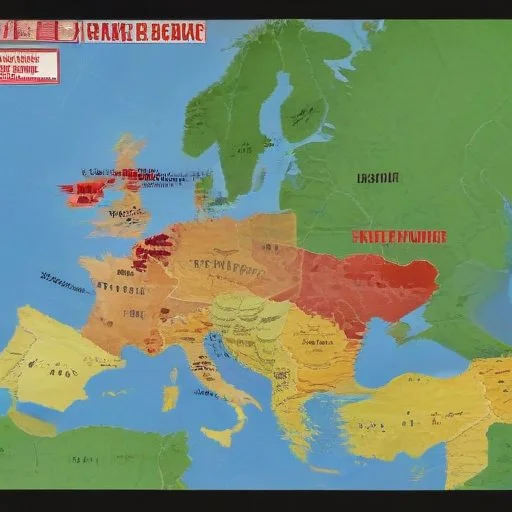
A City Under Siege

Imagine a city, once vibrant and bustling, now cut off from the outside world. West Berlin, with its 2.5 million inhabitants, was suddenly left to fend for itself, with no imports, no exports, and no hope of rescue. The Soviet Union, in a show of force, had blocked all rail, road, and water routes, leaving the city to starve. The once-thriving metropolis was now on the verge of collapse.

The Cold War Takes Center Stage

The Berlin Blockade was more than just a local crisis; it was a grand display of Cold War posturing. The Soviet Union, determined to assert its dominance, was pitted against the United States, Great Britain, and France, who refused to back down. The blockade was a calculated move to test the resolve of the Western powers, and the response would have far-reaching consequences.

Airlift Heroes

In the face of Soviet aggression, the Western powers launched the Berlin Airlift, a daring operation that would supply the besieged city by air. For 11 months, planes took to the skies, dropping food, medicine, and coal into the waiting hands of West Berliners. The airlift, dubbed "Operation Vittles," was a testament to human ingenuity and resolve, as over 277,000 flights delivered more than 2 million tons of supplies.

Key Players

A Turning Point in History

The Berlin Blockade marked a turning point in the Cold War, as the world witnessed the birth of a new era of tensions and confrontations. The blockade hardened the divisions between East and West, cementing the Iron Curtain, and paving the way for the formation of NATO. As the world watched, the blockade became a symbol of resistance against Soviet aggression, inspiring a generation of leaders to stand firm against the tide of communism.

Legacy of the Blockade

The Berlin Blockade, though eventually lifted on May 12, 1949, left an indelible mark on world history. It taught the world the value of resolve, cooperation, and creativity in the face of adversity. The blockade also served as a stark reminder of the devastating consequences of unchecked aggression, and the importance of standing up against tyranny.

In the end, the Berlin Blockade was more than just a cold, calculating move in the game of international politics; it was a testament to the human spirit, a beacon of hope in a world torn apart by conflict and division.

Thorough Historical Narrative

The Early Warning Signs

The Berlin Blockade did not come out of the blue. In the months leading up to the crisis, tensions between the Soviet Union and the Western powers had been simmering. The Soviet Union had been imposing stricter controls on the river and rail routes into Berlin, and the Western powers had been responding with protests and diplomatic pressure. However, the Soviet Union's actions on June 24, 1948, caught the West off guard, revealing the full extent of their intentions.

In the years preceding the blockade, the Soviet Union had been consolidating its control over Eastern Europe, and the Western powers had been trying to counterbalance this influence. The formation of the Cominform in 1947, a Soviet-led organization aimed at coordinating communist parties across Europe, had heightened tensions between the two blocs.

The question on everyone's mind was: what would be the next move?

Character Overview

Ernst Reuter: The Unlikely Hero

Ernst Reuter, the Mayor of West Berlin, emerged as an unlikely hero during the Berlin Blockade. A former communist turned social democrat, Reuter had been imprisoned by the Nazis and later by the Soviets. Despite his turbulent past, Reuter proved to be a shrewd politician who played a crucial role in rallying the people of West Berlin during the crisis.

Reuter's determination and charisma inspired the people of West Berlin to resist the Soviet blockade. He famously declared, "People of Berlin, look to the west for your future!" and worked tirelessly to coordinate the distribution of aid and supplies.

Reuter's leadership during the blockade earned him a special place in the hearts of the Berliners

Study of Economic Impact

The Economic Cost of Isolation

The Berlin Blockade had a devastating impact on the economy of West Berlin. With the city's lifeline to West Germany severed, trade came to a standstill, and food and essential supplies became scarce. The blockade led to a sharp rise in prices, and the black market flourished.

The estimated cost of the blockade to the West Berlin economy was around $100 million per month. The city's industries, including manufacturing and construction, came to a grinding halt, and thousands of workers lost their jobs.

The economic cost of the blockade was a heavy burden for the people of West Berlin to bear

Political Examination

The Diplomatic Dance

The Berlin Blockade was as much a diplomatic crisis as it was a humanitarian one. The Western powers, led by the United States, Great Britain, and France, engaged in a high-stakes game of diplomatic brinkmanship with the Soviet Union.

The negotiations were tense and often public, with both sides trading barbs and accusations. The Western powers threatened to use force to break the blockade, while the Soviet Union warned of the consequences of such an action.

The diplomatic dance continued for months, with the world holding its breath

Study of Cultural Impact

The Cultural Response

The Berlin Blockade had a profound impact on the cultural landscape of West Berlin. The city's artists, writers, and musicians responded to the crisis with a surge of creative output, reflecting the tensions and anxieties of the time.

The Berlin Airlift inspired songs, poems, and works of art that celebrated the heroism and resilience of the people of West Berlin. The city's theaters and cinemas remained open, providing a much-needed escape from the daily hardships.

The cultural response to the blockade was a testament to the power of art in times of crisis