


In the tumultuous aftermath of World War II, the United States embarked on a bold journey to contain the spread of communism, and on May 22, 1947, the Truman Doctrine went into effect, marking a significant turning point in the Cold War. This pioneering policy committed the United States to providing economic and military aid to Greece and Turkey, two nations teetering on the brink of collapse, in a bid to stave off Soviet expansion.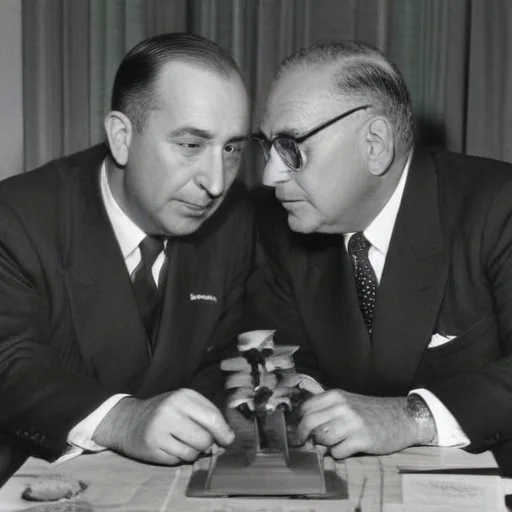
The post-war landscape was a complex web of alliances and rivalries, with the Soviet Union and the United States emerging as the two dominant superpowers. As the Iron Curtain descended across Eastern Europe, the Soviet Union's influence was rapidly expanding, while the United States sought to contain its rival's reach. Against this backdrop, Greece and Turkey found themselves vulnerable to Soviet pressure, their economies in shambles and their governments struggling to maintain stability.
In response to this precarious situation, President Harry Truman took a decisive stand, proposing a comprehensive aid package to Greece and Turkey. This bold move was not only a statement of support for these embattled nations but also a declaration of the United States' commitment to containing Soviet expansion. The Truman Doctrine, as it came to be known, marked a significant shift in U.S. foreign policy, signaling a deliberate move away from isolationism and towards active engagement in international affairs.
President Harry Truman: The 33rd President of the United States, Truman was the architect of the Truman Doctrine. His leadership and vision played a crucial role in shaping the course of the Cold War.
Secretary of State George Marshall: A skilled diplomat and strategist, Marshall was instrumental in crafting the Marshall Plan, a comprehensive aid package aimed at rebuilding war-torn Europe and containing Soviet influence.
British Prime Minister Clement Attlee: As Britain's post-war leader, Attlee played a key role in convincing Truman to take action in support of Greece and Turkey, paving the way for the Truman Doctrine.
February 1947: Britain, exhausted from the war effort, informs the United States that it can no longer provide financial aid to Greece and Turkey.
March 1947: Truman delivers a speech to Congress, outlining the need for U.S. intervention in Greece and Turkey and proposing a comprehensive aid package.
May 22, 1947: The Truman Doctrine goes into effect, committing the United States to providing economic and military aid to Greece and Turkey.
The Truman Doctrine marked a significant turning point in the Cold War, as the United States asserted its dominance as a global leader. The doctrine's impact was multifaceted, resulting in:
Containment of Soviet expansion: The Truman Doctrine drew a clear line against Soviet aggression, halting further communist encroachment in Eastern Europe.
Economic stabilization: U.S. aid helped stabilize the economies of Greece and Turkey, paving the way for post-war reconstruction.
A new era of U.S. engagement: The Truman Doctrine marked a decisive shift towards active U.S. involvement in international affairs, setting the stage for future interventions and alliances.
The Truman Doctrine had far-reaching cultural and social implications, shaping the trajectory of the Cold War and beyond. It:
Cemented the United States' status as a global leader, solidifying its position as a beacon of democracy and freedom.
Reinforced the notion of the 'Free World' vs. the Communist Bloc, exacerbating the ideological divisions of the Cold War.
Inspired a new wave of anti-communist sentiment in the United States, fueling the Red Scare of the 1950s.
The Truman Doctrine's legacy continues to resonate today, serving as a testament to the power of U.S. leadership in shaping the course of global events.
The economic impact of the Truman Doctrine was significant, with the United States providing approximately $400 million in aid to Greece and Turkey between 1947 and 1952. This investment helped to stabilize the economies of both countries, which in turn contributed to the overall economic growth of Europe. The doctrine also marked a shift towards economic containment, as the United States sought to counter Soviet economic influence in the region.
In addition to the direct economic benefits, the Truman Doctrine also had long-term implications for the global economy. By taking a leadership role in providing economic aid, the United States set a precedent for future economic interventions and established itself as a key player in international economic affairs.

British Prime Minister Clement Attlee played a crucial role in convincing Truman to take action in support of Greece and Turkey. Attlee's government had been providing financial aid to both countries, but was no longer able to sustain the effort due to Britain's own economic struggles. Attlee's plea for assistance helped to galvanize Truman and the US Congress, ultimately leading to the passage of the Truman Doctrine.
Attlee's leadership on this issue demonstrated his commitment to maintaining British influence in the region, while also acknowledging the limitations of British power in the post-war era. His ability to work with Truman and other world leaders helped to pave the way for future collaborations and set the stage for the development of the Marshall Plan.
The Truman Doctrine marked a significant shift in US foreign policy, as the country moved away from its traditional isolationism and towards a more active role in international affairs. This change was reflected in the doctrine's emphasis on containment, which contrasted with the more isolationist approach of the interwar period.
In comparison to other major powers, the Truman Doctrine represented a unique approach to international relations. While the Soviet Union was focused on spreading its influence through communist ideology, the United States was committed to promoting democracy and freedom through economic and military aid. This contrast highlighted the fundamentally different values and goals of the two superpowers.

The Truman Doctrine was shaped by the complex geopolitics of the post-war era. With the Soviet Union consolidating its control over Eastern Europe, the United States sought to establish a bulwark against further communist expansion. Greece and Turkey, strategically located at the crossroads of Europe and Asia, were seen as crucial to this effort.
The doctrine reflected the United States' growing awareness of its role as a global leader, as well as its recognition of the need to counter Soviet influence in the region. By providing aid to Greece and Turkey, the United States aimed to create a stable and democratic bulwark against Soviet aggression.
The Truman Doctrine had a profound impact on American culture, as it helped to galvanize public opinion against communism and in favor of international engagement. The doctrine's emphasis on containment and the "free world" helped to create a sense of urgency and moral purpose, which resonated with many Americans.
The doctrine also influenced American popular culture, with films, literature, and music often reflecting the era's anti-communist sentiment. The Truman Doctrine's legacy can be seen in the many cultural artifacts of the Cold War era, from spy novels to propaganda posters, which often depicted the United States as a beacon of freedom and democracy.