


On a fateful day in September 1945, Communist leader Ho Chi Minh boldly declared the establishment of the Democratic Republic of Vietnam, marking the end of the Nguyn dynasty and the beginning of a new era for the Vietnamese people. This pivotal moment in history would shape the country's destiny for decades to come, cementing Ho Chi Minh's legacy as a champion of independence and self-determination.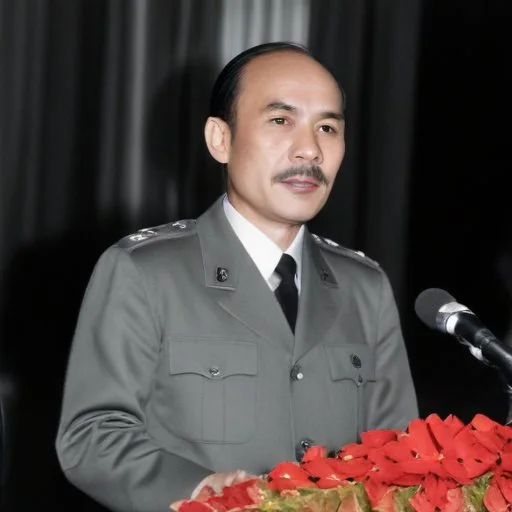
In the aftermath of Japan's defeat in World War II, Vietnam was plunged into a power vacuum, ripe for the taking. Ho Chi Minh, a seasoned revolutionary with a vision for a unified and independent Vietnam, seized the opportunity to proclaim the birth of a new nation. On September 2, 1945, in Hanoi's Ba Dinh Square, Ho Chi Minh read aloud the Declaration of Independence, echoing the spirit of the American and French Revolutions.
Ho Chi Minh, born Nguyen Tat Thanh, was a charismatic leader who had traveled the world, studying and working in various countries, including the United States, France, and the Soviet Union. His experiences abroad had instilled in him a deep understanding of the principles of democracy and independence, which he later applied to his revolutionary movement in Vietnam.
The proclamation of the Democratic Republic of Vietnam marked a significant turning point in Vietnamese history, paving the way for a long and bloody struggle for independence against French colonial rule. The event also sparked a wave of nationalism and anti-colonial sentiment across Southeast Asia, inspiring similar movements in neighboring countries.
Ho Chi Minh's declaration of independence had a profound impact on Vietnamese culture and society. It galvanized the population, fostering a sense of national identity and pride that continues to shape Vietnamese politics and culture to this day. The event also inspired a new generation of artists, writers, and intellectuals, who saw in Ho Chi Minh's vision a promise of a brighter future for their country.
While Ho Chi Minh's declaration of independence was met with widespread support from the Vietnamese people, it was not without its critics. The French, who had long dominated Vietnam's politics and economy, viewed the event as a threat to their colonial authority, and responded with brutal force. The event also sparked concerns among Western powers, who saw in Ho Chi Minh's communist ideology a threat to their own interests in the region.
"Vietnam has the right to enjoy freedom and independence, and in fact has become a free and independent country." - Ho Chi Minh, Declaration of Independence, September 2, 1945
"Nothing is more precious than independence and liberty." - Ho Chi Minh
In his memoirs, Vietnamese revolutionary and historian, Tran Huy Lieu, recalled the electrifying atmosphere in Ba Dinh Square on that fateful day in September 1945. "When Ho Chi Minh finished reading the Declaration of Independence, the crowd erupted in cheers and applause. It was as if the entire nation had been reborn."
The proclamation of the Democratic Republic of Vietnam set in motion a chain of events that would shape the course of Vietnamese history for decades to come. It paved the way for the First Indochina War, the Vietnam War, and eventually, the reunification of North and South Vietnam under communist rule.
The proclamation of the Democratic Republic of Vietnam was not just a declaration of independence, but also a well-planned and executed event. Ho Chi Minh and the Viet Minh had been preparing for this moment for months, gathering support from various nationalist groups and staging mass rallies across the country. The event was carefully choreographed to maximize its impact, with Ho Chi Minh delivering his speech from a balcony overlooking Ba Dinh Square, surrounded by thousands of enthusiastic supporters.
The declaration of independence was also a masterclass in propaganda, with Ho Chi Minh drawing parallels between the Vietnamese struggle for independence and the American and French Revolutions. The event was designed to appeal to a broad audience, both domestically and internationally, and to establish the Viet Minh as the legitimate rulers of Vietnam.
Ho Chi Minh's experiences abroad played a significant role in shaping his vision for a unified and independent Vietnam. During his time in the United States, he was influenced by the ideals of the American Revolution and the principles of democracy. In France, he became involved with the French Socialist Party and was exposed to Marxist ideology, which later became a cornerstone of his revolutionary movement.
Ho Chi Minh's charisma and leadership skills were also honed during his time abroad. He was known for his ability to bring together rival factions and to inspire loyalty among his followers. These traits were essential in his later role as the leader of the Viet Minh and the founder of the Democratic Republic of Vietnam.
The proclamation of the Democratic Republic of Vietnam had a profound impact on Vietnamese culture and society. It marked a shift away from the traditional Confucian values of the Nguyen dynasty and towards a more modern, nationalist identity. The event inspired a new generation of artists, writers, and intellectuals, who saw in Ho Chi Minh's vision a promise of a brighter future for their country.
The declaration of independence also had a significant impact on Vietnamese literature and art, with many works celebrating the country's newfound independence and the heroism of Ho Chi Minh and the Viet Minh. The event also sparked a renewed interest in Vietnamese history and culture, as the country began to reclaim its heritage and establish a new national identity.

The proclamation of the Democratic Republic of Vietnam was a bold challenge to French colonial authority, and it marked the beginning of a long and bloody struggle for independence. The event was met with outrage and hostility by the French, who viewed Ho Chi Minh and the Viet Minh as rebels and terrorists.
The declaration of independence also had significant implications for international relations, as the Viet Minh sought to establish diplomatic relations with other countries and to gain recognition as a sovereign state. The event marked a turning point in the Cold War, as the Viet Minh's communist ideology aligned them with the Soviet Union and against the Western powers.
The proclamation of the Democratic Republic of Vietnam took place against the backdrop of a rapidly changing geopolitical landscape. The defeat of Japan in World War II had created a power vacuum in Southeast Asia, and the Viet Minh were not the only nationalist movement seeking to fill it.
The event was also influenced by the broader context of decolonization and nationalist movements sweeping across Asia and Africa in the aftermath of World War II. The Viet Minh's declaration of independence was part of a larger wave of anti-colonial sentiment, which threatened to upend the old colonial order and establish a new world order.