


The Fugitive Slave Act of 1850 is infamously known for forcing Northern states to assist in the capture and return of escaped slaves to their Southern owners, sparking widespread outrage and solidifying the antislavery movement as a powerful force in American politics.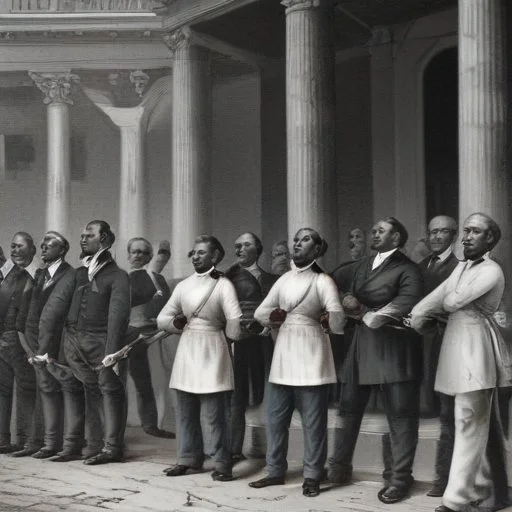
This controversial law, passed on September 18, 1850, was a deliberate attempt to placate Southern slave owners, who had grown increasingly agitated by the number of slaves fleeing to freedom in the North.
The Fugitive Slave Act was part of a larger package of legislation known as the Compromise of 1850, brokered by Senator Henry Clay of Kentucky. This compromise aimed to address the volatile issue of slavery in the newly acquired territories gained through the Mexican-American War.
The Compromise of 1850 consisted of five laws, including the Fugitive Slave Act, which attempted to balance the interests of both pro-slavery and anti-slavery factions. While the compromise temporarily calmed the storm, it ultimately exacerbated the nation's deep-seated divisions.
Henry Clay, known as the "Great Compromiser," played a crucial role in drafting the Fugitive Slave Act. Clay, a skilled politician and orator, walked a thin line between appeasing Southern slave owners and appeasing Northern abolitionists.
Other key figures involved in the passage of the Fugitive Slave Act included Senator Daniel Webster of Massachusetts, who argued in favor of the law, and Senator William Seward of New York, who vehemently opposed it.
The Fugitive Slave Act of 1850 had far-reaching consequences, solidifying the antislavery movement and creating an atmosphere of distrust and hostility between the North and South.
The law also led to the rise of "slave catchers," individuals who captured suspected runaways and returned them to their owners for a bounty, often using questionable methods to identify their prey.
The Fugitive Slave Act galvanized public opinion against slavery, inspiring writers like Harriet Beecher Stowe and Frederick Douglass to speak out against the institution.
The law also spurred the growth of the Underground Railroad, a network of secret routes and safe houses used by escaped slaves to reach freedom in the North.
The Fugitive Slave Act was met with widespread outrage and disbelief, with many viewing it as a direct attack on personal freedom and the principles of the Constitution.
"This law is a deliberate attempt to trample on the sacred rights of the people," declared Senator William Seward in his opposition to the law.
Today, the Fugitive Slave Act of 1850 is remembered as a poignant reminder of the nation's troubled past and a catalyst for the greater struggle against slavery that would ultimately lead to the Civil War.
The Fugitive Slave Act of 1850 played a significant role in escalating the tensions that would eventually lead to the American Civil War.
The law marked a turning point in the nation's relationship with slavery, paving the way for the more radical abolitionist movements of the 1850s and 1860s.
As we reflect on this pivotal moment in American history, we are reminded of the enduring power of humanity's pursuit of freedom and equality, and the ongoing struggle to create a more just and perfect union.
Henry Clay, also known as the "Great Compromiser," was a skilled politician and orator who played a crucial role in drafting the Fugitive Slave Act. Born on April 12, 1777, in Hanover County, Virginia, Clay was a strong advocate for states' rights and a firm believer in the importance of compromise in politics.
Throughout his career, Clay was instrumental in brokering several key compromises, including the Missouri Compromise of 1820 and the Compromise of 1850. His ability to navigate the complex landscape of American politics and find middle ground between rival factions earned him a reputation as a master diplomat.
Despite his many achievements, Clay's legacy is also marked by controversy. Critics argue that his willingness to compromise on the issue of slavery ultimately contributed to the nation's deepening divisions and delayed the inevitable conflict.

Harriet Beecher Stowe's Uncle Tom's Cabin, published in 1852, was a powerful indictment of the Fugitive Slave Act and the institution of slavery as a whole. The novel humanized the horrors of slavery, introducing characters like Eliza, George, and Tom, who became synonymous with the struggles of enslaved individuals.
The book's impact was immense, sparking widespread outrage and galvanizing public opinion against slavery. Uncle Tom's Cabin sold over 300,000 copies in its first year alone, making it a bestseller and cementing its place in American literary history.
The novel's cultural significance extends beyond its literary merit, however. It helped to create a sense of empathy and understanding among Northern whites, many of whom had previously been ambivalent towards the issue of slavery.
The Fugitive Slave Act of 1850 was a deliberate attempt to placate Southern slave owners, who had grown increasingly agitated by the number of slaves fleeing to freedom in the North. The law was part of a larger package of legislation known as the Compromise of 1850, brokered by Senator Henry Clay.
The compromise aimed to address the volatile issue of slavery in the newly acquired territories gained through the Mexican-American War. While the compromise temporarily calmed the storm, it ultimately exacerbated the nation's deep-seated divisions.
The Fugitive Slave Act marked a turning point in the nation's relationship with slavery, paving the way for the more radical abolitionist movements of the 1850s and 1860s.

The Fugitive Slave Act of 1850 had significant economic implications for the North and South. In the North, the law led to increased tensions and a growing sense of unease among business owners, who feared the economic consequences of harboring fugitive slaves.
In the South, the law was seen as a vital measure to protect the economic interests of slave owners. The law's passage led to an increase in the number of "slave catchers" and a corresponding rise in the economic benefits associated with capturing and returning fugitive slaves.
The law's economic consequences were not limited to the domestic sphere, however. The Fugitive Slave Act also had significant implications for international trade, particularly in the cotton and textile industries.
Historians have long debated the significance of the Fugitive Slave Act of 1850, with some viewing it as a critical turning point in the nation's journey towards civil war and others seeing it as a flawed attempt to address the complexities of slavery.
Some historians argue that the law was a calculated attempt by Southern politicians to consolidate their power and protect the institution of slavery. Others contend that the law was a necessary evil, a temporary compromise that allowed the nation to avoid conflict in the short term.
Despite these debates, one thing is clear: the Fugitive Slave Act of 1850 played a significant role in shaping the nation's relationship with slavery and paved the way for the more radical abolitionist movements of the 1850s and 1860s.