


The Council of Europe, a beacon of cooperation and peace in a war-torn continent, was founded in the aftermath of a pivotal speech by Winston Churchill at the University of Zurich in 1946. This monumental event marked a significant turning point in European history, as Churchill's impassioned call for collective security and economic cooperation resonated deeply with leaders across the continent.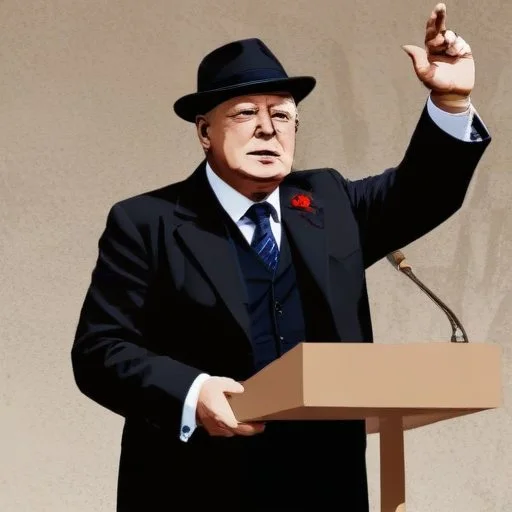
The Second World War had left Europe in shambles, with nations reeling from the devastating effects of conflict and occupation. The divisions of the past threatened to tear the continent asunder, as the Iron Curtain began to descend, separating East from West.
On September 19, 1946, Winston Churchill, the former British Prime Minister, stood before a packed auditorium at the University of Zurich, Switzerland. His speech, titled "The Tragedy of Europe," was a clarion call for unity and cooperation in the face of an uncertain future. Churchill's words painted a vivid picture of a continent torn apart by centuries of conflict, and yet, he offered a vision of hope and reconciliation.
| Date | Event |
|---|---|
| September 19, 1946 | Winston Churchill delivers his Zurich speech, calling for European unity. |
| May 1948 | The Congress of Europe, a gathering of over 1,000 delegates from 16 nations, meets in The Hague to discuss the formation of a united Europe. |
| May 5, 1949 | The Council of Europe is officially established, with 10 founding member states. |
The Council of Europe's founding marked a significant milestone in European history, as nations began to put aside centuries of rivalry and conflict. The Council's establishment paved the way for future European institutions, including the European Union, and provided a platform for cooperation on a range of issues, from human rights to economic development.
Churchill's Zurich speech was not without its challenges. The former Prime Minister had to overcome the skepticism of his own government, as well as the reluctance of other European leaders, to embrace the idea of a united Europe. Despite these obstacles, Churchill's unwavering commitment to the cause ultimately prevailed.
The Council of Europe's founding has had a profound impact on European culture and society. By promoting cooperation and understanding, the Council has helped to foster a sense of shared European identity, transcending national borders and linguistic differences.
In the words of Winston Churchill, "If Europe were once united in the sharing of its common inheritance, there would be no limit to the happiness, to the prosperity and glory which its 300 million people would enjoy."
The Council of Europe's founding shares parallels with other significant events in modern European history, such as the signing of the Treaty of Rome in 1957, which established the European Economic Community (EEC). Both events reflect the ongoing quest for European unity and cooperation in the face of adversity.
The Council of Europe's founding serves as a powerful reminder of the importance of perseverance and vision in shaping the course of history. Churchill's unwavering commitment to a united Europe, despite the odds, inspires us to strive for a brighter, more cooperative future.
The aftermath of World War II saw a power vacuum in Europe, with the Soviet Union expanding its influence over Eastern Europe. In response, the United States and Great Britain sought to create a united front against the Soviet threat. Churchill's Zurich speech was a pivotal moment in this context, as it marked a shift towards a more collaborative approach to European security.
In the months following the speech, a series of high-level meetings took place, involving leaders from across Europe. These meetings laid the groundwork for the Congress of Europe, which would eventually lead to the formation of the Council of Europe. The Congress, held in The Hague in May 1948, brought together over 1,000 delegates from 16 nations to discuss the future of European unity.
The Congress was a landmark event, as it demonstrated a newfound willingness among European leaders to work together towards a common goal. The gathering was marked by passionate speeches and heated debates, but ultimately, it produced a united call for European cooperation. This momentum would carry over into the formation of the Council of Europe, which would provide a formal framework for European cooperation.
Duncan Sandys, Churchill's son-in-law and a British politician, played a crucial role in the early years of the Council of Europe. Sandys was a key organizer of the Congress of Europe, and his tireless efforts helped to bring together delegates from across the continent.
Sandys' dedication to the cause of European unity was unwavering, and he worked closely with Churchill to promote the idea of a united Europe. As a member of the British Parliament, Sandys used his position to lobby for increased British involvement in European affairs.
Sandys' commitment to European unity was matched only by his commitment to his family. He was a devoted husband and father, and his personal relationships often played a significant role in his political work.
The formation of the Council of Europe shares striking parallels with the creation of the European Coal and Steel Community (ECSC) in 1951. Both organizations were born out of a desire for European cooperation in the face of adversity, and both sought to promote economic integration as a means of achieving peace and stability.
The ECSC, which would eventually evolve into the European Union, was founded on the principles of supranationalism and economic integration. In contrast, the Council of Europe focused primarily on promoting cultural and political cooperation among its member states.
Despite these differences, both organizations played a crucial role in shaping the course of European history. They demonstrated that, in the aftermath of World War II, European leaders were willing to put aside their differences and work towards a common goal.
The global geopolitical context of the late 1940s played a significant role in the formation of the Council of Europe. The Soviet Union's expansion into Eastern Europe had created a sense of unease among Western leaders, and the threat of communism loomed large over the continent.
In response, the United States and Great Britain sought to create a united front against the Soviet threat. The Council of Europe was seen as a key component of this strategy, as it would provide a forum for European leaders to discuss common security concerns and promote cooperation.
The Council's formation was also influenced by the emerging Cold War rivalry between the United States and the Soviet Union. As the two superpowers jockeyed for position on the global stage, European leaders were forced to navigate a complex web of alliances and rivalries.