


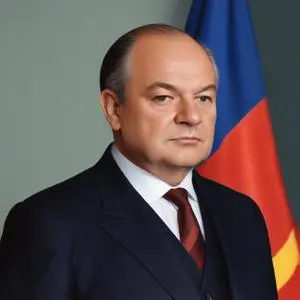
A Belgian lawyer and politician who served as the 46th Prime Minister of Belgium, known for his key role in shaping the European Union and its institutions. He was a strong advocate for European integration and cooperation.
Paul-Henri Spaak, a Belgian politician, diplomat, and statesman, is renowned for his instrumental role in shaping the European Union and serving as the second Secretary-General of NATO. As a three-time Prime Minister of Belgium and a dedicated advocate for international cooperation, Spaak left an indelible mark on global politics and diplomacy.
Born on January 25, 1899, Spaak came from a prominent Belgian family. He briefly served in World War I before being captured and later became a distinguished tennis player and lawyer. His high-profile defense of an Italian student accused of attempting to assassinate Italy's crown prince in 1929 catapulted him into the spotlight.
A convinced socialist, Spaak entered politics in 1932, joining the Belgian Workers' Party (later the Belgian Socialist Party). He gained his first ministerial portfolio in the government of Paul Van Zeeland in 1935. By 1938, he had become the Prime Minister of Belgium, a position he held until 1939.
During World War II, Spaak played a crucial role in the London-based Belgian government in exile under Hubert Pierlot. He negotiated the foundation of the Benelux Customs Union with the governments of the Netherlands and Luxembourg, paving the way for future European integration.
After the war, Spaak twice regained the premiership, first for a brief period in March 1946 and again between 1947 and 1949. He continued to hold various Belgian ministerial portfolios until 1966, serving as Foreign Minister for an impressive 18 years.
A firm believer in multilateralism, Spaak was a vocal supporter of international cooperation. He hoped to include geopolitical enemies of Belgium and NATO, such as the Soviet Union and its satellite states, in the pursuit of global harmony. In 1945, he chaired the first session of the General Assembly of the United Nations, cementing his reputation as a champion of international cooperation.
Spaak received numerous accolades for his contributions to global politics and diplomacy. He was awarded the Charlemagne Prize in 1957 and the prestigious honorary title of Minister of State in 1963. His legacy continues to inspire generations of politicians and diplomats, solidifying his place as one of the most influential figures of the 20th century.
Through his tireless efforts and unwavering commitment to international cooperation, Paul-Henri Spaak left an indelible mark on modern history. His vision for a united Europe and his dedication to diplomacy continue to inspire leaders and citizens alike, cementing his place as one of the most remarkable statesmen of the 20th century.
Born in 1810
A renowned Romantic-era composer and influential music critic, known for his expressive and emotionally charged works, including symphonies, piano music, and art songs.
Born in 1876
Led post-war West Germany's reconstruction and served as a key figure in shaping the country's modern identity, earning him the title "Father of the Federal Republic."
Born in 1881
Italian journalist and politician who served as the 30th Prime Minister of Italy, leading the country's post-WWII reconstruction and European integration efforts. He's known for his key role in shaping modern Italy's politics and economy.
Born in 1871
Prolific writer of historical novels and adventure stories, also a talented landscape painter.
Born in 1890
A French military leader who led the Free French Forces during WWII and later became President of France, known for his strong leadership and vision for a unified Europe.
Born in 1888
A key architect of the European Union, credited with uniting a war-torn continent through economic cooperation and integration. His vision for a unified Europe has shaped modern politics and global relations.
Born in 1901
First President of the European Commission, instrumental in shaping the EU's early development and integration, and a key figure in post-war European politics.
