


The Chilean coup of 1973, led by General Augusto Pinochet, is infamous for being one of the most brutal and dramatic seizures of power in modern Latin American history, marking the end of democracy and the beginning of a 17-year-long dictatorship.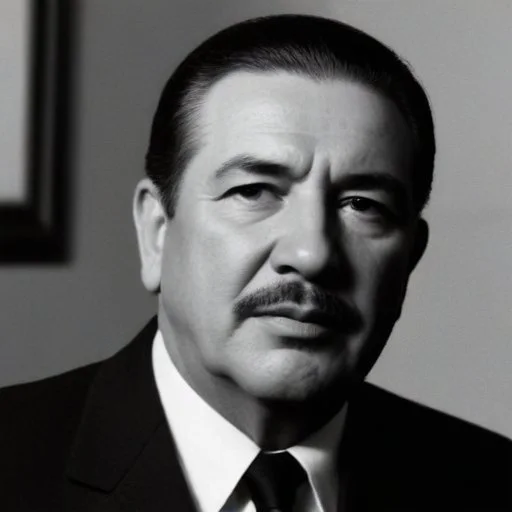
In the early 1970s, Chile was experiencing a period of significant social and political change. President Salvador Allende, a socialist and a pioneer of Latin American socialism, had been democratically elected in 1970, promising to bring about radical reforms and redistribute wealth. However, his policies were met with resistance from the Chilean upper class, the military, and the United States government, which saw him as a threat to their economic interests.
The coup began on September 11, 1973, with a coordinated attack on the Presidential Palace, La Moneda, by the Chilean Air Force and Army. Warplanes bombed the palace, while tanks rolled into the streets and soldiers stormed the radio stations. President Allende, refusing to surrender, died in the palace, reportedly by his own hand.
The Chilean coup had a profound impact on the country's cultural and social landscape. The coup led to a surge in creative expression, as artists, writers, and musicians responded to the repression and violence of the regime. The movement was characterized by the emergence of new forms of protest, such as street art, music, and poetry.
The Chilean coup remains a highly controversial and emotive topic, with many Chileans still divided over the legacy of Pinochet's regime. While some view Pinochet as a hero who saved Chile from communism, others see him as a brutal dictator who suppressed human rights and democracy.
"I will not surrender. I will not betray my country. I will not betray the people who elected me." - President Salvador Allende, during the coup
The Chilean coup shares similarities with other military coups in Latin American history, such as the 1964 Brazilian coup and the 1976 Argentine coup. However, the Chilean coup stands out for its brutality and the longevity of the subsequent dictatorship.
In the aftermath of the coup, many Chileans were forced into exile, where they continued to fight for democracy and human rights. One such exile was Isabel Allende, the niece of President Allende, who went on to become a renowned writer and human rights activist.
The Chilean coup had significant implications for future events in Latin America. The coup marked a turning point in the Cold War, as the United States increasingly supported authoritarian regimes in the region. The coup also inspired a wave of social and political mobilization, as people across the continent demanded greater democracy and human rights.
The Chilean coup serves as a powerful warning about the dangers of authoritarianism and the importance of defending democracy and human rights. The event has been the subject of numerous academic studies, and continues to be an important topic in Latin American history and politics courses.
Salvador Allende, the democratically elected President of Chile, was a pioneer of Latin American socialism. Born on July 26, 1908, in Valparaíso, Chile, Allende came from a middle-class family and was exposed to the harsh realities of poverty and social inequality from an early age.
Allende's commitment to social justice and equality led him to become a prominent figure in Chilean politics. He co-founded the Socialist Party of Chile and served as a senator and minister of health before being elected president in 1970.
As president, Allende implemented a series of radical reforms aimed at reducing poverty and inequality. He nationalized key industries, increased workers' rights, and introduced a program of agrarian reform. These policies made him a champion of the working class and a thorn in the side of the Chilean elite and foreign powers.
The Chilean coup had a profound impact on the country's cultural landscape. The regime's crackdown on dissent led to a surge in artistic expression, as musicians, writers, and artists began to use their work as a form of resistance.
The coup also led to the emergence of new forms of protest, such as street art and music. The iconic song "El pueblo unido jamás será vencido" ("The people united will never be defeated") became an anthem of resistance against the regime.
The cultural impact of the coup extended beyond Chile's borders, inspiring solidarity movements and artistic responses around the world. The coup remains a powerful symbol of resistance and a testament to the power of art to challenge oppression.
The Chilean coup marked a turning point in the Cold War, as the United States increasingly supported authoritarian regimes in Latin America. The coup also inspired a wave of social and political mobilization, as people across the continent demanded greater democracy and human rights.
The coup's political legacy extends to the present day, with many Chileans still divided over the legacy of Pinochet's regime. While some view Pinochet as a hero who saved Chile from communism, others see him as a brutal dictator who suppressed human rights and democracy.
The Chilean coup had significant economic consequences, both domestically and internationally. The regime's neoliberal economic policies led to rapid economic growth, but also increased income inequality and poverty.
The coup also had a profound impact on Chile's economy, as foreign investment flooded in and the country became a laboratory for neoliberal experimentation. The regime's policies were hailed as a model for economic development, but critics argued that they came at the cost of social justice and human rights.
The Chilean coup took place against the backdrop of the Cold War, as the United States and Soviet Union vied for influence in Latin America. The Nixon administration saw Allende's socialist government as a threat to US interests and actively supported the coup.
The coup was part of a broader pattern of US intervention in Latin America, as the United States sought to prevent the spread of socialism and communism in the region. The coup marked a turning point in US-Chilean relations, which would remain tense for decades to come.