


In October 1962, the world teetered on the edge of nuclear war as Adlai Stevenson, the United States Ambassador to the United Nations, presented damning evidence of Soviet ballistic missiles in Cuba to the UN Security Council. This decisive moment marked the climax of the Cuban Missile Crisis, a 13-day standoff that brought humanity closer to annihilation than ever before.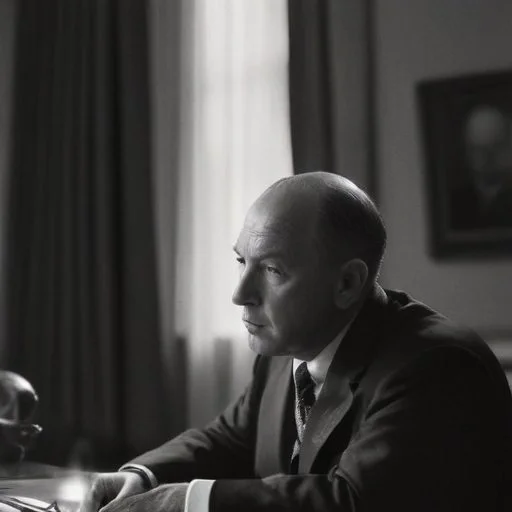
The Cuban Missile Crisis was the culmination of a decades-long Cold War between the United States and the Soviet Union. Since the end of World War II, the two superpowers had engaged in a global chess match, each attempting to outmaneuver the other in a struggle for ideological supremacy. The 1959 Cuban Revolution, which saw Fidel Castro's communist government come to power, had transformed the island nation into a Soviet satellite state just 90 miles from American shores.
On October 14, 1962, a U-2 spy plane flying over Cuba captured pictures of Soviet missile sites under construction. The photographs revealed the presence of SS-4 Sandal and SS-5 Skean ballistic missiles, capable of delivering nuclear warheads to the United States. These findings were not only a direct threat to American national security but also a clear violation of Soviet Premier Nikita Khrushchev's assurances that no offensive weapons would be placed in Cuba.
On October 25, 1962, Stevenson stood before the UN Security Council, his face stern and resolute. He presented the aerial photographs, pointing to the unmistakable evidence of Soviet missile sites. The room fell silent as Stevenson's words hung in the air, leaving the Soviet delegation reeling in embarrassment. Soviet Ambassador Valerian Zorin's futile attempts to deny the allegations only heightened the tension, as Stevenson retorted, "I am prepared to wait until hell freezes over for your answer."
The Cuban Missile Crisis ultimately ended with a Soviet withdrawal of its missiles from Cuba, in exchange for a US guarantee not to invade the island and the removal of US missile sites from Turkey. This outcome was a testament to the power of diplomacy and the willingness of both superpowers to compromise, averting a nuclear conflict that could have claimed millions of lives.
The Cuban Missile Crisis had a profound impact on the cultural and social landscape of the 1960s. It brought the reality of nuclear war into American living rooms, sparking widespread fear and anxiety. The crisis also fueled the growth of the anti-war movement, as young people began to question the logic of Cold War politics and the nuclear arms race.
The Cuban Missile Crisis has been the subject of intense controversy and debate, with many questioning the motives and actions of both the US and Soviet governments. The crisis has been characterized as an "eyeball to eyeball" standoff, with each side pushing the other to the brink of war. The event has also been criticized for perpetuating the Cold War mentality, reinforcing the notion that the only way to ensure national security is through military might.
Adlai Stevenson's courageous stance during the Cuban Missile Crisis has become the stuff of legend. According to eyewitnesses, Stevenson's determination and conviction were unwavering, even in the face of Soviet belligerence. His unflinching presentation of the photographic evidence has been hailed as a masterclass in diplomatic brinksmanship.
The Cuban Missile Crisis marked a turning point in the Cold War, as both superpowers began to explore avenues of diplomacy and dialogue. The crisis paved the way for the Partial Test Ban Treaty in 1963 and the Strategic Arms Limitation Talks (SALT) in the 1970s, signaling a new era of détente and arms control.
The Cuban Missile Crisis serves as a powerful reminder of the devastating consequences of nuclear war and the importance of diplomacy in preventing global catastrophes. As we reflect on this pivotal moment in history, we are reminded of the urgent need for continued international cooperation and dialogue in the face of uncertainty and conflict.
The lead-up to the Cuban Missile Crisis was marked by a series of tense events, including the failed Bay of Pigs invasion in 1961 and the construction of the Berlin Wall in 1961. These incidents had already heightened tensions between the United States and the Soviet Union, setting the stage for a more serious confrontation.
In the months leading up to the crisis, the Soviet Union had been secretly deploying nuclear-armed ballistic missiles to Cuba. This move was seen as a direct threat to American national security, as the missiles were capable of reaching major cities in the United States.
The U-2 spy plane photographs, which provided the smoking gun evidence of Soviet missile sites in Cuba, were not just a lucky break. They were the result of months of careful planning and intelligence gathering by the CIA and the Pentagon.
Adlai Stevenson, the United States Ambassador to the United Nations, was a seasoned diplomat with a strong sense of conviction. His presentation to the UN Security Council, in which he presented the photographic evidence of Soviet missile sites in Cuba, was a masterclass in diplomatic brinksmanship.
Stevenson's background in politics and law had prepared him well for the high-stakes drama of the Cuban Missile Crisis. He had served as Governor of Illinois and had run for President twice, losing to Dwight Eisenhower in 1952 and 1956.
Despite his tough stance against the Soviet Union, Stevenson was a strong advocate for diplomacy and international cooperation. He played a key role in shaping the United States' response to the crisis, and his unwavering resolve helped to prevent a nuclear war.
The Cuban Missile Crisis was not an isolated event, but rather part of a broader pattern of Cold War tensions and conflicts. It shared many similarities with other major crises of the era, including the Berlin Blockade of 1948-1949 and the Suez Crisis of 1956.
One key difference between the Cuban Missile Crisis and other Cold War conflicts was the level of public awareness and concern. The crisis was televised, with millions of Americans watching the drama unfold on their TV screens.
The crisis also highlighted the dangers of nuclear proliferation, as both the United States and the Soviet Union had developed massive nuclear arsenals. This led to a newfound focus on arms control and disarmament, as policymakers sought to reduce the risk of nuclear war.
The Cuban Missile Crisis had a profound impact on American culture, as the reality of nuclear war suddenly became very real. The crisis sparked widespread fear and anxiety, as people wondered if they would survive a nuclear conflict.
The crisis also fueled the growth of the anti-war movement, as young people began to question the logic of Cold War politics and the nuclear arms race. The crisis helped to galvanize the movement, which would go on to play a major role in shaping American politics in the 1960s and 1970s.
The crisis also had an impact on popular culture, with films and literature reflecting the fears and anxieties of the era. Movies like "Dr. Strangelove" and "Fail-Safe" explored the dangers of nuclear war, while books like "On the Beach" and "Alas, Babylon" depicted the devastating consequences of a nuclear conflict.
The Cuban Missile Crisis marked a major turning point in the development of military technology, as both the United States and the Soviet Union realized the importance of satellite reconnaissance and communication.
The crisis highlighted the need for more accurate and reliable intelligence gathering, leading to significant investments in satellite technology and signals intelligence.
The crisis also accelerated the development of anti-ballistic missile systems, as both sides sought to protect themselves from the threat of nuclear attack. This led to a new era of technological competition, as the United States and the Soviet Union engaged in a high-stakes game of military one-upmanship.