


The world held its collective breath as the Cuban Missile Crisis, a 13-day standoff between the United States and the Soviet Union, came to a dramatic close. On October 28, 1962, Soviet Premier Nikita Khrushchev issued the order to dismantle and remove Soviet missiles from Cuba, effectively ending the crisis that had brought humanity to the precipice of nuclear war.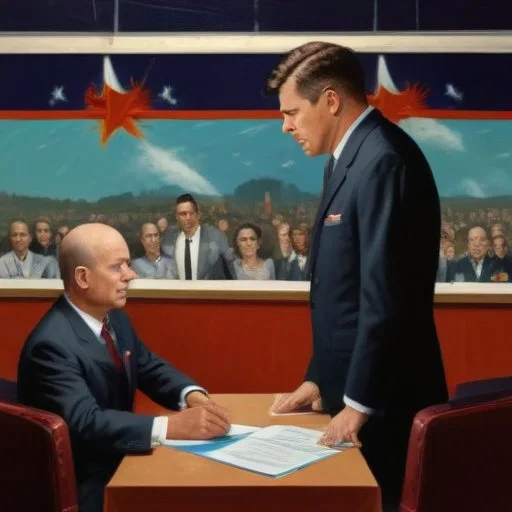
The roots of the crisis can be traced back to the early 1960s, when the Soviet Union, led by Khrushchev, began to establish a communist presence in Cuba, just 90 miles from the United States. In response, the Kennedy administration, determined to prevent the spread of communism in the Western Hemisphere, implemented a trade embargo and began to secretly plan an invasion of the island.
The crisis began on October 14, 1962, when American spy planes detected Soviet nuclear missile sites under construction in Cuba. President John F. Kennedy, determined to protect American interests, imposed a naval quarantine on the island, prohibiting any further Soviet shipments. Khrushchev, meanwhile, refused to back down, and the two leaders engaged in a series of tense diplomatic exchanges.
The resolution of the crisis marked a significant turning point in the Cold War, as both superpowers began to re-evaluate their policies and explore diplomatic alternatives to conflict. The crisis also led to the establishment of a direct communication hotline between the White House and the Kremlin, reducing the risk of miscommunication and nuclear war.
The Cuban Missile Crisis had a profound impact on popular culture, with films, literature, and music reflecting the era's anxieties and fears. The crisis also prompted a renewed interest in civil defense and nuclear preparedness, with families across the United States building bomb shelters and stockpiling supplies.
Let every nation know, whether it wishes us well or ill, that we shall pay any price, bear any burden, meet any hardship, support any friend, oppose any foe to assure the survival and the success of liberty. - John F. Kennedy
The Cuban Missile Crisis ultimately paved the way for the Partial Test Ban Treaty of 1963, which banned atmospheric nuclear testing, and the Strategic Arms Limitation Talks (SALT) of the 1970s, which aimed to reduce nuclear stockpiles. The crisis also underscored the importance of diplomacy and crisis management in international relations, influencing U.S. foreign policy for decades to come.
The Cuban Missile Crisis, a near-apocalyptic event that brought humanity to the brink of destruction, serves as a powerful reminder of the devastating consequences of nuclear war. As we reflect on this pivotal moment in history, we are reminded of the importance of diplomacy, cooperation, and the delicate balance of power that shapes our world.
The Cuban Missile Crisis has been the subject of much historiographical debate, with historians disagreeing on the events leading up to the crisis and the motivations of the key players. Some have argued that the crisis was a result of Kennedy's aggressive anti-communist stance, while others have seen it as a necessary response to Soviet aggression. Regardless, the crisis marked a significant turning point in the Cold War, and its legacy continues to shape international relations today.
One of the most significant historiographical debates surrounding the crisis is the role of luck and chance in its resolution. Some historians have argued that the crisis was resolved through a combination of skillful diplomacy and blind luck, while others have seen it as a more deliberate and calculated process.

The Cuban Missile Crisis took place within a complex web of geopolitical alliances and rivalries. The Soviet Union, led by Khrushchev, had been seeking to expand its influence in the Western Hemisphere, while the United States, led by Kennedy, was determined to prevent the spread of communism. The crisis also highlighted the tensions between the Soviet Union and its Eastern European allies, as well as the divisions within the Western alliance.
The crisis also underscored the importance of geography in international relations. The proximity of Cuba to the United States made it a strategic location for Soviet missile sites, and the Kennedy administration was determined to prevent the establishment of a Soviet military presence in the Western Hemisphere.
Nikita Khrushchev, the Soviet Premier, was a key figure in the Cuban Missile Crisis. Khrushchev, who had risen to power through the Soviet Communist Party, was a complex and contradictory figure, known for his bombastic rhetoric and unpredictable behavior. Despite his reputation for aggression, Khrushchev was also a pragmatist, and he ultimately decided to withdraw the Soviet missiles from Cuba.
Khrushchev's leadership style was characterized by a mix of toughness and flexibility. He was willing to take risks, but he was also prepared to back down when faced with the threat of nuclear war. His decision to withdraw the Soviet missiles from Cuba was a significant moment in the crisis, and it marked a turning point in the Cold War.

The Cuban Missile Crisis had a profound impact on popular culture, with the crisis and its aftermath influencing music, film, and literature. The crisis sparked a wave of anxiety and fear, with many Americans building bomb shelters and stockpiling supplies in anticipation of a nuclear war.
The crisis also influenced the civil rights movement, with many activists seeing the crisis as a wake-up call to the dangers of nuclear war and the importance of international cooperation. The crisis also prompted a renewed interest in peace activism, with many Americans calling for greater international cooperation and diplomacy.
The Cuban Missile Crisis was marked by a series of dramatic and tense diplomatic exchanges between Kennedy and Khrushchev. One of the most famous examples is the "red phone" message, in which Kennedy warned Khrushchev that any attack on the United States would be met with a devastating response.
The crisis also generated a wealth of documentary evidence, including declassified cables, memos, and other documents. These documents provide a unique insight into the events leading up to the crisis, as well as the decision-making process of the key players.