


Cyprus, an island nation in the Eastern Mediterranean, had long been plagued by ethnic and political tensions between its Greek and Turkish Cypriot populations. The island's strategic location made it a coveted prize for various empires throughout history, leaving behind a complex web of relationships and allegiances.
In the post-colonial era, Cyprus gained independence from British rule in 1960, but the fragile peace was short-lived. Intercommunal violence erupted in the 1960s, and by the early 1970s, the situation had escalated into a full-blown crisis.
In July 1974, Turkish troops invaded the northern part of the island, prompting widespread international condemnation. The Security Council sprang into action, acknowledging the gravity of the situation and the need for swift intervention.
On August 16, 1974, the Security Council passed Resolution 359, authorizing the UNFICYP to establish a "buffer zone" to separate the warring parties and prevent further violence. This marked the birth of the Green Line, a 180-kilometer-long boundary that would divide Cyprus into two zones.
The creation of the Green Line brought an end to the immediate violence, but it also created a new reality for the island's inhabitants. The border became a de facto international border, dividing families, communities, and livelihoods.
While the Green Line has maintained a fragile peace, it has also perpetuated the division of the island, with the internationally recognized Republic of Cyprus controlling the southern part, and the Turkish Republic of Northern Cyprus administering the north.
The Green Line has had a profound impact on Cypriot society, influencing art, literature, and music. The division has inspired works that reflect the longing for unity, the pain of separation, and the resilience of the human spirit.
Today, the Green Line serves as a poignant reminder of the island's complex history and the ongoing quest for reconciliation and reunification.
1974: Turkish troops invade northern Cyprus, leading to the establishment of the Green Line.
1983: The Turkish Republic of Northern Cyprus declares independence, unrecognized by the international community.
1990s-2000s: numerous attempts at reunification talks take place, but a comprehensive settlement remains elusive.
2004: The Annan Plan, a UN-sponsored reunification initiative, is rejected in a referendum.
As Cyprus continues to navigate the complex web of international politics, one thing is clear: the Green Line remains a powerful symbol of the island's unfinished business. Will the island eventually reunify, or will the status quo persist? Only time will tell.
The Green Line serves as a poignant reminder of the human cost of conflict and the power of diplomacy in shaping the course of history. As we look to the future, we are compelled to ask: what lessons can be learned from this pivotal moment in Cyprus' history?
The Green Line has been the subject of various historiographical debates, with some scholars viewing it as a necessary evil to prevent further bloodshed, while others see it as a temporary solution that has perpetuated the division of the island.
Historians have also disagreed on the role of international actors, particularly the United States and the Soviet Union, in the lead-up to the Turkish invasion and the establishment of the Green Line.
Recent studies have highlighted the importance of oral histories and personal narratives in understanding the impact of the Green Line on Cypriot society.
The Green Line has had a profound impact on Cypriot art, literature, and music, with many works reflecting the themes of division, separation, and reunification.
In literature, authors such as Niki Marangou and Kyriakos Charalambides have written extensively on the human cost of the conflict and the emotional toll of living in a divided island.
In music, the work of composers like Evagoras Karageorgis and Marios Tokas has reflected the complex emotions and experiences of Cypriots living on both sides of the Green Line.
Kurt Waldheim, the Austrian diplomat and Secretary-General of the United Nations during the Cyprus crisis, played a crucial role in brokering a peaceful resolution to the conflict.
Waldheim's diplomatic efforts were instrumental in securing the passage of Resolution 359, which authorized the creation of the Green Line.
Despite his efforts, Waldheim's legacy has been marred by controversy, including allegations of war crimes during World War II.
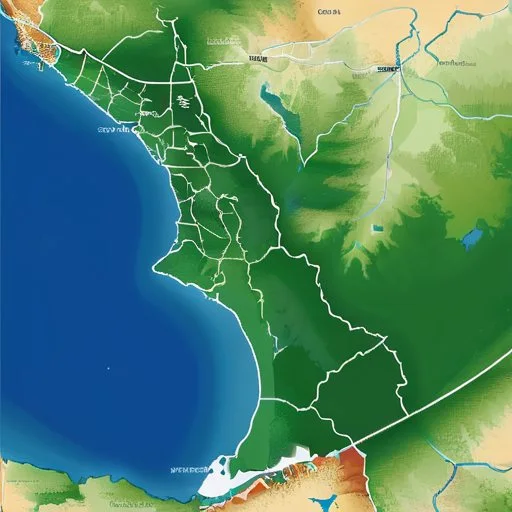
The Green Line was established during a period of heightened Cold War tensions, with the Soviet Union and the United States vying for influence in the region.
The Turkish invasion of Cyprus was seen by many as a move to counter Soviet influence in the Eastern Mediterranean, while the international community viewed the establishment of the Green Line as a necessary step to prevent further conflict.
Today, the Green Line remains a complex flashpoint in the geopolitics of the Eastern Mediterranean, with ongoing tensions between Cyprus, Turkey, and the European Union.
The creation of the Green Line has had significant economic implications for Cyprus, with the division of the island leading to a loss of economic opportunities and trade.
The internationally recognized Republic of Cyprus has struggled to develop its economy, while the Turkish Republic of Northern Cyprus has relied heavily on Turkish aid and investment.
Recent efforts to reunify the island have focused on the potential economic benefits of a united Cyprus, including increased trade and investment opportunities.