Depayin Massacre: Suu Kyi flees, arrested amidst bloody crackdown
Government-sponsored thugs, armed with swords and sticks, ambushed a convoy carrying Aung San Suu Kyi, the Nobel laureate and leader of the National League for Democracy. At least 70 people associated with the party were brutally killed, marking one of the deadliest incidents in Burma's modern history. Suu Kyi narrowly escaped, but her freedom was short-lived as she was arrested soon after, sparking international outrage and condemnation.
The Depayin Massacre: A Dark Chapter in Burma's Struggle for Democracy
The Depayin massacre, a brutal and brazen attack on democracy, is etched in the annals of Burmese history as one of the deadliest incidents of its kind. On a fateful day in 2003, a government-sponsored mob unleashed a wave of terror on a convoy carrying Aung San Suu Kyi, the iconic leader of the National League for Democracy (NLD), leaving at least 70 people dead and many more injured.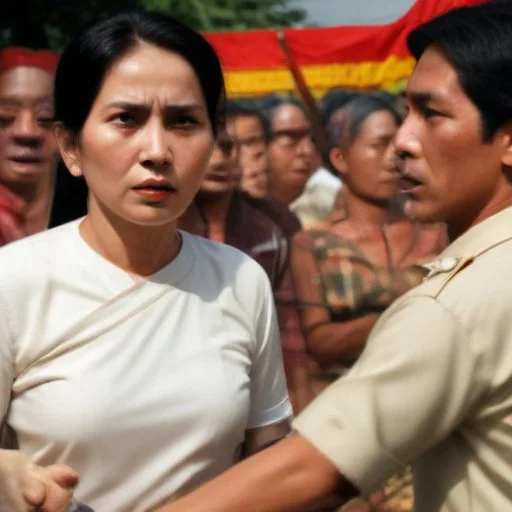
Historical Background: A Climate of Fear and Repression
In the years leading up to the Depayin massacre, Burma (also known as Myanmar) was gripped by a military-backed regime that brooked no dissent. The ruling junta, led by General Than Shwe, had been accused of human rights abuses, forced labor, and suppression of political opposition. Against this backdrop of fear and repression, Aung San Suu Kyi and her NLD party had emerged as a beacon of hope for democratic reforms.
The Fateful Day: May 30, 2003
On May 30, 2003, Aung San Suu Kyi's convoy was ambushed by a mob of government-sponsored thugs, armed with swords, sticks, and other deadly weapons. The attack occurred in Depayin, a small town in central Burma, as Suu Kyi's motorcade was en route to a political rally. The assault was swift and merciless, with the mob attacking the convoy with impunity. Despite the chaos and bloodshed, Suu Kyi managed to escape, but her freedom was short-lived.
Arrest and Detention: Silencing the Voice of Dissent
Within hours of the attack, Aung San Suu Kyi was arrested by the authorities and taken into custody. This marked the beginning of a lengthy period of detention, during which she was held under house arrest, denied access to medical care, and subjected to psychological torture. The international community was outraged by her arrest, and calls for her release echoed around the world.
Key Figures Involved: The Architect of the Massacre
The Depayin massacre was orchestrated by a cabal of government officials and military leaders, who sought to crush the NLD and eliminate Aung San Suu Kyi as a political threat. Among the key figures implicated in the attack was Major General Soe Win, a notorious hardliner who had a history of human rights abuses. Win was later promoted to the position of Prime Minister, underscoring the regime's impunity and disregard for human life.
Major Outcomes and Impacts: A Blow to Democracy
The Depayin massacre sent shockwaves through Burma and the international community, casting a dark shadow over the country's already-tarnished reputation. The attack marked a low point in the country's struggle for democracy, and it would take years for the NLD to recover from the loss of lives and momentum. The massacre also galvanized international pressure on the regime, with many countries imposing economic sanctions and diplomatic isolation.
"Freedom from Fear": Aung San Suu Kyi's Legacy
In the face of unimaginable brutality, Aung San Suu Kyi remained steadfast in her commitment to democracy and human rights. Her iconic phrase, "Freedom from Fear," became a rallying cry for the Burmese people, inspiring generations to fight for their rights and dignity. Despite her detention, Suu Kyi's words continue to resonate, serving as a powerful reminder of the struggle for democracy and the indomitable human spirit.
A Visual Timeline of the Depayin Massacre
May 30, 2003 |
Aung San Suu Kyi's convoy ambushed by government-sponsored mob in Depayin |
May 30, 2003 |
Aung San Suu Kyi escapes the attack, but is arrested soon after |
2003-2010 |
Aung San Suu Kyi detained under house arrest, denied access to medical care and subjected to psychological torture |
2010 |
Aung San Suu Kyi released from house arrest, paving the way for her eventual rise to power in 2015 |
Inspirational Quotes: Aung San Suu Kyi's Message of Hope
"The struggle for democracy is not a fleeting dream, but a persistent and enduring reality."
"Freedom from fear is a fundamental human right, and it is the foundation upon which all other rights are built."
"The people of Burma will never be defeated, for they are the embodiment of hope and resilience."
The Depayin Massacre: A Cautionary Tale for Dictators
The Depayin massacre serves as a stark reminder of the dangers of unchecked power and the brutal suppression of dissent. It is a testament to the enduring power of courage and resilience, and a beacon of hope for those fighting against tyranny and oppression. As the world continues to grapple with the challenges of democracy and human rights, the Depayin massacre stands as a potent symbol of the struggle for freedom and dignity.
In-Depth Historical Analysis
The Pre-Depayin Massacre Climate: A Rising Tide of Political Unrest
In the months leading up to the Depayin massacre, tensions between the ruling junta and the NLD had been escalating. Aung San Suu Kyi's popularity had been growing, and her calls for democratic reforms were gaining traction with the Burmese people.
The regime, sensing a threat to their power, responded with increased repression and intimidation. Pro-democracy activists were arrested, and there were reports of torture and forced labor.
The NLD, undeterred, continued to organize public rallies and protests, which were often met with brutal force by the authorities. Against this backdrop of rising political unrest, the Depayin massacre was a devastating blow to the democracy movement.

Detailed Character Insight
Major General Soe Win: The Architect of the Depayin Massacre
Major General Soe Win was a notorious hardliner and one of the most feared men in Burma. With a reputation for ruthlessness and a history of human rights abuses, he was the perfect candidate to orchestrate the Depayin massacre.
Soe Win's role in the attack was instrumental, and he worked closely with other high-ranking officials to plan and execute the ambush. His promotion to Prime Minister after the massacre sent a clear message: the regime would stop at nothing to maintain its grip on power.
Rich Comparative Exploration
Comparing the Depayin Massacre to Other Notorious Attacks on Democracy
The Depayin massacre bears eerie similarities to other attacks on democratic movements around the world. The 1989 Tiananmen Square protests in China, the 1973 Chilean coup, and the 1962 Algerian massacre all share a common thread: the brutal suppression of dissent by authoritarian regimes.
In each of these cases, the regime sought to crush the opposition and maintain its grip on power through violence and intimidation. The Depayin massacre is a stark reminder that the struggle for democracy is universal, and that the forces of repression will stop at nothing to maintain their control.

Detailed Ideological Review
The Philosophical Underpinnings of Aung San Suu Kyi's Democracy Movement
Aung San Suu Kyi's commitment to democracy is rooted in a deep philosophical conviction that freedom and dignity are fundamental human rights. Her concept of "Freedom from Fear" is more than just a rallying cry – it's a powerful ideological framework for understanding the struggle for democracy.
By emphasizing the importance of individual liberty and the right to self-determination, Suu Kyi's movement represents a powerful challenge to the authoritarian ideology of the ruling junta. The Depayin massacre was a brutal attempt to silence this ideology, but it ultimately served to galvanize the democracy movement and inspire a new generation of activists.
Rich Geopolitical Insight
The Geopolitical Context of the Depayin Massacre: A Regional Power Struggle
The Depayin massacre took place against a backdrop of regional geopolitical tensions. Burma's strategic location at the crossroads of Southeast Asia made it a key player in the region's power dynamics.
The ruling junta had long been supported by China, which saw Burma as a vital ally in its quest for regional dominance. The Depayin massacre was, in part, a response to the growing influence of Western powers in the region, and the perceived threat they posed to Burma's sovereignty.


