


On August 9, 1974, Richard Nixon, the 37th President of the United States, made history by becoming the first U.S. President to voluntarily resign from office. This shocking event was the culmination of the Watergate scandal, which had been unfolding for over two years.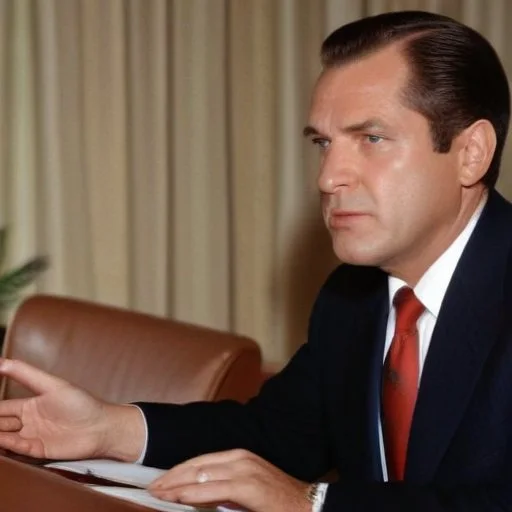
The roots of Nixon's downfall lay in his re-election campaign in 1972, when his team was accused of breaking into the Democratic National Committee headquarters at the Watergate complex in Washington D.C. The subsequent cover-up and attempts to conceal evidence led to the appointment of a special prosecutor, Archibald Cox, to investigate the matter.
The following events led to Nixon's resignation:
Nixon's resignation had significant consequences:
The Watergate scandal and Nixon's resignation had far-reaching effects on American culture and society:
The event has been referenced in countless films, books, and TV shows, cementing its place in popular culture.
The scandal led to increased public distrust of government and politicians, contributing to the growing disillusionment of the 1970s.
"Our long national nightmare is over." - Gerald Ford, in his first address as President
"When the President does it, that means it is not illegal." - Richard Nixon, in a 1977 interview with David Frost
Richard Nixon's resignation serves as a reminder of the importance of checks and balances in government and the need for transparency and accountability.
The event paved the way for future presidents to be held accountable for their actions, and for the strengthening of democratic institutions.
In the end, Nixon's fall from grace serves as a powerful cautionary tale about the dangers of unchecked power and corruption.
Archibald Cox, the special prosecutor appointed to investigate the Watergate scandal, was a man of strong principles and unwavering dedication to justice. As a former Solicitor General and Harvard Law professor, Cox was known for his exceptional legal mind and commitment to upholding the law.
Despite facing intense pressure from the Nixon administration, Cox refused to back down, and his determination ultimately led to the revelation of the secret tapes and Nixon's resignation.
Cox's bravery and integrity earned him numerous accolades, including the Profiles in Courage Award, and cemented his place as a champion of truth and accountability in American history.

The Watergate scandal and Nixon's resignation had a profound impact on American popular culture, influencing everything from film and literature to music and politics.
Films like All the President's Men (1976) and Nixon (1995) dramatized the events, while books like Woodward and Bernstein's All the President's Men (1974) and Nixon's Shadow: The History of an Image (2002) provided in-depth analysis.
The scandal also inspired countless references in TV shows, songs, and even comedy sketches, solidifying its place in the American cultural consciousness.
The Watergate scandal led to a significant shift in the political landscape of the United States, leading to increased scrutiny of political leaders and the establishment of stricter ethics laws.
The scandal also marked a turning point in the American political narrative, as the public's distrust of government and politicians grew, contributing to the growing disillusionment of the 1970s.
In the aftermath, Congress passed the Ethics in Government Act (1978), which strengthened financial disclosure requirements for government officials and increased transparency in political financing.

Historians have offered diverse interpretations of Nixon's resignation, with some viewing it as a triumph of constitutional checks and balances, while others see it as a cautionary tale of unchecked power and corruption.
Some historians, like Stanley Kutler, have argued that Nixon's resignation was a necessary step towards preserving the integrity of the presidency, while others, like William F. Buckley Jr., have seen it as an overreach of congressional power.
Regardless, Nixon's resignation remains a pivotal moment in American history, with historians continuing to debate its significance and implications.
The Watergate scandal and Nixon's resignation sent shockwaves around the world, as international leaders and citizens alike struggled to understand the implications of such a high-profile political crisis.
In the aftermath, Nixon's resignation was seen as a sign of American democratic resilience, with many governments and commentators praising the strength of the US system in holding its leaders accountable.