


The August Coup of 1991, a pivotal event in modern history, is remembered for the bravery and defiance of the Soviet people, who stood strong against a group of hardline communist plotters attempting to overthrow the reform-minded President Mikhail Gorbachev. On those fateful days, over 100,000 protesters gathered outside the Soviet Union's parliament building, refusing to back down in the face of riot police and tanks.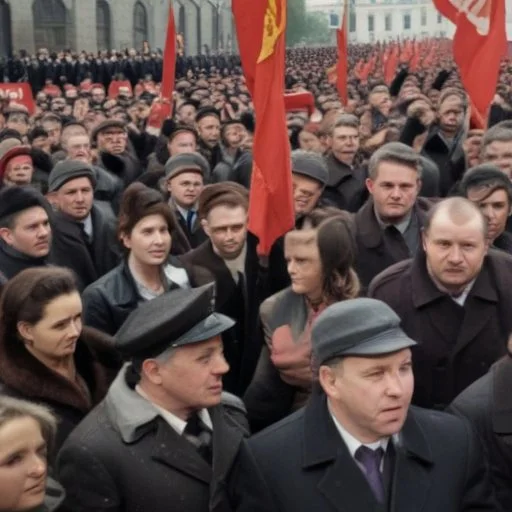
In the late 1980s, Mikhail Gorbachev's policies of glasnost (openness) and perestroika (restructuring) aimed to reform the Soviet economy and increase transparency in government. These reforms, however, were met with resistance from conservative communist factions, who feared the erosion of their power and the decline of the Soviet system.
On August 19, 1991, Vice President Gennady Yanayev, along with other high-ranking officials, orchestrated a coup to depose Gorbachev and restore communist control. The plotters, fearing the imminent signing of a new union treaty that would grant greater autonomy to Soviet republics, saw this as their last chance to maintain their grip on power.
As news of the coup spread, thousands of Muscovites poured onto the streets, encircling the Russian White House, the seat of government. Protesters, braving the threat of violence, chanted slogans, waved flags, and denounced the coup plotters. The iconic image of Boris Yeltsin, President of the Russian Soviet Federative Socialist Republic, standing on a tank to address the crowd, has become an enduring symbol of resistance against oppression.
The failed coup marked the beginning of the end for the Soviet Union. In the following months, the Soviet republics declared their independence, and the Soviet Union was officially dissolved on December 26, 1991. The August Coup also cemented Boris Yeltsin's position as a leading figure in Russian politics, paving the way for his presidency from 1991 to 1999.
"We will not give up our freedom, and we will not give up our Russia!" - Boris Yeltsin, addressing the crowd on August 20, 1991.
"The coup has failed, and the people have won. This is a victory for democracy and freedom." - Mikhail Gorbachev, upon his return to Moscow on August 22, 1991.
The August Coup and its aftermath marked a significant shift in Soviet society, as the people began to embrace a new era of freedom, democracy, and cultural expression. The collapse of the Soviet Union paved the way for a new generation of artists, writers, and musicians, who were no longer bound by the confines of communist dogma.
The August Coup of 1991 serves as a powerful reminder of the importance of standing up against tyranny and oppression. The bravery and defiance of the Soviet people, in the face of overwhelming odds, inspired a generation to fight for their rights and freedoms. As we reflect on this pivotal moment in history, we are reminded of the enduring power of human resilience and the unquenchable thirst for liberty.
The August Coup of 1991 was a pivotal event that took place against the backdrop of a rapidly changing geopolitical landscape. The Soviet Union, once a dominant world power, was struggling to maintain its influence in the face of growing global instability. The coup plotters, fearing the erosion of their power and the decline of the Soviet system, saw the rising nationalism in the Soviet republics as a threat to their authority.
In this context, the coup can be seen as a desperate attempt to reassert Soviet dominance and maintain control over the republics. However, the failure of the coup marked a significant shift in the balance of power, paving the way for the eventual dissolution of the Soviet Union.
The event also had far-reaching implications for international relations, as the West saw an opportunity to expand its influence and promote democracy in the former Soviet sphere. The aftermath of the coup marked a new era of cooperation and diplomacy between the US and Russia, setting the stage for a new era of global politics.
Vladimir Kryuchkov, the head of the KGB, was a key figure in the coup plot. A hardline communist and a close ally of Gorbachev's rival, Yegor Ligachev, Kryuchkov saw the reformer's policies as a threat to the Soviet way of life. As the chief of the KGB, he was in a position to provide critical support to the coup plotters, and his involvement helped to lend credibility to the putsch.
Kryuchkov's role in the coup was instrumental in convincing the Soviet military to support the plotters. However, his failure to anticipate the resistance of the Russian people and the eventual collapse of the coup led to his downfall, and he was arrested and charged with treason in August 1991.
The August Coup of 1991 was a watershed moment in Soviet social history, marking a significant shift in the relationship between the state and its citizens. The event galvanized the Soviet people, who saw the coup as an attack on their newfound freedoms and democratic rights.
The protest movement that emerged in response to the coup was characterized by a sense of solidarity and unity, as people from all walks of life came together to defy the plotters. This sense of collective purpose helped to create a new sense of national identity, one that was based on democratic values and a rejection of authoritarian rule.
In the aftermath of the coup, the Soviet people continued to push for greater democratic reforms, paving the way for a new era of social and political change in Russia and beyond.
The August Coup of 1991 had a profound impact on Soviet culture, marking a significant shift away from the dogmatic ideology of the communist era. The event paved the way for a new era of creative freedom, as artists, writers, and musicians were no longer bound by the strictures of communist censorship.
In the aftermath of the coup, Russian rock music, in particular, experienced a surge in popularity, as bands like DDT and Televizor became symbols of resistance and freedom. The event also inspired a new wave of literary and artistic expression, as writers and artists began to explore themes of democracy, freedom, and national identity.
The August Coup of 1991 marked a significant turning point in the political career of Boris Yeltsin, who emerged as a hero of the resistance against the coup plotters. Yeltsin's decision to defy the plotters and rally the Russian people helped to cement his position as a champion of democratic reform and a leader of the Russian nation.
The event also had significant implications for Gorbachev's political fortunes, as his failure to prevent the coup and his subsequent deposition marked the beginning of the end of his presidency. The aftermath of the coup paved the way for a new era of political competition in Russia, as Yeltsin and other reformers vied for power and influence in the post-Soviet era.