


In a momentous declaration of independence, East Pakistan broke free from the shackles of oppression and emerged as a sovereign nation, renaming itself Bangladesh on December 16, 1971. This epoch-making event marked the culmination of a brutal 9-month-long war, resulting in the loss of millions of lives, but ultimately paving the way for a new era of freedom and self-governance for the Bangladeshi people.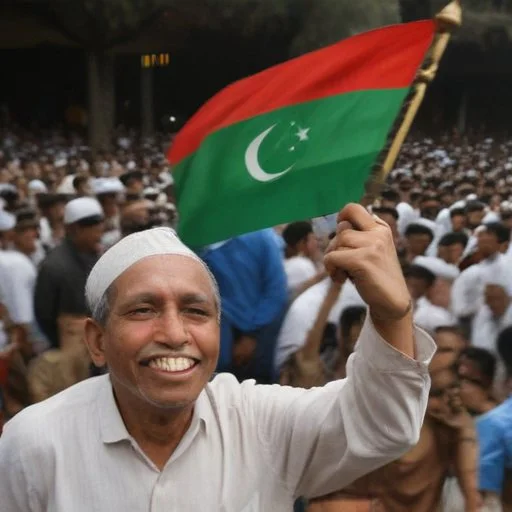
The seeds of rebellion were sown in the 1940s, when East Pakistan, then a province of Pakistan, began to feel suffocated by the dominant Western counterpart. The Bangladeshi people were subjected to economic exploitation, cultural suppression, and political marginalization, fuelling a growing sense of discontent and resentment.
At the forefront of this struggle for independence was the charismatic leader, Sheikh Mujibur Rahman, affectionately known as the "Father of the Nation." Through his impassioned speeches and tireless advocacy, he rallied the masses, inspiring them to demand their right to self-determination.
The conflict began on March 26, 1971, when the Pakistani army launched a brutal crackdown on the Bengali population, massacring thousands and forcing millions to flee their homes. The Bangladesh Forces, comprising the Mukti Bahini (Liberation Army) and the Indian Armed Forces, fought valiantly against the Pakistani military, engaging in a series of bloody battles.
The war raged on for nine months, leaving behind a trail of devastation, death, and destruction. The international community, led by India, eventually intervened, providing crucial military and diplomatic support to the Bangladesh Forces.
On December 16, 1971, the Pakistani forces surrendered, marking the end of the war and the beginning of a new era for Bangladesh. The country's first government was formed, with Sheikh Mujibur Rahman as the Prime Minister, and the Constitution of Bangladesh was adopted in 1972.
The creation of Bangladesh had far-reaching consequences, both domestically and internationally.
The Bangladesh Liberation War had a profound impact on the country's culture and society.
The war inspired a new wave of Bengali nationalism, with a renewed emphasis on the country's language, literature, and art. The struggle for independence also brought about a sense of unity and solidarity among the Bangladeshi people, transcending religious and socio-economic divides.
The Bangladesh Liberation War remains a contested and emotive issue, with differing narratives and perspectives on the conflict.
Critics have accused Pakistan of genocide and war crimes, while others have raised questions about the role of India and the international community in the conflict. The war also highlighted the plight of the Bengali Hindus, who faced persecution and violence during the conflict.
"The struggle now is the struggle for our freedom. They want to deprive us of our sovereignty... We will not allow that to happen." - Sheikh Mujibur Rahman
"The Bengalis are a nation, and they have the right to self-determination." - Indira Gandhi
The Bangladesh Liberation War serves as a testament to the power of human resilience and the indomitable spirit of freedom.
Today, Bangladesh stands as a proudly independent nation, forging its own path in the world. The war's legacy continues to inspire generations of Bangladeshis, serving as a powerful reminder of the sacrifices made for their freedom and independence.
The life of Sheikh Mujibur Rahman is a testament to his unwavering dedication to the cause of Bangladeshi independence. Born on March 17, 1920, in Tungipara, Bengal Presidency, British India, Mujib, as he is affectionately known, grew up in a family of modest means. His early life was marked by a strong sense of justice and a desire to serve his community.
Mujib's political career began in the 1940s, when he joined the All-India Muslim Students Federation. He later became a key figure in the Awami League, a Bengali nationalist political party. His leadership and oratory skills earned him the respect and admiration of the Bangladeshi people.
Rahman's vision for Bangladesh was one of a democratic, secular, and socialist state. He was a strong advocate for social justice, equality, and human rights. Throughout his life, he faced numerous challenges and obstacles, including imprisonment and exile. Despite these setbacks, he remained resolute in his pursuit of independence for Bangladesh.

In the 1940s and 1950s, the Bengali language movement played a significant role in shaping the struggle for Bangladeshi independence. The movement, which began as a protest against the imposition of Urdu as the sole national language of Pakistan, soon evolved into a broader demand for cultural and linguistic autonomy.
The movement gained momentum in 1952, when students from the University of Dhaka organized a protest against the Pakistani government's decision to make Urdu the sole national language. The protests, which were brutally suppressed by the authorities, resulted in the deaths of several students and activists.
The Bengali language movement not only helped to galvanize the Bangladeshi people's sense of identity and nationhood but also paved the way for the eventual demand for independence. The movement's emphasis on linguistic and cultural rights laid the groundwork for the broader struggle for self-determination.
The Bangladesh Liberation War had a profound impact on the country's cultural landscape. The war inspired a new wave of Bengali nationalism, which manifested in a renewed emphasis on the country's language, literature, and art.
The war also saw the emergence of a new generation of Bangladeshi artists, writers, and intellectuals who sought to express the country's experiences and aspirations through their work. The war provided a fertile ground for creative expression, with many artists using their work as a form of resistance against the Pakistani occupation.
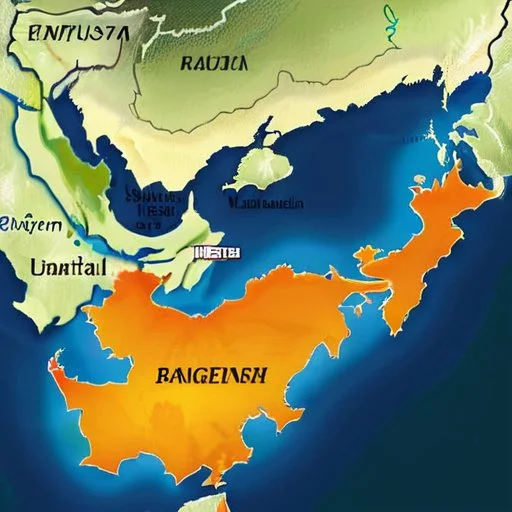
The Bangladesh Liberation War was characterized by a complex web of political alliances and rivalries. The war saw the emergence of new political actors, such as the Mukti Bahini, a guerrilla force comprising Bengali nationalist parties and left-wing groups.
The war also highlighted the significance of international diplomacy, with India playing a crucial role in supporting the Bangladesh Forces. The Indian government's decision to intervene in the conflict was motivated by a desire to counterbalance the influence of Pakistan and China in the region.
The war's outcome had far-reaching implications for the region's political dynamics, with Bangladesh emerging as a sovereign state and India solidifying its position as a regional power.
The Bangladesh Liberation War took place against the backdrop of the Cold War, with the United States and the Soviet Union vying for influence in the region. The war saw the emergence of new geopolitical alignments, with India and the Soviet Union forming a strategic partnership to counterbalance the influence of Pakistan and China.
The war had significant implications for the global balance of power, with the emergence of a new nation-state in South Asia and a shift in the regional power dynamics. The war also highlighted the importance of diplomacy and international cooperation in resolving conflicts and promoting regional stability.