


In the face of overwhelming pressure, Edvard Bene, the President of Czechoslovakia, made a bold decision that would change the course of his country's history. On May 9, 1948, Bene chose to resign from office rather than sign the NinthofMay Constitution, which would have solidified Czechoslovakia's fate as a Communist state.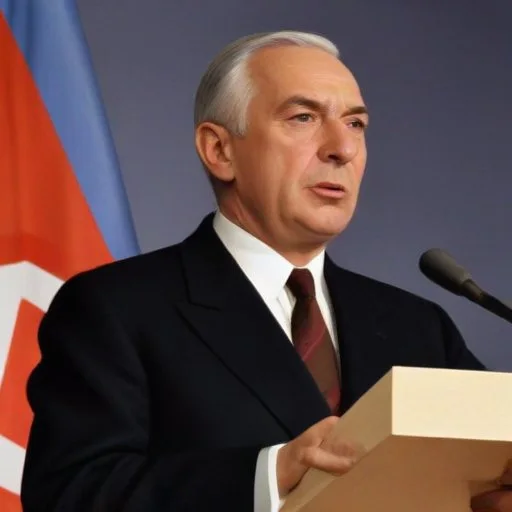
In the aftermath of World War II, Eastern Europe was in a state of flux. The Soviet Union, led by Joseph Stalin, was rapidly consolidating power and expanding its influence across the region. Czechoslovakia, a democratic nation, found itself caught in the crosshairs of the Soviet Union's ambitions.
In 1946, the Communist Party of Czechoslovakia, backed by the Soviet Union, began to gain popularity and influence. Led by Klement Gottwald, the party capitalized on the post-war sentiment and promised to bring about rapid modernization and economic growth. By 1948, the Communist Party had gained enough momentum to push for a new constitution that would cement its hold on power.
The NinthofMay Constitution, as it came to be known, was a carefully crafted document that would have transformed Czechoslovakia into a Communist state. The constitution would have given the Communist Party unparalleled power, limited individual freedoms, and aligned the nation's policies with those of the Soviet Union.
Faced with the prospect of signing the NinthofMay Constitution, Edvard Bene was torn. As a democrat and a patriot, he was deeply committed to preserving Czechoslovakia's independence and democratic values. However, as the President, he was also acutely aware of the consequences of defying the Soviet Union and the Communist Party.
After much contemplation, Bene made the difficult decision to resign from office rather than compromise his values. This bold move sent shockwaves throughout the nation and the international community. Although it was a personal defeat for Bene, his resignation served as a beacon of resistance against the Communist tide sweeping Eastern Europe.
Edvard Bene's courageous decision to resign may not have changed the course of Czechoslovakia's history, but it left an indelible mark on the nation's psyche. His actions inspired a generation of Czechs and Slovaks to continue fighting for democracy and independence. Today, Bene is remembered as a symbol of resistance against totalitarianism and a champion of democratic values.
In his memoirs, Edvard Bene wrote about the agonizing decision to resign, stating, "I knew that my decision would be seen as a betrayal by some, but I could not betray my conscience."
Years later, Bene would reflect on his decision, saying, "I did not want to be the President of a Communist state. I wanted to be the President of a free and independent nation."
Edvard Bene's courageous resignation serves as a powerful reminder of the importance of standing up for one's beliefs, even in the face of overwhelming opposition. His legacy continues to inspire individuals around the world to fight for democracy, freedom, and human rights.
The post-war political landscape of Eastern Europe was shaped by the Potsdam Conference, where the Allied Powers agreed to allow the Soviet Union to maintain a sphere of influence in the region. This led to the establishment of Soviet-backed governments in Poland, Hungary, and Romania, creating a communist bloc that Czechoslovakia found itself surrounded by.
The Soviet Union's expansionist policies were also driven by its need for economic resources and strategic locations. Czechoslovakia, with its rich industrial base and strategic location at the heart of Europe, was a prime target for Soviet expansion.
Edvard Bene, born in 1884, was a seasoned politician who had served as the Prime Minister of Czechoslovakia before becoming its President. A strong democrat and nationalist, Bene was committed to preserving his country's independence and democratic values.
Bene's presidency was marked by his attempts to navigate the complexities of Cold War politics, balancing the demands of the Soviet Union with the needs of his own people. His courageous decision to resign rather than compromise his values earned him a place in history as a champion of democracy.
The NinthofMay Constitution was not unique in its attempt to establish a communist state in Eastern Europe. Similar constitutions were being drafted in Poland, Hungary, and Romania, all aimed at consolidating communist power and aligning their policies with those of the Soviet Union.
However, the NinthofMay Constitution was distinct in its severity, stripping citizens of their basic rights and freedoms and giving the Communist Party unparalleled power. The constitution's provisions were even more draconian than those of the Soviet Union's own constitution.
The international community's response to Bene's resignation was lukewarm, with many Western governments prioritizing stability over democracy in the face of Soviet expansion. The United States, still reeling from the aftermath of World War II, was slow to respond to the crisis, allowing the Soviet Union to solidify its grip on Eastern Europe.
In the years that followed, the West would come to realize the significance of Bene's courageous stand, and the event would become a rallying cry for anti-communist movements across the world.
Edvard Bene's resignation had a profound impact on Czechoslovakian culture, inspiring a generation of artists, writers, and intellectuals to speak out against communist oppression. The event became a symbol of resistance against totalitarianism, and its legacy continues to be felt in Czech and Slovak literature, art, and music.
The event also led to a brain drain, as many intellectuals and artists fled the country to escape persecution. This exodus would have a lasting impact on Czechoslovakia's cultural landscape, depriving the nation of some of its most talented minds.