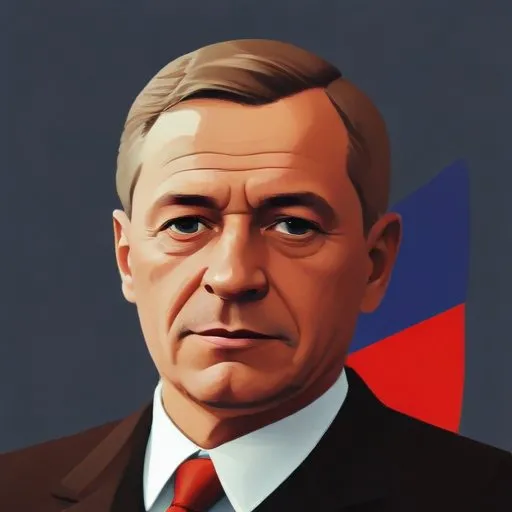
Klement Gottwald: The Architect of Communist Czechoslovakia
The Rise of a Communist Leader
Klement Gottwald was a Czech communist politician who led the Communist Party of Czechoslovakia from 1929 until his death in 1953, making him the first leader of Communist Czechoslovakia from 1948 to 1953. As the 14th prime minister of Czechoslovakia from July 1946 to June 1948, Gottwald played a crucial role in shaping the country's communist regime, earning him the title of "the architect of Communist Czechoslovakia."
Early Life and Influences
Gottwald was born on November 23, 1896, in either Dědice or Heroltice, Vykov, to an unmarried maidservant mother. His father was an ethnic Czech, while his mother was an ethnic German. Before World War I, Gottwald was trained as a carpenter in Vienna, where he actively participated in the Social Democratic youth movement.
Personal Life
Gottwald was married to Marta Gottwaldová, who came from a poor family and was an illegitimate child. Although Marta stood by him throughout his endeavors, she never joined the Communist Party. The couple had one daughter, Marta.
World War I and Early Career
From 1915 to 1918, Gottwald served as a soldier in the Austro-Hungarian Army during World War I. After the war, he became increasingly involved in the Czechoslovakian communist movement, eventually becoming the leader of the Communist Party of Czechoslovakia in 1929.
Exile and Unification
Following the collapse of democratic Czechoslovakia after the Munich Agreement, Gottwald was forced to emigrate to the Soviet Union in November 1938. In 1943, he agreed with representatives of the Czechoslovak government-in-exile to unify domestic and foreign anti-fascist resistance and form the National Front.
Rise to Power
In June 1948, Gottwald was elected as Czechoslovakia's first Communist president, four months after the 1948 coup d'état in which his party seized power with the backing of the Soviet Union. He held the post until his death in 1953.
Legacy and Controversy
Gottwald's leadership was marked by controversy, with some regarding him as a ruthless dictator who crushed opposition and dissent. However, others saw him as a champion of the working class and a key figure in Czechoslovakia's transition to communism. Today, Gottwald's legacy remains a topic of debate among historians and scholars.
Historical Context and Impact
Gottwald's rise to power coincided with the aftermath of World War II, when communist regimes were gaining traction across Eastern Europe. His leadership played a significant role in shaping Czechoslovakia's communist regime, which had far-reaching implications for the country's domestic and foreign policies.
Comparative Analysis with Contemporaries
Gottwald's leadership style and policies have been compared to those of other communist leaders of the time, including
Joseph Stalin and
Mao Zedong. While sharing similarities with these leaders, Gottwald's approach was unique in its emphasis on Czechoslovakian nationalism and its adaptation to the country's specific cultural and historical context.
Quotes and Memorable Sayings
Gottwald was known for his charismatic speeches and memorable quotes, including:
- "The working class must take power into its own hands, and the Party must become the vanguard of the working class."
- "We must build socialism in our own country, not in the style of the Soviet Union, but in our own Czechoslovakian way."
Farewell and Legacy
Klement Gottwald died on March 14, 1953, leaving behind a complex and controversial legacy. While his reign was marked by repression and authoritarianism, he remains an important figure in Czechoslovakian history, and his influence continues to be felt to this day.
FAQ
What is Klement Gottwalds most notable political achievement?
Klement Gottwald is best known for becoming the first Communist President of Czechoslovakia, leading the country through a period of significant political and economic transformation.
How did Klement Gottwalds early life influence his political views?
Klement Gottwalds early life, marked by poverty and hardship, influenced his development as a radical thinker and politician, drawn to the ideology of communism.
What is Klement Gottwalds legacy in Czechoslovakian politics?
Klement Gottwalds legacy in Czechoslovakian politics is complex and contested, marked by both achievements in social and economic reform, as well as criticisms of his authoritarian style and human rights abuses.
How did Klement Gottwalds relationship with the Soviet Union influence his political decisions?
Klement Gottwalds close ties to the Soviet Union and its leadership, particularly Joseph Stalin, significantly influenced his political decisions, leading to a period of Soviet dominance in Czechoslovakia.
What is Klement Gottwalds place in the history of Eastern European communism?
Klement Gottwald is remembered as a key figure in the history of Eastern European communism, his leadership marking a significant shift towards Soviet-style communism in Czechoslovakia.