


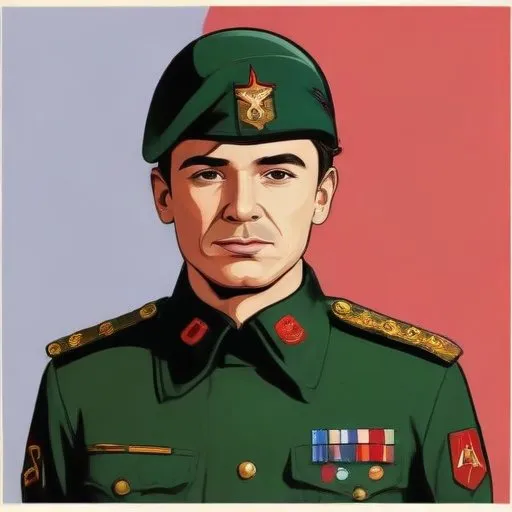
A Slovak politician who led a brief, failed attempt to reform communism in Czechoslovakia during the Prague Spring of 1968, known for his efforts to introduce democratic reforms.
Alexander Dubček, a Slovak statesman, is best known for his bold attempt to humanize socialism in Czechoslovakia during the Prague Spring, a period of unprecedented reform in 1968. As the First Secretary of the Communist Party of Czechoslovakia, Dubček oversaw significant cultural and economic liberalization, earning him the slogan "Socialism with a human face."
Born on November 27, 1921, in Uhrovský Ostrov, Slovakia, Dubček grew up in a rural family and was exposed to the harsh realities of poverty and inequality from a young age. He became involved in communist politics at an early age and quickly rose through the ranks, becoming a member of the Central Committee of the Communist Party of Czechoslovakia in 1955.
In January 1968, Dubček took office as the First Secretary of the Communist Party of Czechoslovakia, ushering in a period of unprecedented reform. He introduced measures to decentralize decision-making, increase democratic participation, and liberalize the economy. Dubček's reforms were met with widespread enthusiasm, and his popularity soared as he became known as the champion of "Socialism with a human face."
However, Dubček's reforms were opposed by conservative forces within the party and neighboring Soviet-bloc countries, who feared the spread of liberalization. On August 20, 1968, half a million Soviet-led Warsaw Pact troops invaded Czechoslovakia, crushing the Prague Spring and forcing Dubček to resign in April 1969. He was succeeded by Gustáv Husák, a former reformer turned Moscow loyalist.
After his resignation, Dubček was forced into relative obscurity, but he continued to advocate for democratic reforms. In 1989, following the Velvet Revolution, Dubček was elected Chairman of the Federal Assembly, a position he held until his death on November 7, 1992. Despite the setbacks, Dubček's legacy as a champion of humanized socialism continues to inspire generations of politicians and activists.
Dubček's vision of "Socialism with a human face" was rooted in his commitment to democratic participation, individual freedom, and economic decentralization. He believed that socialism could be reformed to prioritize human well-being over ideological dogma, and his reforms reflected this philosophy.
Dubček's legacy extends beyond Czechoslovakia, inspiring democratic movements across the Soviet-bloc countries and beyond. His vision of humanized socialism continues to influence political discourse, reminding us that even in the darkest of times, there is always room for hope and reform.
"We want to decentralize power, not concentrate it. We want to give back to the people the right to decide their own affairs."
"Socialism with a human face is not a tactic, but a strategy. It is not a phrase, but a program."
Born in 1913
Led the Communist Party of Czechoslovakia, implementing reforms and normalizing relations with the Soviet Union after the Prague Spring. Known for his role in shaping the country's post-war history.
89 Years Old
A Czech poet, playwright, and politician who led the country's transition from communism to democracy, and is known for his advocacy of human rights and individual freedom.
Born in 1906
A Soviet leader who ruled with an iron fist, implementing policies that stagnated the economy and suppressed dissent, while also being a key figure in the Cold War. He's infamous for his authoritarian regime and bureaucratic inefficiency.
95 Years Old
The last leader of the Soviet Union, who introduced reforms that led to the end of the Cold War and the collapse of communism, earning a Nobel Peace Prize. He's known for his policies of glasnost and perestroika, which transformed the Soviet Union and the world.
Born in 1913
A German statesman who served as Chancellor of Germany, known for his efforts to reconcile with Eastern Europe and his "Ostpolitik" policy, earning him a Nobel Peace Prize.
Born in 1918
A German leader who served as Chancellor from 1974 to 1982, known for his pragmatic and socially liberal policies, and his key role in shaping the European Union. He was also a respected economist and published author.
Born in 1915
A prominent post-war German politician who served as Minister President of Bavaria and played a key role in shaping the country's conservative politics. He was also a strong advocate for European integration.
