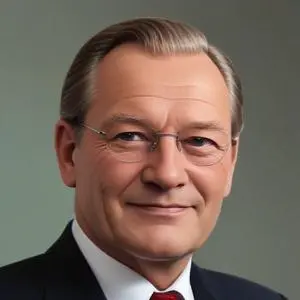
Willy Brandt: The German Statesman and Nobel Peace Prize Laureate
A Champion of Peace and Reconciliation
Willy Brandt, born Herbert Ernst Karl Frahm, was a German politician and statesman who left an indelible mark on modern history. He is best known for his efforts to strengthen cooperation in Western Europe and achieve reconciliation between West Germany and Eastern Europe, earning him the Nobel Peace Prize in 1971.
Early Life and Career
Born on December 18, 1913, in Lübeck, Germany, Brandt fled to Norway and then Sweden during the Nazi regime to escape persecution. He worked as a left-wing journalist, adopting the pseudonym Willy Brandt to avoid detection by Nazi agents. After the war, he formally adopted the name in 1948. Brandt's early political career saw him rise through the ranks of the Social Democratic Party of Germany (SPD), eventually becoming the leader of the party from 1964 to 1987.
Rise to Prominence
Brandt's initial claim to fame came as the Governing Mayor of West Berlin, where he implemented policies aimed at improving the lives of Berliners during a tumultuous period. He then served as foreign minister and vice chancellor in
Kurt Georg Kiesinger's cabinet, laying the groundwork for his eventual rise to the chancellorship in 1969.
Ostpolitik and European Integration
As chancellor, Brandt's foreign policy centered around his groundbreaking Ostpolitik initiative, aimed at improving relations with Eastern Europe. This bold approach led to significant diplomatic breakthroughs, including the signing of the Moscow Treaty in 1970 and the Warsaw Treaty in 1971. Brandt's commitment to European integration saw him strengthen ties with Western Europe, paving the way for Germany's eventual reunification.
The Kniefall von Warschau
One of the most enduring images of Brandt's tenure as chancellor is the "Kniefall von Warschau" – his spontaneous act of kneeling and meditation in silence at the Warsaw Ghetto Uprising memorial in 1970. This powerful gesture of contrition and apology marked a turning point in Germany's post-war relations with Eastern Europe.
Controversies and Criticisms
Brandt's policy initiatives did not go unchallenged. He faced criticism from both the left and right wings of the political spectrum. His silence on the Vietnam War until 1973 and his support for right-wing authoritarian regimes sparked controversy. Additionally, his Radikalenerlass (Anti-Radical Decree) in 1972 sparked debate about the balance between national security and individual freedoms.
The Brandt Report and Legacy
The Brandt Report, published in 1980, provided a framework for understanding the North-South divide in global economics and politics. This influential document acknowledged the vast disparities between affluent and poor nations, shaping international development policy for decades to come. Brandt's commitment to peace, reconciliation, and cooperation has left a lasting impact on modern society, cementing his status as one of the most important European leaders of the 20th century.
Awards and Honors
- Nobel Peace Prize (1971)
- Grand Cross of the Federal Republic of Germany (1959)
- Peace Prize of the German Book Trade (1973)
Personal Life and Later Years
Brandt resigned as chancellor in 1974, but continued to serve as the leader of the SPD until 1987. He passed away on October 8, 1992, at the age of 78. Throughout his life, Brandt remained committed to his core values of peace, reconciliation, and social justice, leaving behind a legacy that continues to inspire and influence leaders around the world.
FAQ
What was Willy Brandts most notable achievement as Chancellor of Germany?
Willy Brandts most notable achievement as Chancellor of Germany was his Ostpolitik policy, which sought to improve relations with Eastern Europe and the Soviet Union, leading to a period of détente in the Cold War.
How did Willy Brandts experiences shape his political views?
Willy Brandts experiences as a Norwegian exile during World War II and his involvement in the German resistance movement shaped his political views, informing his commitment to democracy and human rights.
What was Willy Brandts role in the European integration process?
Willy Brandt played a key role in the European integration process, pushing for greater cooperation and unity among European countries. He received the Nobel Peace Prize in 1971 for his efforts.
How did Willy Brandts policies address social and economic issues in Germany?
Willy Brandts policies addressed social and economic issues in Germany by promoting social justice, expanding education and healthcare, and investing in infrastructure and urban development.
What is Willy Brandts legacy in modern German politics?
Willy Brandts legacy in modern German politics is that of a visionary leader who promoted peace, democracy, and social justice. His Ostpolitik policy continues to influence German foreign policy, and his commitment to European integration remains a cornerstone of German politics.