


On May 14, 1796, Edward Jenner, a British physician, dared to challenge the status quo by administering the first smallpox inoculation to an 8-year-old boy, James Phipps. This pioneering act marked the beginning of a medical revolution that would eventually lead to the eradication of smallpox, a disease that had claimed millions of lives for centuries.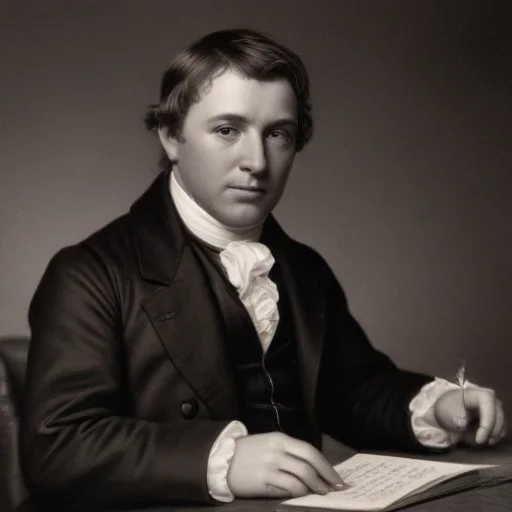
Edward Jenner was no ordinary doctor. He was a passionate advocate for vaccination, driven by a fierce determination to combat smallpox, the scourge of his time. His fascination with the disease began when he noticed that milkmaids who had contracted cowpox, a similar virus, were immune to smallpox. This observation sparked a bold idea: what if he could deliberately expose someone to cowpox to induce immunity against smallpox?
On that fateful day in May, Jenner carefully exposed James Phipps to cowpox, taking a calculated risk that could have gone horribly wrong. He made a small incision on James' arm and inserted a tiny amount of cowpox-infected material, anxiously waiting for the outcome. The days that followed were filled with tension as James developed a mild fever, but crucially, he did not contract smallpox.
Jenner's experiment was a resounding success, paving the way for the development of modern vaccines. The news of his discovery spread like wildfire, and soon, people from all walks of life were clamoring to receive the smallpox inoculation. The impact was swift and profound, with smallpox cases plummeting in the years that followed. In 1980, the World Health Organization officially declared smallpox eradicated, a testament to Jenner's groundbreaking work.
Edward Jenner's bravery and ingenuity have inspired countless generations of medical professionals, scientists, and researchers. His work has saved millions of lives and continues to shape the field of immunology. Today, vaccination is a cornerstone of modern medicine, and we owe it all to the passion and vision of a single individual who dared to challenge the unknown.
"The deviation of man from the state in which he was originally placed by nature seems to have proved to him a prolific source of diseases." - Edward Jenner
In recognition of his monumental contribution, Edward Jenner was elected a Fellow of the Royal Society in 1789. Today, his legacy lives on through the numerous awards, honors, and institutions that bear his name, a testament to the enduring impact of his work.
Edward Jenner's pioneering work on smallpox inoculation has been the subject of extensive historiographical analysis. Historians have debated the role of Jenner's discovery in the broader context of medical history, with some arguing that it marked a paradigm shift in the understanding of disease prevention.
Others have situated Jenner's work within the framework of the Enlightenment, highlighting the influence of scientific rationality and empirical observation on his approach to medicine.
Jenner's experiment has also been seen as a symbol of the power of human curiosity and innovation, inspiring generations of scientists and researchers to pursue groundbreaking discoveries.
Little is known about James Phipps, the 8-year-old boy who volunteered to receive the first smallpox inoculation. However, his bravery and willingness to participate in Jenner's experiment played a crucial role in the success of the venture.
As a milkmaid's son, James was likely familiar with the risks and challenges of smallpox, making his decision to participate even more remarkable. Through his bravery, James Phipps helped pave the way for a medical revolution that would save countless lives.The eradication of smallpox has had a profound impact on human culture, symbolizing the power of human ingenuity and collaboration in the face of adversity.
In many cultures, smallpox was seen as a curse or a punishment from the gods, and its eradication has been hailed as a triumph of modern medicine over superstition and ignorance.
The legacy of smallpox eradication continues to inspire public health campaigns and vaccination initiatives around the world, serving as a powerful symbol of the importance of global cooperation in the face of disease.
Edward Jenner's development of the smallpox vaccine marked a significant milestone in the history of vaccination technology.
The use of cowpox as a vaccine substrate sparked a new wave of research into the development of attenuated vaccines, paving the way for the creation of modern vaccines against diseases such as measles, mumps, and rubella.
Jenner's innovation has also led to the development of advanced vaccine delivery systems, including jet injectors and microneedle patches, which have revolutionized the field of immunization.Edward Jenner's contributions to the field of immunology extend far beyond his development of the smallpox vaccine.
His work on the transmission of cowpox and its relationship to smallpox helped lay the foundation for modern virology, and his observations on the role of immunity in disease prevention paved the way for the development of modern immunology.
Jenner's scientific legacy continues to influence research into infectious diseases, and his work remains a cornerstone of modern vaccine development.