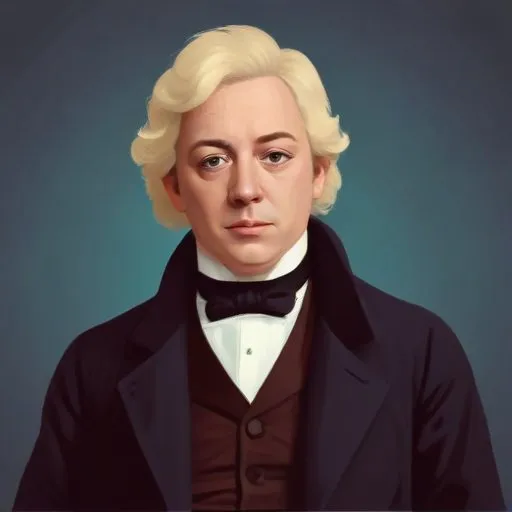
Edward Jenner: The Father of Immunology and Savior of Lives
The Pioneering Spirit Behind the Smallpox Vaccine
Edward Jenner is widely regarded as the father of immunology, and his groundbreaking work on the smallpox vaccine has saved more lives than any other person in history. In 1798, Jenner published his landmark paper, "An Inquiry into the Causes and Effects of the Variolae Vaccinae," which introduced the concept of vaccination and paved the way for the development of vaccines against other diseases.
Early Life and Education
Born on May 17, 1749, in Berkeley, Gloucestershire, England, Edward Jenner was the eighth of nine children to Reverend Stephen Jenner, the vicar of Berkeley. He received a strong basic education and was inoculated against smallpox by variolation, an experience that would have a lasting impact on his health and later work.
At the age of 14, Jenner was apprenticed to Daniel Ludlow, a surgeon in Chipping Sodbury, where he gained extensive experience in surgery and anatomy. In 1770, he continued his training under the renowned surgeon John Hunter in London.
The Birth of Vaccination
Jenner's observations of cowpox, a disease that affected cattle, led him to develop the smallpox vaccine. He noticed that milkmaids who had contracted cowpox were immune to smallpox, and he experimented with exposing people to a mild form of cowpox to build immunity against smallpox.
The term "vaccine" and "vaccination" originated from Jenner's work, derived from the Latin word "Variolae vaccinae," meaning "pustules of the cow."
Legacy and Honors
Jenner's pioneering work earned him numerous accolades, including:
- Appointment as physician to King George IV in 1821
- Election as a fellow of the Royal Society
- Mayoralty of Berkeley and justice of the peace
- Inclusion in the BBC's list of the 100 Greatest Britons in 2002
In addition to his groundbreaking work in immunology, Jenner made significant contributions to the field of zoology. He was among the first modern scholars to describe the brood parasitism of the cuckoo, a behavior also noted by Aristotle in his "History of Animals."
Personal Life and Milestones
Edward Jenner married Catherine Kingscote in 1788, and they had five children together. He died on January 26, 1823, at the age of 73, leaving behind a legacy that continues to inspire scientists and save lives around the world.
Jenner's work not only revolutionized the field of medicine but also had a profound impact on modern society, saving an estimated 200 million lives in the 20th century alone.
Conclusion
Edward Jenner's remarkable story serves as a testament to the power of curiosity, perseverance, and innovation. His pioneering work in immunology has left an indelible mark on human history, and his legacy continues to inspire and protect generations to come.
FAQ
What was Edward Jenners contribution to medicine?
Edward Jenner was an English physician and microbiologist who developed the smallpox vaccine, revolutionizing the field of medicine and saving countless lives. His discovery paved the way for modern vaccination techniques.
How did Edward Jenner develop the smallpox vaccine?
Edward Jenner observed that milkmaids who had contracted cowpox, a similar virus, were immune to smallpox. He developed the vaccine by exposing people to a mild form of cowpox, which would provide immunity to smallpox without causing the full-blown disease.
What was Edward Jenners role in the Royal Society?
Edward Jenner was a Fellow of the Royal Society, a prestigious organization dedicated to promoting scientific discovery and intellectual inquiry. He was recognized for his groundbreaking work in the field of microbiology and vaccination.
Did Edward Jenner receive any awards for his work?
Yes, Edward Jenner was awarded the Royal Societys Copley Medal in 1799 for his outstanding contributions to science. He was also granted a royal pension in recognition of his work.
How did Edward Jenners discovery impact public health?
Edward Jenners development of the smallpox vaccine led to the widespread adoption of vaccination programs, significantly reducing the incidence of smallpox and saving millions of lives. His discovery is considered one of the most important medical breakthroughs in history.