Egypt and Syria launch surprise attack on Israel
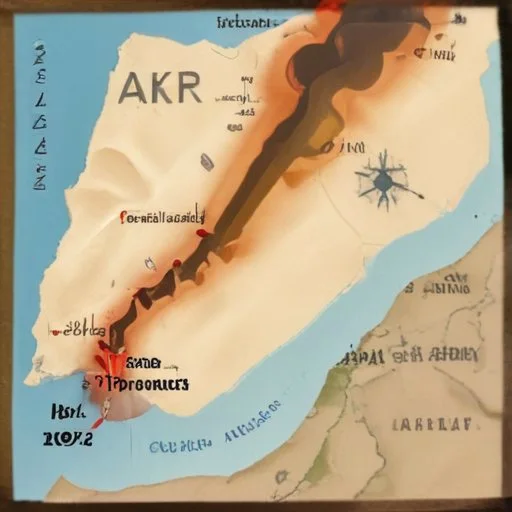
In a daring move, Egyptian and Syrian forces, fueled by a desire for revenge and a quest for Arab pride, simultaneously launched a surprise attack on Israel on the holiest day of the Jewish calendar, catching the Israeli Defense Forces off guard. As Israeli troops scrambled to mobilize, Egyptian forces poured across the Suez Canal, while Syrian forces stormed the Golan Heights. The coordinated assault, which would become known as the Yom Kippur War, sent shockwaves throughout the region, sparking a 20-day conflict that would claim thousands of lives and redraw the geopolitical landscape of the Middle East.
The Yom Kippur War: A Coordinated Surprise Attack that Redefined the Middle East
The Yom Kippur War, also known as the October War, is infamous for being one of the most unexpected and daring military operations in modern history. On the holiest day of the Jewish calendar, Egypt and Syria launched a synchronized assault on Israel, catching the Israeli Defense Forces off guard and changing the face of the Middle East forever.
A Day of Deception
October 6, 1973, was a day of great significance for the Jewish community. Yom Kippur, the Day of Atonement, is a sacred holiday where Jews around the world fast, reflect, and seek forgiveness. In Israel, it was a day of tranquility, with many soldiers on leave, enjoying time with their families. Little did they know, their Arab neighbors were secretly planning a surprise attack.
The Masterminds Behind the War
Two key figures played a crucial role in orchestrating the Yom Kippur War: Egyptian President Anwar El-Sadat and Syrian President
Hafez al-Assad. Both leaders shared a common goal – to reclaim land lost in the 1967 Six-Day War and restore Arab pride.
Anwar El-Sadat: The Architect of Surprise
Anwar El-Sadat, known for his cunning and strategic thinking, was the mastermind behind the war. He carefully planned the operation, using deception and misdirection to ensure a successful surprise attack.
Hafez al-Assad: The Syrian Strongman
Hafez al-Assad, a ruthless and calculating leader, brought Syria into the fold, providing a crucial second front against Israel. His regime was notorious for its brutality, and the war would prove to be no exception.
The War Unfolds
On October 6, 1973, Egyptian and Syrian forces launched a coordinated assault on Israel. Egyptian troops, accompanied by a relentless artillery barrage, stormed across the Suez Canal, while Syrian forces attacked the Golan Heights.
- The initial attack caught Israel off guard, with many soldiers still on leave or observing Yom Kippur.
- The Israeli Air Force, in particular, was unprepared, with many pilots away on vacation.
- The Egyptian and Syrian armies made significant gains in the early days of the war, pushing deep into Israeli-held territory.
A Desperate Defense
As the war raged on, Israel's situation grew increasingly desperate. The country's military leaders scrambled to mobilize troops, while Prime Minister
Golda Meir appealed to the United States for emergency military aid.
- The Israeli military, led by General Ariel Sharon, launched a series of counterattacks to stem the tide of the Arab advance.
- The United States, responding to Israel's pleas, initiated Operation Nickel Grass, a massive airlift of military supplies and equipment.
- Soviet Union, backing the Arab states, threatened to intervene, bringing the world to the brink of a nuclear war.
A Bitter End to the War
After 20 days of intense fighting, the war came to an end on October 25, 1973. The Israeli military had managed to regain lost territory, but at a great cost.
- The war claimed the lives of over 2,500 Israeli soldiers and 10,000 Egyptian and Syrian troops.
- The conflict also led to a global oil embargo, sparking a severe economic crisis in the West.
- The war marked a significant shift in the balance of power in the Middle East, with Egypt and Syria emerging as major players.
A Lasting Legacy
The Yom Kippur War had far-reaching consequences, shaping the modern Middle East and beyond.
- The war led to the 1978 Camp David Accords, a historic peace agreement between Israel and Egypt.
- The conflict accelerated the development of the Israeli military-industrial complex, making Israel one of the world's leading arms manufacturers.
- The war also highlighted the importance of intelligence gathering and surprise attacks, influencing military doctrine around the world.
The Yom Kippur War serves as a poignant reminder of the devastating consequences of war and the importance of diplomacy in preventing future conflicts. As we reflect on this pivotal event, we are reminded that the pursuit of peace and stability in the Middle East remains an ongoing challenge.
Character Overview
Anwar El-Sadat's Early Life and Rise to Power
Anwar El-Sadat was born on December 25, 1918, in Mit Abu al-Kum, Egypt. Growing up in a family of 13 children, Sadat's early life was marked by poverty and struggle. Despite these challenges, he was an exceptional student and graduated from the Egyptian Royal Military Academy in 1938.
Sadat's rise to power began during the 1952 Egyptian Revolution, when he joined forces with Gamal Abdel Nasser to overthrow King Farouk. As Nasser's ally, Sadat played a key role in the new government, eventually becoming Vice President in 1964.
After Nasser's death in 1970, Sadat succeeded him as President of Egypt, marking the beginning of a new era in Egyptian politics. Sadat's presidency was characterized by a desire to reform the Egyptian economy, improve relations with the United States, and reclaim lost territory from Israel.

Economic Impact Analysis
The Economic Fallout of the Yom Kippur War
The Yom Kippur War had far-reaching economic consequences that affected not only the combatant countries but also the global economy. The 1973 oil embargo, led by OAPEC (Organization of Arab Petroleum Exporting Countries), quadrupled oil prices, leading to a severe economic crisis in the West.
The war also disrupted global trade, as countries sympathetic to Israel faced economic boycotts from Arab nations. The economic instability sparked hyperinflation, widespread unemployment, and a sharp decline in international trade.
In the aftermath of the war, the United States and Europe began to diversify their energy sources, reducing their dependence on Arab oil. This shift marked a significant turning point in the global energy landscape, with major implications for the world economy.
Extensive Historical Chronicle
The Egyptian Army's Crossing of the Suez Canal
On October 6, 1973, the Egyptian Army launched Operation Badr, a daring assault on Israeli forces across the Suez Canal. The operation was a masterpiece of military planning, with Egyptian engineers constructing 60 bridges and 10 pontoon ferries to transport troops and equipment across the canal.
The initial crossing was preceded by a massive artillery barrage, which caught Israeli forces off guard. As Egyptian troops poured across the canal, they quickly established a foothold on the eastern bank, catching the Israeli military off balance.
The successful crossing of the Suez Canal was a crucial turning point in the war, as it allowed Egyptian forces to push deep into the Sinai Peninsula and threaten Israel's southern flank.

Thorough Political Analysis
The Yom Kippur War's Impact on Israeli Politics
The Yom Kippur War marked a significant shift in Israeli politics, as the country's leadership faced intense scrutiny for its handling of the war. Prime Minister Golda Meir's government was criticized for its complacency and failure to anticipate the Arab attack.
The war led to widespread anger and disappointment among the Israeli public, who felt that their government had put them in harm's way. In the aftermath of the war, Israel's political scene underwent a significant transformation, with the Likud party, led by Menachem Begin, rising to power.
The war also led to increased scrutiny of Israel's military doctrine, with many calling for a more aggressive and proactive defense strategy. This shift in perspective paved the way for Israel's subsequent military buildup and expansion.
Detailed Geopolitical Context
The Geopolitical Context of the Yom Kippur War
The Yom Kippur War was fought against the backdrop of a complex and volatile international landscape. The Cold War was at its height, with the United States and the Soviet Union vying for influence in the Middle East.
In this context, the war was seen as a proxy conflict between the superpowers, with the United States backing Israel and the Soviet Union supporting Egypt and Syria. The war marked a significant shift in the balance of power in the region, as the Soviet Union's influence waned and the United States emerged as the dominant player.
The war also highlighted the importance of the Middle East as a strategic region, with control of the Suez Canal and access to oil resources at stake. The war marked a turning point in the global struggle for power and influence, with far-reaching implications for international relations.


