


In a stunning turn of events, Emperor Haile Selassie, the revered monarch of Ethiopia and spiritual leader of the Rastafari movement, was toppled from power in a military coup staged by the Derg, a faction of the Ethiopian military. This marked the end of a remarkable 58-year reign, which had seen the emperor navigate the complexities of colonialism, modernization, and social change.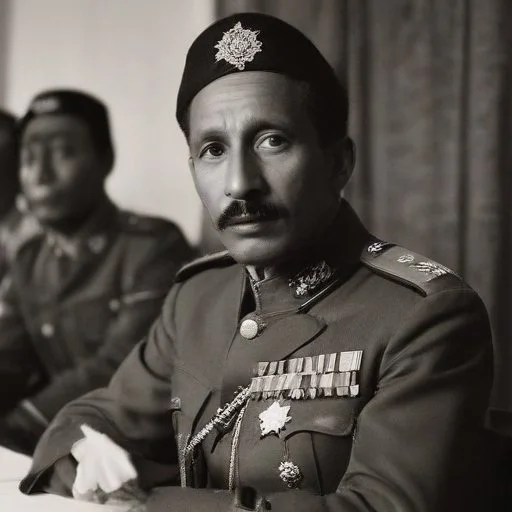
Haile Selassie's rise to power was marked by a series of dynastic struggles and internal conflicts, but it was his coronation in 1930 that cemented his position as the 225th ruler of the Solomonic dynasty. During his early years, he worked tirelessly to modernize Ethiopia, introducing reforms in education, healthcare, and infrastructure. However, it was his leadership during World War II, particularly his advocacy for African unity and independence, that earned him international recognition and admiration.
In the 1960s and 1970s, Ethiopia faced a series of economic and political challenges, including drought, famine, and social unrest. The Derg, a group of radical Marxist officers, saw an opportunity to capitalize on the growing discontent and began secretly organizing a coup. Led by Mengistu Haile Mariam, a charismatic and ruthless leader, the Derg slowly gained momentum, eventually staging a successful putsch on September 12, 1974.
The day of the coup was marked by chaos and confusion, as loyalist troops fought valiantly but ultimately in vain against the rebel forces. Haile Selassie, then 82 years old, was taken into custody and placed under house arrest. The Derg, now in control, quickly set about consolidating their power, purging the government and military of potential opponents, and imposing a rigid Marxist-Leninist ideology on the country.
Haile Selassie's reign had seen the rise of the Rastafari movement, a global phenomenon that reverberated far beyond Ethiopia's borders. The emperor's messianic status among Rastafarians, who saw him as a symbol of black empowerment and redemption, added a layer of complexity to the coup and its aftermath. The Derg's suppression of Rastafarianism and other opposition groups would later become a defining feature of their brutal regime.
Despite the tumultuous circumstances of his downfall, Haile Selassie's legacy continues to inspire generations of Africans and people around the world. His unwavering commitment to pan-Africanism, his resistance to colonialism, and his advocacy for human rights and social justice remain a beacon of hope and a testament to the power of visionary leadership.
As the Rastafarian saying goes, "Jah lives, and Haile Selassie is His prophet." Though the emperor may have fallen, his spirit and ideals continue to resonate, inspiring us to strive for a world of justice, equality, and peace.
The road to the 1974 coup was paved by a series of events that had been unfolding for years. In the early 1970s, Ethiopia was plagued by a devastating famine that had left millions in dire need of food and aid. Haile Selassie's government was criticized for its slow response to the crisis, which further eroded the emperor's popularity.
The Derg, led by Mengistu Haile Mariam, capitalized on the growing discontent among the population. They began to secretly organize a coup, exploiting the divisions within the military and the government. The group's Marxist-Leninist ideology resonated with many young officers who were disillusioned with the monarchy and its perceived incompetence.
In the months leading up to the coup, the Derg staged a series of protests and demonstrations, calling for more radical reforms and greater state control over the economy. The government, already weakened by internal divisions and external pressures, was unable to respond effectively to the growing unrest.
Mengistu Haile Mariam, the leader of the Derg, was a complex and enigmatic figure. Born in 1937, Mengistu rose through the ranks of the Ethiopian military, becoming a colonel by the age of 35. He was known for his charisma and cunning, as well as his ruthless determination to achieve his goals.
Despite his brutal methods, Mengistu was a skilled politician who was able to rally support among the military and the radical left. He was convinced that the only way to bring about true change in Ethiopia was through a brutal and violent revolution, and he was willing to do whatever it took to achieve his vision.
Mengistu's rise to power marked a turning point in Ethiopian history, as the country began its descent into a dark period of repression, violence, and famine.
The 1974 Ethiopian coup shares striking similarities with other military coups that took place in Africa during the 1960s and 1970s. In many cases, these coups were led by radicalized military officers who were disillusioned with the corruption and nepotism of the ruling elite.
Like the Ethiopian coup, many of these coups were marked by a wave of violence and repression, as the new rulers sought to consolidate their power and eliminate potential opponents. In some cases, such as in Ghana and Nigeria, the coups led to the establishment of military dictatorships that would last for decades.
The Ethiopian coup, however, was unique in its ideological underpinnings. The Derg's Marxist-Leninist ideology set it apart from other African coups, which were often driven by more pragmatic or nationalist considerations.
Haile Selassie's reign had a profound impact on Ethiopian culture, as he sought to modernize and Westernize the country. He introduced reforms in education, healthcare, and infrastructure, which helped to create a more modern and cosmopolitan society.
The emperor was also a patron of the arts, and his court attracted many prominent Ethiopian artists, intellectuals, and musicians. He encouraged the development of Amharic literature and music, which helped to promote a sense of national identity and pride.
Haile Selassie's cultural legacy continues to be felt in Ethiopia today, as the country celebrates its rich cultural heritage and its unique identity.
Haile Selassie's legacy is deeply tied to his philosophical and ideological beliefs. As a pan-Africanist, he was committed to the unity and liberation of African nations, and he played a key role in the formation of the Organization of African Unity.
As a Rastafarian symbol, Haile Selassie embodied the ideals of black empowerment and redemption. He was seen as a messianic figure, a symbol of resistance against colonialism and oppression.
Haile Selassie's philosophical and ideological legacy continues to inspire generations of Africans and people of African descent around the world.