Puyi Renounces Manchukuo Throne to China
In a dramatic turn of events, Puyi, the last emperor of China and the Kangde Emperor of Manchukuo, surrendered his throne, dissolving the puppet state of Manchukuo and ceding its territory to the Republic of China. As the Japanese Empire crumbled, Puyi, once a symbol of Chinese collaboration with the Japanese, faced the reality of defeat and abandoned his throne at Talitzou, near the Sino-Korean border. The fall of Manchukuo marked a significant milestone in China's struggle against Japanese occupation and paved the way for the country's reunification.
The Dramatic Fall of Manchukuo: Puyi's Surrender at Talitzou
The winter of 1945 marked a pivotal moment in Chinese history as Puyi, the last emperor of China and the Kangde Emperor of Manchukuo, relinquished his throne, dissolving the puppet state of Manchukuo and ceding its territory to the Republic of China. This event, known for its dramatic turn of events and profound implications, unfolded at Talitzou, a small town situated near the Sino-Korean border.
Historical Background: The Rise and Fall of Manchukuo
In 1932, Puyi, who had previously ruled China as the Xuantong Emperor, was installed by the Japanese as the puppet emperor of Manchukuo, a newly created state carved out of northeastern China. The state was established following the Japanese invasion of Manchuria, a region rich in natural resources. For over a decade, Manchukuo served as a vital buffer zone for the Japanese Empire, providing access to China's vast markets and resources.
Puyi's Descent into Defeat
As World War II drew to a close, the Japanese Empire began to crumble. In the face of overwhelming Soviet and American forces, Puyi's fragile state teetered on the brink of collapse. The once-mighty Japanese army, which had propped up Manchukuo, began to withdraw from the region, leaving Puyi and his government vulnerable to the advancing Chinese forces.
The Surrender at Talitzou
On August 15, 1945, Puyi, realizing the futility of his situation, formally renounced the imperial throne, dissolving the state of Manchukuo and ceding its territory to the Republic of China. This historic event took place at Talitzou, a small town near the Sino-Korean border, marking the end of an era and the beginning of a new chapter in Chinese history.
Major Outcomes and Impacts
The fall of Manchukuo had significant consequences for China and the region. The reunification of China, long divided by warlordism and foreign occupation, was finally within reach. The surrender also paved the way for the establishment of the People's Republic of China in 1949, led by
Mao Zedong and the Communist Party.
- The return of Manchuria to Chinese control marked a significant shift in the regional balance of power.
- The fall of Manchukuo led to the repatriation of millions of Chinese citizens who had been displaced during the war.
- The event marked a symbolic end to the era of foreign occupation and domination in China.
Cultural and Social Influences
Puyi's surrender at Talitzou had far-reaching cultural and social implications. The event marked a turning point in China's struggle against foreign domination, inspiring a new sense of national pride and identity. The fall of Manchukuo also paved the way for the revival of traditional Chinese culture, long suppressed under Japanese rule.
Personal Accounts and Anecdotes
In his memoirs, Puyi recalled the surrender at Talitzou with a sense of melancholy and regret. "As I departed from the palace, I felt as though I was abandoning my ancestors and my people," he wrote. This poignant account offers a glimpse into the complex emotions of a man who had once ruled China, only to surrender to the tides of history.
Impact on Future Events
The fall of Manchukuo at Talitzou had significant implications for China's future. The event marked a crucial step towards national reunification, paving the way for the establishment of the People's Republic of China in 1949. This, in turn, set the stage for China's emergence as a global power in the decades that followed.
By examining this pivotal event, we gain a deeper understanding of the complex tapestry of Chinese history, woven from threads of power, identity, and resistance. The surrender at Talitzou serves as a powerful reminder of the resilience and determination of the Chinese people in the face of foreign occupation and domination.
Detailed Character Insight
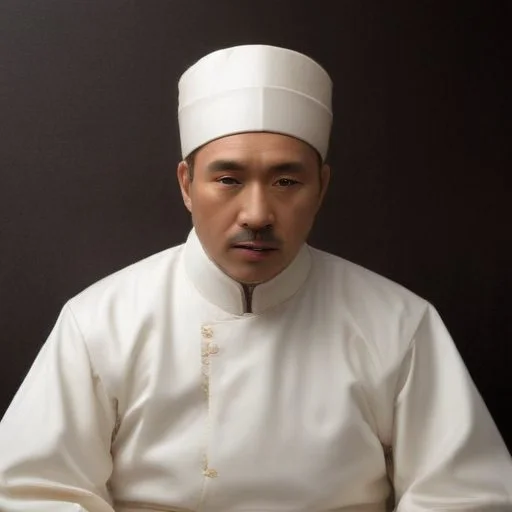
Puyi: A Life of Turmoil and Transition
Puyi, the last emperor of China, led a life marked by turmoil and transition. Born in 1906, Puyi ascended to the throne at the age of two, only to be forced to abdicate in 1912. His life thereafter was a series of attempts to regain power and relevance, ultimately culminating in his installation as the Kangde Emperor of Manchukuo.
Despite his tumultuous life, Puyi was known for his intelligence, curiosity, and love of luxury. He was fascinated by Western culture and spent much of his free time reading about European history and culture.
A Complex Legacy
Puyi's legacy is a complex one, marked by both tragedy and farce. While he was a symbol of Chinese tradition and culture, his collaboration with the Japanese and his role in the puppet state of Manchukuo have been widely criticized. Despite this, Puyi remains an important figure in Chinese history, a reminder of the complexities and challenges of the 20th century.
Extensive Historical Chronicle
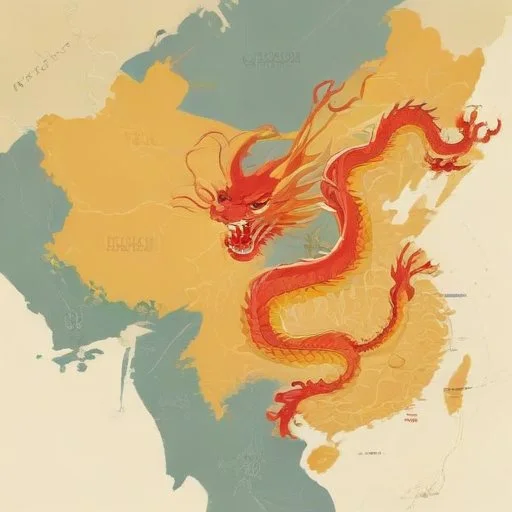
The Japanese Invasion of Manchuria
The Japanese invasion of Manchuria in 1931 was a pivotal event in the lead-up to World War II. The invasion, sparked by the Mukden Incident, marked the beginning of Japan's aggressive expansion into Asia.
The Japanese Kwantung Army, led by General Shigeru Honjō, quickly overran the region, defeating the Chinese warlord Zhang Xue-liang and establishing the puppet state of Manchukuo.
The International Response
The international community was initially slow to respond to the invasion, with many nations viewing it as a localized conflict. However, as the scale of Japan's aggression became clear, the League of Nations condemned the invasion, and the United States imposed economic sanctions on Japan.
Detailed Cultural Impact Report
The Cultural Significance of Manchukuo
Despite its status as a puppet state, Manchukuo played a significant role in the cultural development of northeast China. The Japanese occupation led to the introduction of new technologies, infrastructure, and cultural practices, which had a lasting impact on the region.
The establishment of Manchukuo also led to the creation of new cultural institutions, including the Manchukuo State Opera and the Manchuria Motion Picture Corporation. These institutions helped to promote traditional Chinese culture, as well as introduce new forms of entertainment and art.
A Legacy of Cultural Exchange
The cultural exchange between Japan and China during the period of Manchukuo had a lasting impact on both nations. It marked the beginning of a period of cultural exchange and cooperation that continued long after the fall of Manchukuo.
Economic Consequence Analysis
The Economic Costs of Manchukuo
The establishment and maintenance of Manchukuo came at a significant economic cost to China and the region. The Japanese occupation led to the exploitation of Manchuria's natural resources, including coal, iron, and oil.
The construction of infrastructure, including roads, railways, and ports, while modernizing the region, also drained the resources of the Chinese government and led to significant economic burdens.
A Legacy of Economic Dependence
The economic legacy of Manchukuo continued long after its fall, with the region remaining heavily dependent on foreign investment and trade. The exploitation of Manchuria's natural resources also had a lasting impact on the regional environment.
Thorough Political Analysis
The Political Consequences of Manchukuo's Fall
The fall of Manchukuo marked a significant shift in the political landscape of China and the region. The collapse of the Japanese Empire and the defeat of the Nationalist government led to a power vacuum that the Communist Party of China (CPC) was quick to fill.
The CPC, led by Mao Zedong, capitalized on the nationalist sentiment and anti-Japanese feelings that had grown during the war, using them to build support for their revolution.
The Rise of Communism
The fall of Manchukuo paved the way for the establishment of the People's Republic of China in 1949, marking the beginning of a new era in Chinese history. The Communist government would go on to play a significant role in regional and global politics, shaping the course of the Cold War and beyond.


