


The war unfolded rapidly, with the Argentine invasion on April 2, followed by the British response on April 5. The UK assembled a task force, which sailed 8,000 miles to the Falklands, and landed troops on May 21. The British forces, despite being outnumbered, slowly pushed the Argentine forces back, culminating in the surrender on June 14.
The Falklands War had a profound impact on British culture, with the conflict inspiring numerous books, films, and documentaries. The war also spawned a sense of national unity, with the British public rallying behind the troops and the government.
"We shall defend our realm, whatever the cost may be."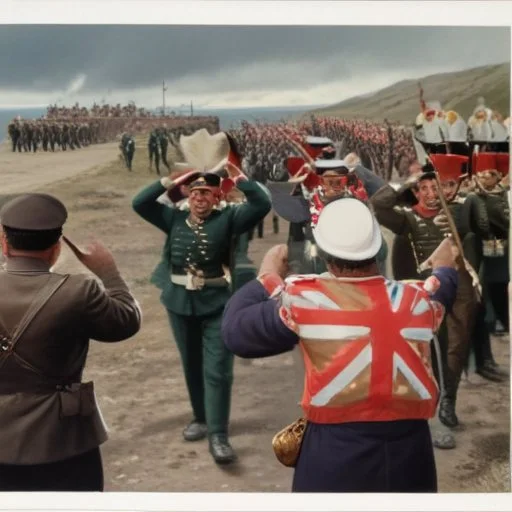
One British soldier, Simon Weston, suffered severe burns during the war and later became a prominent advocate for veteran rights and charity work. Weston's bravery and resilience symbolize the sacrifices made by those who fought in the conflict.
The Falklands War served as a catalyst for modernizing the British military, with the UK investing in new equipment and technologies to ensure the lessons learned during the conflict were not forgotten.
April 2, 1982: Argentina invades the Falkland Islands.
April 5, 1982: Britain responds by sending a task force to the Falklands.
May 21, 1982: British troops land on the Falklands.
June 14, 1982: Argentine forces surrender to the British in Stanley.
The Falklands War showcases the bravery and determination of those who fought to protect their nations' interests. It serves as a testament to the importance of standing up for what is rightfully yours, even in the face of adversity.
By understanding the events surrounding the Argentine surrender in Stanley, we can gain a deeper appreciation for the complexity of international relations, the importance of national sovereignty, and the human cost of war.General Mario Menéndez, the Argentine commander who led the invasion of the Falkland Islands, was a reluctant leader who was thrust into the spotlight by circumstances. A career military officer, Menéndez was tasked with carrying out the military junta's orders to reclaim the islands. However, he was opposed to the invasion and feared the consequences of war with the UK.
Despite his reservations, Menéndez carried out the invasion on April 2, 1982, and soon found himself in a precarious situation. Outnumbered and outgunned, Menéndez's forces were no match for the British military. On June 14, 1982, he was forced to surrender, marking the end of the war.
Menéndez's role in the Falklands War remains a subject of debate, with some viewing him as a hero who followed orders, while others see him as a puppet of the military junta. Regardless, his actions had far-reaching consequences for Argentina and the UK.
The Falklands War had a profound impact on British popular culture, inspiring a range of creative works, from novels to films and documentaries. One of the most notable examples is the 1983 novel "The Battle for the Falklands" by Sir Max Hastings and Simon Jenkins, which provides a gripping account of the conflict.
The war also inspired a wave of patriotic fervor, with songs like "Sing Along with the Falklands" and "We'll Stand by the Falklands" becoming instant hits. The conflict also spawned a range of memorabilia, from badges to T-shirts, which became symbols of British pride and defiance.
The Falklands War has also been commemorated in numerous documentaries and films, including the 2002 film "An Ungentlemanly Act", which explores the experiences of British troops during the conflict.
The Falklands War was fought against the backdrop of a shifting global landscape. The Cold War was still raging, and the UK was keen to assert its authority as a major world power. The war also came at a time of heightened tensions between the West and the Soviet Union, with the Falklands representing a strategic outpost in the South Atlantic.
The conflict was also influenced by regional politics, with Argentina seeking to assert its claim to the islands and gain regional credibility. The war marked a significant shift in the balance of power in the South Atlantic, with the UK emerging as the dominant military power.
The Falklands War also had implications for global governance, highlighting the importance of respecting national sovereignty and the need for diplomatic solutions to territorial disputes.
The Falklands War had significant political ramifications for both Argentina and the UK. In Argentina, the war marked the beginning of the end for the military junta, which was forced to step down in 1983. The war also led to a shift towards democracy, with free elections held in 1983.
In the UK, the war boosted the popularity of Prime Minister Margaret Thatcher, who was praised for her decisive leadership during the crisis. The war also marked a significant shift in British foreign policy, with the UK adopting a more assertive approach to defending its interests.
The war also had implications for UK-Argentina relations, with the two countries engaging in a long and difficult process of reconciliation. The war remains a sensitive topic to this day, with both countries still grappling with its legacy.
The Falklands War highlighted the importance of technological superiority in modern warfare. The British military's ability to deploy advanced weaponry, such as the Sea Harrier jump jet and the Exocet missile, proved decisive in the conflict.
The war also showcased the importance of satellite communications, with the UK using advanced satellite technology to coordinate its military operations. The conflict also saw the first use of helicopter-borne troops in combat, marking a significant innovation in military tactics.
The war drove home the need for the British military to invest in new technologies, leading to a significant modernization program in the aftermath of the conflict.