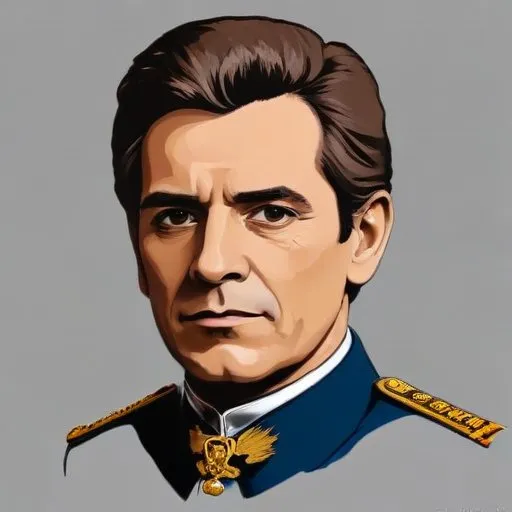
Leopoldo Galtieri: The Controversial Argentine General and President
A Legacy of Power and Controversy
Leopoldo Galtieri, a prominent Argentine general, served as President of Argentina from December 1981 to June 1982, leaving an indelible mark on the country's history. During his tenure, he ruled with an iron fist, imposing fiscal conservatism, supporting anti-communist efforts, and waging a disastrous war over the Falkland Islands, which ultimately led to his downfall.
Rise to Power
Born on July 15, 1926, in Caseros, Buenos Aires Province, Galtieri came from a working-class Italian-Argentine family. He enrolled in the National Military Academy in 1943, where he studied civil engineering and began his military career as an officer in the engineering branch. His early career saw him rise through the ranks, becoming chief combat engineer of the Argentine Army and supporting the 1976 military coup d'état.
Policies and Reforms
As President, Galtieri established Argentina as a strong Cold War ally of NATO and the United States. He implemented fiscal conservative economic reforms, aiming to curb inflation and stimulate growth. Additionally, he increased Argentine covert support for the anti-communist Contras guerrillas during the Nicaraguan civil war.
The Dirty War and Human Rights Abuses
Galtieri's regime was marred by human rights abuses, particularly during the Dirty War, a period of state-sponsored terrorism that lasted from the mid-1970s to the early 1980s. The 601 Intelligence Battalion, a notorious death squad, reported directly to him, perpetuating human rights violations and terrorizing civilians.
The Falklands War and Downfall
In an attempt to divert attention from his regime's unpopularity and economic stagnation, Galtieri ordered the invasion of the Falkland Islands in April 1982. However, Argentina's defeat by British armed forces led to his removal from power in June 1982, and the subsequent restoration of democracy.
Trial and Later Life
In 1986, Galtieri was prosecuted and convicted of war crimes and other offenses. He was pardoned by President
Carlos Menem in 1989, but lived in obscurity until his arrest for new charges shortly before his death in 2003.
Legacy and Impact
Leopoldo Galtieri's legacy is marked by controversy, authoritarianism, and human rights abuses. His policies and actions had a profound impact on Argentine society, contributing to the country's economic stagnation and perpetuating a culture of fear and repression. Despite his tumultuous presidency, Galtieri's presence in Argentine history remains significant, serving as a reminder of the dangers of unchecked power and the importance of democratic accountability.
- 1926: Born on July 15th in Caseros, Buenos Aires Province
- 1943: Enrolled in the National Military Academy
- 1976: Supported the military coup d'état
- 1981: Became President of Argentina
- 1982: Ordered the invasion of the Falkland Islands
- 1982: Removed from power and democracy restored
- 1986: Prosecuted and convicted of war crimes
- 1989: Pardoned by President Carlos Menem
- 2003: Died on January 12th
FAQ
What was Leopoldo Galtieris role in Argentine politics?
Leopoldo Galtieri, an Argentine general and politician, served as the 44th President of Argentina from 1981 to 1982, playing a significant role in the countrys political landscape during a tumultuous period.
What were Leopoldo Galtieris most notable achievements as President?
During his presidency, Galtieri implemented various economic reforms and launched the Falklands War, a move that would have far-reaching consequences for Argentina and the UK.
What led to Leopoldo Galtieris downfall?
Galtieris presidency was cut short due to the disastrous Falklands War, which led to his forced resignation and subsequent imprisonment for his role in human rights abuses during the Dirty War.
What was Leopoldo Galtieris military career like?
Galtieri rose through the ranks of the Argentine military, becoming a prominent figure in the junta that ruled Argentina from 1976 to 1983.
What is Leopoldo Galtieris legacy in Argentine politics?
Galtieris legacy is marked by controversy, with his presidency remembered for its authoritarian nature and the devastating consequences of the Falklands War.