


The Winter War, a brutal and lopsided conflict between Finland and the Soviet Union, is perhaps best remembered for the valiant yet ultimately futile resistance offered by the Finnish military against the crushing might of the Red Army. By the winter of 1940, it had become painfully clear that Finland's military was no match for the Soviet Union's relentless advance, and that the time had come to seek a negotiated settlement to the conflict.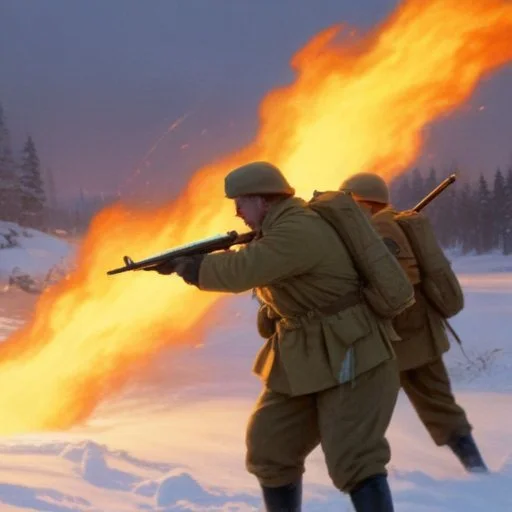
In the midst of this chaos, Finland's government authorized negotiations with the Soviet Union, a move that would prove to be both a calculated risk and a desperate bid for survival. The Finnish delegation, led by Prime Minister Risto Ryti, Justice Minister Johan Wiley, and Finnish Ambassador to Sweden Juho Kusti Paasikivi, embarked on a delicate dance of diplomacy, navigating the treacherous waters of Soviet politics in the hopes of securing a peace settlement that would spare their nation from total annihilation.
After weeks of grueling negotiations, the Finnish delegation finally emerged with the Moscow Peace Treaty, signed on March 13, 1940. While the treaty brought an end to the Winter War, it came at a steep price: Finland was forced to cede 10% of its territory to the Soviet Union, including the strategically vital province of Karelia.
The Moscow Peace Treaty sparked a heated debate within Finland, with many citizens feeling that their government had surrendered too much to the Soviets. The treaty's terms left a lasting scar on the Finnish psyche, fueling a sense of bitterness and resentment towards the Soviet Union that would persist for decades to come.
Despite the sobering realities of the Moscow Peace Treaty, Finland's decision to initiate peace negotiations during the Winter War stands as a testament to the nation's unyielding resilience in the face of overwhelming adversity. As Finland looks back on this tumultuous period in its history, it is reminded that even in the darkest of times, the courage to seek peace can be a powerful catalyst for national rebirth and renewal.
In the months leading up to the Winter War, Finland's government had established a clandestine backchannel with the Soviet Union, hoping to negotiate a peaceful resolution to their border disputes. This secret diplomacy, facilitated by Swedish intermediaries, laid the groundwork for the eventual peace negotiations.
Despite the initial reluctance of the Soviets to engage in talks, the Finnish delegation's persistence ultimately paid off, and the Moscow Peace Treaty was signed on March 13, 1940.
Juho Kusti Paasikivi, Finland's Ambassador to Sweden, played a crucial role in the Winter War negotiations. With decades of experience in international diplomacy, Paasikivi brought a level of gravitas and tact to the negotiations, helping to navigate the complex web of Soviet politics.
Paasikivi's experience in the 1920s and 1930s, when Finland navigated the treacherous waters of Soviet-Finnish relations, proved invaluable in the negotiations.
The Winter War negotiations took place against the backdrop of a rapidly shifting global landscape. The Molotov-Ribbentrop Pact, signed in August 1939, had created an uneasy alliance between Nazi Germany and the Soviet Union, leaving Finland caught in the middle.
The Soviet Union's aggression towards Finland was, in part, a response to the perceived threat of Nazi Germany's expansionist policies.
The Moscow Peace Treaty had a profound impact on Finnish culture, shaping the nation's identity and sense of self for decades to come. The loss of Karelia, a region rich in Finnish cultural heritage, was particularly devastating.
The treaty also sparked a wave of nationalist sentiment, as many Finns felt that their government had compromised too much to the Soviets.
The Winter War exacted a heavy toll on Finland's economy, with widespread destruction of infrastructure and industry. The loss of Karelia, a region rich in natural resources, further exacerbated the economic burden.
The Moscow Peace Treaty, while bringing an end to the conflict, did little to alleviate the economic hardship, as Finland was forced to redirect resources towards reconstruction and war reparations.