


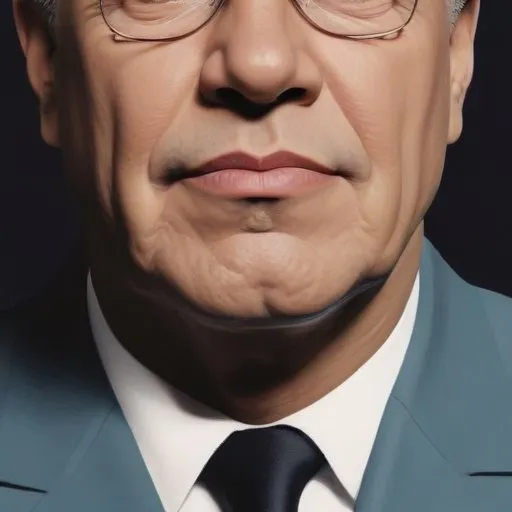
A Finnish statesman who played a crucial role in shaping Finland's post-WWII foreign policy and maintaining the country's independence during the Cold War era. He's known for his pragmatic and diplomatic approach to politics.
Juho Kusti Paasikivi, the seventh president of Finland, is renowned for his instrumental role in shaping the country's foreign policy after World War II. During his presidency from 1946 to 1956, Paasikivi navigated Finland's delicate position between the Soviet Union and the Western world, earning him the reputation as a master diplomat.
Born on November 27, 1870, in Huljala, Finland, Paasikivi was originally named Johan Gustaf Hellsten. His life took a dramatic turn when his mother passed away when he was just four years old, and his father's death in debt when he was 14 left him in the care of his aunt, Kaisa Hagman. Paasikivi later Finnicized his name to Juho Kusti Paasikivi in 1885.
Paasikivi's political career spanned over five decades, during which he held various positions, including senator, member of parliament, envoy to Stockholm and Moscow, and Prime Minister of Finland. His expertise in economics and politics earned him a reputation as a trusted statesman, and he played a crucial role in shaping Finland's relationships with its neighboring countries.
As president, Paasikivi skillfully maintained Finland's neutrality during the Cold War era, a feat that earned him international recognition. The Paasikivi Society, founded in 1958, aimed to promote fact-based foreign policy thinking and neutrality, further solidifying his legacy.
Paasikivi's diplomatic approach was guided by his firm belief in the importance of realism and pragmatism in foreign policy. He advocated for a nuanced understanding of Finland's position in the global arena, always keeping the country's best interests at heart.
Paasikivi's legacy extends beyond Finland's borders, as his diplomatic efforts paved the way for other nations to adopt similar approaches to foreign policy. His commitment to neutrality and realism continues to inspire leaders and policymakers worldwide.
Paasikivi's remarkable life is a testament to the power of perseverance and determination. From his challenging childhood to his rise as a statesman, his story serves as a beacon of inspiration for individuals from all walks of life.
Juho Kusti Paasikivi's remarkable legacy is a reflection of his tireless efforts to shape Finland's foreign policy and secure its independence. As a visionary leader, diplomat, and statesman, Paasikivi's contributions continue to inspire and influence generations to come.
Born in 1889
A Finnish lawyer and politician who served as the Governor of the Bank of Finland and the 5th President of Finland, known for leading the country through World War II. He played a crucial role in maintaining Finland's independence and sovereignty during the war.
Born in 1873
A Finnish farmer, banker, and politician who served as the 4th President of Finland, known for his role in shaping the country's post-WWII economy and politics. He's remembered for his humble, down-to-earth leadership style.
Born in 1861
Finnish lawyer, judge, and politician who served as the 3rd President of Finland, known for his role in the country's independence from Russia. He played a key part in shaping Finland's early years as a sovereign state.
Born in 1883
The 2nd President of Finland, serving from 1925 to 1931, known for his efforts to stabilize the country's economy and politics during a tumultuous period. He's also remembered for his strong advocacy of Finnish independence and sovereignty.
Born in 1881
The Prime Minister of Finland who led the country through post-WWII reconstruction and implemented significant social and economic reforms. He's most known for his efforts to establish Finland as a neutral state during the Cold War.
89 Years Old
A Finnish statesman and Nobel laureate who served as President of Finland and mediated several international conflicts, earning him the Nobel Peace Prize in 2008.
82 Years Old
Finnish lawyer and politician who served as the 11th President of Finland, known for being the first female head of state in the country. She's a champion of human rights and social justice.
