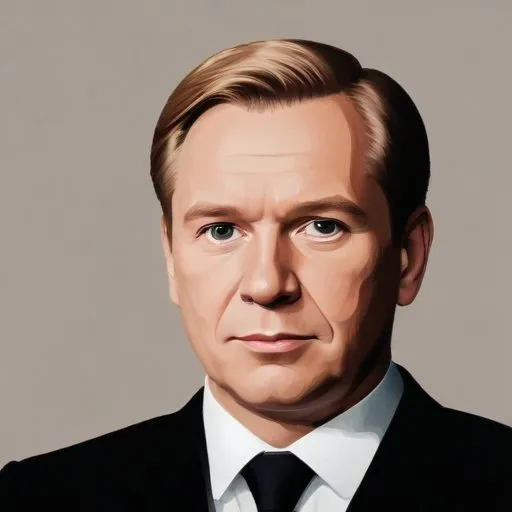
Lauri Kristian Relander

Lauri Kristian Relander

Lauri Kristian Relander was born on May 31st, 1883

Full Name: Lauri Kristian Relander
Place of Birth: Kurkijoki, Finland
Occupation: Politician, President of Finland
Nationality: Finnish
Known For: 2nd President of Finland
Term: 1925-1931
Party: National Coalition Party
Predecessor: Kaarlo Juho Ståhlberg

The 2nd President of Finland, serving from 1925 to 1931, known for his efforts to stabilize the country's economy and politics during a tumultuous period. He's also remembered for his strong advocacy of Finnish independence and sovereignty.

Written by: Carlos Hernandez Carlos Hernandez

Lauri Kristian Relander: The Forgotten President of Finland

A Legacy of Diplomacy and Compromise

Lauri Kristian Relander, the second president of Finland, served from 1925 to 1931 and left an indelible mark on the nation's history. Known for his diplomatic prowess and ability to navigate complex political landscapes, Relander's presidency was marked by a commitment to social peace and stability during a period of domestic turmoil.

Early Life and Career

Born on May 31, 1883, in Kurkijoki, Karelia, Relander was the son of Evald Kristian Relander, an agronomist, and Gertrud Maria Olsoni. He followed in his father's footsteps, enrolling at the University of Helsinki in 1901 to study agronomy. Relander earned his first bachelor's degree in philosophy in 1905 and his second in agronomy the following year.

During his studies, Relander worked as a teacher and later as a researcher at the Agricultural Research Institute. He married Signe Maria Östman in 1906, and the couple had two children, Maja-Lisa and Ragnar.

Rise to Prominence

Relander's involvement in politics began in the 1910s, when he became a member of the Agrarian League. He served as a member of Parliament from 1917 to 1920 and later as Speaker of Parliament from 1920 to 1922.

Relander's diplomatic skills and ability to navigate complex political landscapes earned him recognition within the Agrarian League, leading to his election as President of Finland in 1925.

Presidency and Foreign Policy

During his presidency, Relander focused on maintaining social peace and stability in Finland. He also worked to establish relations with neighboring Nordic countries, a move that would strengthen Finland's position in the region.

Although Relander's foreign policy was marked by a policy of isolation, he worked tirelessly to promote Finland's interests abroad. He was instrumental in establishing diplomatic relations with countries such as Sweden, Norway, and Denmark.

Domestic Policy and Challenges

Relander's presidency was not without its challenges. He faced opposition from both the left and right wings of the political spectrum, and his inability to take a clear stance on key issues led to criticism from his contemporaries.

Despite these challenges, Relander remained committed to his vision of social peace and stability. He worked to promote understanding between different political factions and encouraged cooperation between the government and opposition parties.

Legacy and Impact

Relander's presidency may have been marked by controversy, but his commitment to diplomacy and compromise has left a lasting impact on Finnish politics.

Today, Relander is remembered as a statesman who worked tirelessly to promote Finland's interests abroad and maintain social peace at home. His legacy serves as a testament to the power of diplomacy and cooperation in the face of adversity.

Personal Life and Later Years

Relander's personal life was marked by tragedy, including the loss of his son Ragnar in 1934. He died on February 9, 1942, at the age of 58, leaving behind a legacy of public service and dedication to his country.

Despite his passing, Relander's contributions to Finnish politics and diplomacy continue to be felt today. His story serves as a reminder of the importance of cooperation, compromise, and diplomacy in the pursuit of a better future.

Timeline of Major Events

Quotes and Memorable Sayings

Timeline
1883
Born in Helsinki, Finland
Lauri Kristian Relander was born in Helsinki, Finland on May 31st, 1883. He would go on to become the 2nd President of Finland.
1910
Graduated from the University of Helsinki
Relander graduated from the University of Helsinki, earning a degree in law and politics.
1925
Elected as the 2nd President of Finland
Relander was elected as the 2nd President of Finland, succeeding Kaarlo Juho Ståhlberg.
1931
Lost re-election
Relander lost re-election to Pehr Evind Svinhufvud, ending his presidency.
1942
Died in Helsinki, Finland
Lauri Kristian Relander passed away on February 9th, 1942, leaving behind a significant legacy in Finnish politics.
Lauri Kristian Relander

Lauri Kristian Relander Quiz

Lauri Kristian Relander is remembered for his strong advocacy of

Score: 0/5
FAQ
What was Lauri Kristian Relanders role in Finnish politics?
Lauri Kristian Relander served as the 2nd President of Finland from 1925 to 1931. During his tenure, he focused on strengthening Finnish independence, promoting economic growth, and fostering international cooperation.
How did Lauri Kristian Relanders background influence his presidency?
Lauri Kristian Relanders agricultural background and experience as a member of the Finnish Parliament shaped his presidential approach. He brought a practical, down-to-earth perspective to the office, prioritizing issues like rural development and agricultural reform.
What were Lauri Kristian Relanders views on Finnish identity and culture?
Lauri Kristian Relander was a strong advocate for Finnish culture and identity. He believed in promoting Finnish language, literature, and arts, while also engaging with the broader Nordic and European communities.
How did Lauri Kristian Relanders policies impact the Finnish economy?
Lauri Kristian Relanders policies aimed to promote Finnish economic growth and stability. He encouraged innovation, investment, and trade, laying the groundwork for Finlands future economic success.
What legacy did Lauri Kristian Relander leave behind in Finnish history?
Lauri Kristian Relanders legacy is that of a dedicated public servant who worked to strengthen Finnish independence and promote national development. His contributions to Finnish politics, economy, and culture continue to be celebrated and studied in Finland today.

Related People:

Pehr Evind Svinhufvud

Born in 1861

Finnish lawyer, judge, and politician who served as the 3rd President of Finland, known for his role in the country's independence from Russia. He played a key part in shaping Finland's early years as a sovereign state.

Risto Ryti

Born in 1889

A Finnish lawyer and politician who served as the Governor of the Bank of Finland and the 5th President of Finland, known for leading the country through World War II. He played a crucial role in maintaining Finland's independence and sovereignty during the war.

Juho Kusti Paasikivi

Born in 1870

A Finnish statesman who played a crucial role in shaping Finland's post-WWII foreign policy and maintaining the country's independence during the Cold War era. He's known for his pragmatic and diplomatic approach to politics.

Kyösti Kallio

Born in 1873

A Finnish farmer, banker, and politician who served as the 4th President of Finland, known for his role in shaping the country's post-WWII economy and politics. He's remembered for his humble, down-to-earth leadership style.

Martti Ahtisaari

88 Years Old

A Finnish statesman and Nobel laureate who served as President of Finland and mediated several international conflicts, earning him the Nobel Peace Prize in 2008.

Tarja Halonen

82 Years Old

Finnish lawyer and politician who served as the 11th President of Finland, known for being the first female head of state in the country. She's a champion of human rights and social justice.

Sauli Niinistö

77 Years Old

The 12th President of Finland, a decorated war hero and seasoned politician, led the country through economic turmoil and strengthened its international presence. He's known for his calm and collected leadership style.

Mauno Koivisto

Born in 1923

Finnish banker and politician who served as the 9th President of Finland, known for his leadership during a period of significant economic and political change. He played a key role in Finland's integration into the European Union.