


In the scorching deserts of Saudi Arabia, a historic chapter unfolded on August 7, 1990, as the vanguard of American soldiers, part of Operation Desert Shield, set foot on the Arabian soil. This pivotal moment marked the beginning of the Gulf War, a conflict that would shape the global landscape and leave an indelible mark on the 1990s.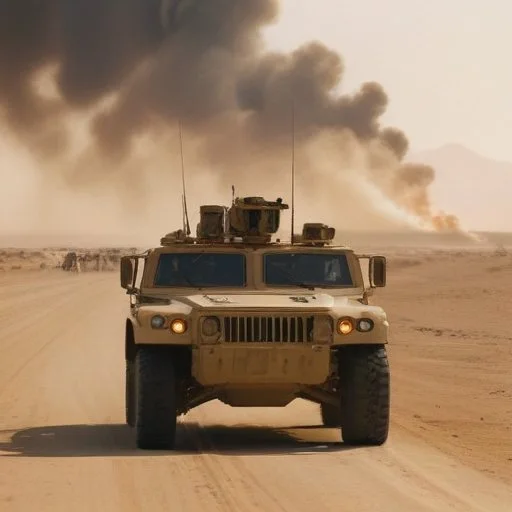
The seeds of this conflict were sown on August 2, 1990, when Iraq, under the regime of Saddam Hussein, launched a surprise invasion of Kuwait, its neighboring oil-rich nation. The international community reacted with outrage, and the United Nations Security Council swiftly condemned the invasion, demanding Iraq's immediate withdrawal.
With the UN deadline fast approaching, the United States, led by President George H.W. Bush, took the reins in forming a coalition of nations to liberate Kuwait. Operation Desert Shield, a defensive strategy, was launched to deter further Iraqi aggression and prepare for a potential ground war. The first wave of American soldiers, comprising troops from the 82nd Airborne Division, arrived in Saudi Arabia on August 7, 1990, marking the beginning of the Gulf War.
The US-led coalition was a remarkable display of international cooperation, with over 30 countries contributing troops, equipment, and logistical support. Key member nations included the United Kingdom, France, Canada, and Saudi Arabia, among others. This unity of purpose would ultimately prove crucial in the face of Saddam Hussein's belligerence.
The Gulf War served as a testament to the power of collective action, with nations putting aside their differences to achieve a common goal. This united effort led to a swift and decisive victory, liberating Kuwait and showcasing the effectiveness of international cooperation in maintaining global peace and security.
The Gulf War marked a significant turning point in modern history, shaping the course of international relations and cementing the United States' position as a global leader. The liberation of Kuwait sent a powerful message to aggressors worldwide, reaffirming the international community's commitment to upholding sovereignty and promoting peace.
In the sands of Saudi Arabia, the first American soldiers to arrive in 1990 played a crucial role in shaping this legacy, their bravery and sacrifice paving the way for a new era of international cooperation and collective action.
The enigmatic figure of Saddam Hussein, the President of Iraq, played a pivotal role in the Gulf War. His regime's invasion of Kuwait was a calculated move to gain control over the country's vast oil reserves. Born in 1937 in Tikrit, Iraq, Saddam rose to power through a series of coups and eventually became the President of Iraq in 1979. His authoritarian rule and aggressive foreign policy led to international criticism and economic sanctions.
Saddam's regime was marked by brutal suppression of dissent, and his infamous secret police, the Mukhabarat, were notorious for their human rights abuses. Despite his controversial reputation, Saddam enjoyed a degree of popularity among some Iraqis, who saw him as a strong leader who had modernized the country.

The Gulf War took place against the backdrop of a rapidly changing global landscape. The end of the Cold War had created a power vacuum, allowing regional powers like Iraq to assert their dominance. The United States, having just emerged from a period of relative isolationism, was eager to reassert its role as a global leader.
The Soviet Union, Iraq's traditional ally, was in the midst of a debilitating economic crisis, which limited its ability to intervene on behalf of Saddam. This created an opportunity for the United States to build a coalition of nations and demonstrate its military prowess.
The Gulf War was a clash of ideologies, with the West's liberal democratic values pitted against Saddam's authoritarian regime. The war was also seen as a struggle for control over the Middle East's vast oil resources, with the United States seeking to maintain its influence in the region.
The war marked a significant shift in the global balance of power, with the United States emerging as the sole superpower. This new world order would have far-reaching implications, shaping international relations and global politics for decades to come.

The Gulf War had a profound impact on the global economy, with oil prices skyrocketing in the wake of the Iraqi invasion. The economic costs of the war were estimated to be in the trillions of dollars, with the United States shouldering a significant burden.
However, the war also presented opportunities for economic growth, with the US-led coalition investing heavily in military infrastructure and equipment. The war marked the beginning of a new era of military-industrial cooperation, with private contractors playing an increasingly important role in modern warfare.
The Gulf War had a profound cultural impact, with the conflict shaping the way Americans viewed the Middle East and international relations. The war marked a significant shift in the US media landscape, with 24-hour news cycles and embedded journalism becoming the norm.
The war also had a profound impact on popular culture, with films, literature, and music reflecting the anxieties and fears of the time. The conflict marked a turning point in the way Americans perceived and interacted with the Middle East, shaping the country's cultural and political identity for decades to come.