First Lady Mamie Eisenhower launches nuclear submarine USS Nautilus
Imagine a world where the oceans hold the key to unlocking a new era of power and progress. On a chilly winter morning, Mamie Eisenhower, the elegant First Lady of the United States, stepped up to the podium in Groton, Connecticut, ready to make history. With a gentle smile and a firm grasp, she smashed a bottle of champagne against the sleek hull of the USS Nautilus, christening the world's first nuclear-powered submarine. This revolutionary vessel, brainchild of the US Navy, promised to redefine the boundaries of underwater exploration and military prowess. As the crowd cheered, the Nautilus slid into the icy waters, marking the dawn of a new era in naval engineering.
The Birth of a Revolution: The Launch of the USS Nautilus
The world witnessed a monumental moment on January 21, 1954, as Mamie Eisenhower, the First Lady of the United States, christened the USS Nautilus, the world's first nuclear-powered submarine, in Groton, Connecticut. This pioneering vessel marked a significant milestone in naval engineering, promising to revolutionize underwater exploration and military capabilities.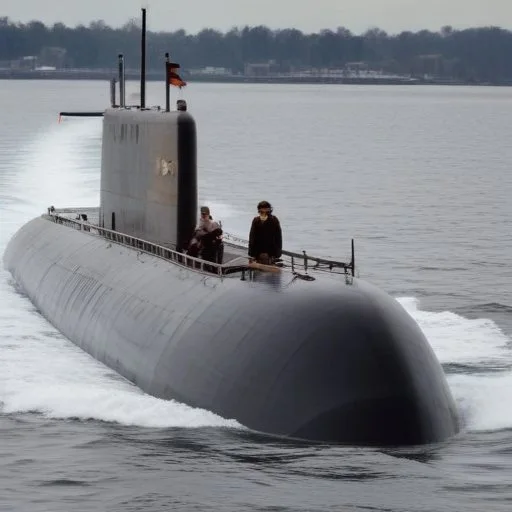
A Leap into the Unknown
The USS Nautilus was the brainchild of the US Navy, designed to push the boundaries of submarine technology. Powered by a nuclear reactor, this innovative vessel could remain submerged for extended periods, covering vast distances without the need for surfacing. This capability opened up new possibilities for naval operations, reconnaissance, and defense.
The Key Players
- Mamie Eisenhower: As the First Lady of the United States, Mamie Eisenhower played a symbolic role in the launch, ushering in a new era of naval capability.
- Admiral Hyman G. Rickover: Known as the "Father of the Nuclear Navy," Admiral Rickover was the driving force behind the development of the USS Nautilus. His vision and leadership paved the way for the nuclear-powered submarine program.
A Timeline of Triumph
- 1951: The US Navy initiates the nuclear-powered submarine program, with Admiral Rickover at the helm.
- 1952: The keel of the USS Nautilus is laid at the General Dynamics Electric Boat Division in Groton, Connecticut.
- January 21, 1954: Mamie Eisenhower christens the USS Nautilus, marking its official launch.
- 1955: The USS Nautilus completes its first nuclear-powered dive, demonstrating its capability to remain submerged for extended periods.
Major Outcomes and Impacts
The launch of the USS Nautilus had far-reaching consequences, both militarily and diplomatically:
- The USS Nautilus became a symbol of American technological prowess, showcasing the country's ability to push the boundaries of innovation.
- The nuclear-powered submarine program paved the way for the development of more advanced naval vessels, including ballistic missile submarines and attack submarines.
- The USS Nautilus played a significant role in maintaining the balance of power during the Cold War, providing the US Navy with a strategic advantage.
Quotes and Memorable Sayings
Admiral Hyman G. Rickover's words echoed the significance of the USS Nautilus' launch:
"The nuclear-powered submarine is a symbol of what can be accomplished when science, industry, and government work together towards a common goal."
Lasting Legacy
The USS Nautilus' legacy extends beyond its military service. Today, it serves as a museum ship and National Historic Landmark, inspiring generations to pursue careers in science, technology, engineering, and mathematics (STEM).
The launch of the USS Nautilus on that chilly winter morning in 1954 marked the beginning of a new era in naval engineering, forever changing the course of maritime history.
Supplemental Content
In addition to being a pioneer in the field of nuclear submarines, Admiral Hyman G. Rickover was also a strict and demanding leader. Known for his high standards and attention to detail, Rickover was feared and respected by those who worked under him. Despite his tough exterior, however, Rickover was also deeply committed to the welfare of his personnel, and worked tirelessly to ensure their safety and well-being.
Rickover's leadership style was marked by a focus on technical expertise and a willingness to challenge conventional thinking. He was known for his ability to inspire loyalty and devotion in his personnel, and his legacy continues to be felt in the US Navy to this day.