


In a groundbreaking moment for modern physics, the LIGO and Virgo collaborations announced the first-ever observation of gravitational waves on February 11, 2016, sending shockwaves of excitement throughout the scientific community. This historic detection marked the culmination of decades of innovative research, technological advancements, and international collaboration, confirming a fundamental prediction made by Albert Einstein a century ago.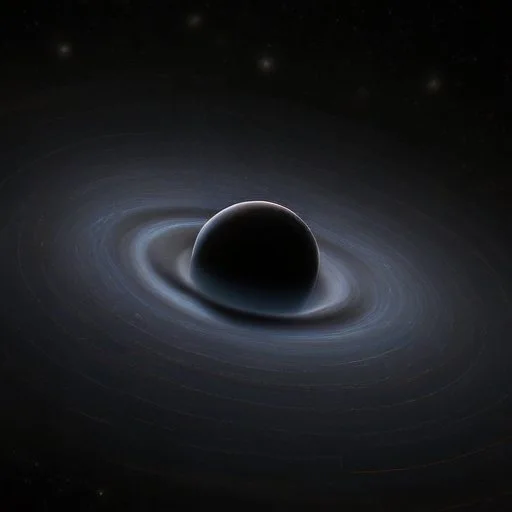
The concept of gravitational waves dates back to the early 20th century when Einstein introduced his theory of general relativity. However, detecting these ripples in the fabric of spacetime proved to be a daunting task, requiring unprecedented technological advancements and precision. The quest for gravitational waves began in earnest in the 1960s, with pioneers like Joseph Weber and Vladimir Braginsky paving the way for future generations of researchers.
The first observation of gravitational waves has far-reaching implications for our understanding of the universe, black holes, and the nature of gravity itself. This groundbreaking discovery:
The detection of gravitational waves has inspired a new generation of scientists, engineers, and innovators. This breakthrough has:
"The gravitational wave observatory is a gift to humanity, allowing us to study the universe in a way that was previously impossible."
— Rainer Weiss, Nobel laureate and LIGO pioneer
The first observation of gravitational waves marks the beginning of a new era in astrophysics. Future events will likely include:
The celestial symphony has begun, and the rhythm of gravitational waves will continue to inspire and illuminate our understanding of the cosmos.
Rainer Weiss, a German-American physicist, played a crucial role in the development of the LIGO experiment. Born in 1932 in Berlin, Germany, Weiss's family fled to the United States during World War II. He grew up in New York City and developed an early interest in science and engineering.
Weiss's contributions to the field of gravitational waves began in the 1960s, when he was a graduate student at MIT. He worked under the guidance of physicist Jerrold Zacharias, who encouraged him to explore the concept of laser interferometry. This technique, which involves splitting laser beams to measure tiny changes in distance, would later become a key component of the LIGO detectors.
Weiss's tireless efforts to develop LIGO earned him numerous accolades, including the 2017 Nobel Prize in Physics, which he shared with Kip Thorne and Barry Barish.
The detection of gravitational waves has had a profound impact on popular culture, inspiring a new generation of scientists, engineers, and innovators. The discovery has been featured in numerous documentaries, books, and films, including the award-winning documentary The Universe's Greatest Mysteries.
The gravitational wave community has also been recognized for its commitment to diversity and inclusion. The LIGO and Virgo collaborations have implemented various initiatives aimed at promoting gender equality and increasing representation of underrepresented groups in physics.
The cultural significance of gravitational waves extends beyond the scientific community, symbolizing the power of human ingenuity and collaboration in the pursuit of knowledge.
The detection of gravitational waves required significant technological advancements, including the development of extremely sensitive detectors and sophisticated data analysis software. The LIGO detectors, which consist of two 4-kilometer-long Michelson interferometers, are capable of measuring changes in distance as small as one-ten-thousandth the width of a proton.
The Virgo detector, located in Cascina, Italy, has also undergone significant upgrades, including the implementation of advanced seismic isolation systems and more powerful lasers. These innovations have enabled the detector to operate at unprecedented sensitivities, ensuring the continued detection of gravitational wave signals.
The development of more advanced detectors, such as the KAGRA detector in Japan, will further expand our understanding of the gravitational wave universe, enabling the study of weaker signals and more distant cosmic events.
The detection of gravitational waves has prompted a reappraisal of Albert Einstein's legacy, highlighting the significance of his contributions to modern physics. Einstein's theory of general relativity, which predicted the existence of gravitational waves, has been reaffirmed as a cornerstone of our understanding of the universe.
Historians of science have also reexamined the development of general relativity, emphasizing the role of Einstein's contemporaries, such as David Hilbert and Marcel Grossmann, in the theory's evolution.
The discovery of gravitational waves has cemented Einstein's position as one of the most influential scientists of the 20th century, solidifying his reputation as a visionary and a pioneer in the field of theoretical physics.
The detection of gravitational waves has had a minimal environmental impact, with most research facilities operating at extremely low power consumption levels. The LIGO detectors, for example, require only about 2 megawatts of power to operate, making them one of the most energy-efficient scientific experiments in the world.
The construction of new detectors, such as the KAGRA detector in Japan, has also been designed with sustainability in mind, incorporating green technologies and minimizing waste production.
The environmental benefits of gravitational wave research extend beyond the scientific community, serving as a model for sustainable innovation and inspiring future generations to pursue environmentally conscious careers in science and engineering.