


Saddam Hussein, the former President of Iraq, met a dramatic end on December 30, 2006, when he was hanged for crimes against humanity. This event marked the culmination of a tumultuous career, marked by brutality, oppression, and defiance, finally coming to an end in a Baghdad courtroom.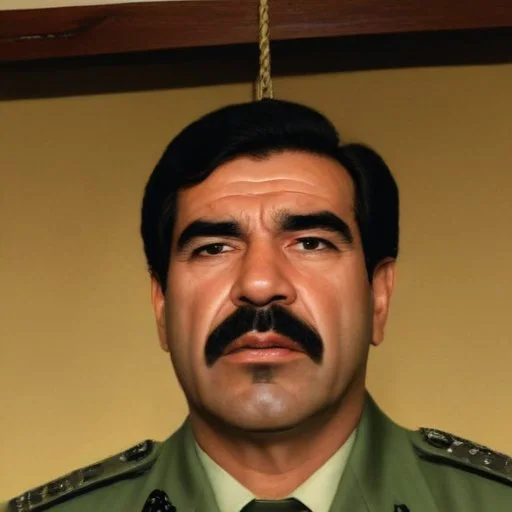
Saddam Hussein's rise to power was marked by intrigue, betrayal, and violence. Born in 1937, in the Iraqi town of Tikrit, Saddam's early life was marked by poverty and hardship. He eventually joined the Ba'ath party, a pan-Arab nationalist movement, and quickly rose through the ranks.
After a failed assassination attempt on Iraqi President Abdul Karim Qasim in 1959, Saddam fled to Egypt, where he forged close ties with Egyptian President Gamal Abdel Nasser. He returned to Iraq in 1963, following a successful Ba'athist coup, and began to consolidate power.
Saddam's presidency, which began in 1979, was marked by brutal suppression of opposition, war with Iran, and the notorious Anfal genocide against the Kurdish population. His regime was responsible for the deaths of hundreds of thousands of people, and his secret police, the Mukhabarat, were feared throughout the country.
In 1990, Saddam's invasion of Kuwait led to the Gulf War, and although he was eventually forced to withdraw, his regime remained in power. The subsequent sanctions and no-fly zones imposed by the international community did little to curb his brutality.
In 2003, a US-led coalition invaded Iraq, citing fears of weapons of mass destruction. Although none were found, the invasion marked the beginning of the end for Saddam's regime. He was captured in December of that year, hiding in a hole in the ground near Tikrit.
After a lengthy and controversial trial, Saddam was convicted of crimes against humanity and sentenced to death by hanging. On December 30, 2006, at 6:07 am local time, Saddam Hussein took his final breath.
Saddam's execution sparked widespread celebrations in Iraq, but also controversy and criticism from human rights groups. Many argued that the trial was flawed, and that Saddam's death would not bring closure to the Iraqi people.
Despite his brutal legacy, Saddam remains a complex and fascinating figure. His rise to power, marked by cunning and ruthlessness, was matched only by his defiance in the face of defeat. As the world moves forward, the lessons of Saddam's life and death serve as a stark reminder of the dangers of unchecked power and brutal suppression.
Saddam's execution marked the end of an era of brutal suppression in Iraq, and paved the way for a new era of democracy and political freedom. However, the controversy surrounding his trial and execution continues to have far-reaching implications for international justice and human rights.
The fall of Saddam's regime also had significant implications for the Middle East, marking a shift in the regional balance of power and opening the door to new challenges and opportunities.
"I am Saddam Hussein, the President of Iraq, and I will not surrender to the invaders."
"History will forgive me, because I have done nothing wrong."
"I am the leader of the Iraqi people, and I will do what is best for them."
The fall of Saddam Hussein's regime can be compared to the collapse of other authoritarian governments in the Middle East. Like Egypt's Hosni Mubarak and Libya's Muammar Gaddafi, Saddam's regime was marked by corruption, nepotism, and brutality. However, Saddam's regime was unique in its ability to maintain power through a complex network of patronage, propaganda, and secret police.
One key difference between Saddam's regime and others in the region was his ability to manipulate the international community. Saddam successfully played on fears of Iranian expansion and exploited divisions within the Gulf States to maintain a degree of legitimacy. This allowed him to maintain power longer than many of his contemporaries.
Despite these differences, the fall of Saddam's regime shares many parallels with the Arab Spring uprisings. Both were driven by popular discontent with authoritarian rule and fueled by demands for democracy and human rights. The legacy of Saddam's regime serves as a cautionary tale for the dangers of unchecked power and the importance of accountability in governance.

Historians have long debated the significance of Saddam Hussein's regime and its impact on the Middle East. Some have portrayed Saddam as a modern-day Nebuchadnezzar, a ruthless and cunning leader who used brutality and propaganda to maintain power.
Others have seen Saddam as a product of the Cold War era, a leader who exploited divisions between the United States and the Soviet Union to maintain power and manipulate the international community.
Regardless of interpretation, Saddam's regime marks a significant turning point in modern Middle Eastern history. His rise to power and subsequent fall from grace serve as a reminder of the dangers of authoritarianism and the importance of democratic governance.
Saddam Hussein's regime was deeply embedded in the geopolitics of the Middle East. His rise to power was facilitated by the Cold War rivalry between the United States and the Soviet Union, which provided him with a degree of legitimacy and diplomatic cover.
Saddam's invasion of Kuwait in 1990 marked a significant shift in the regional balance of power, drawing in the United States and its allies. The subsequent Gulf War and sanctions regime imposed on Iraq further solidified the dominance of the United States in the region.
The fall of Saddam's regime in 2003 marked a new era of American influence in the Middle East, with the United States establishing a major military presence in the region. This has had lasting implications for regional politics and global security.
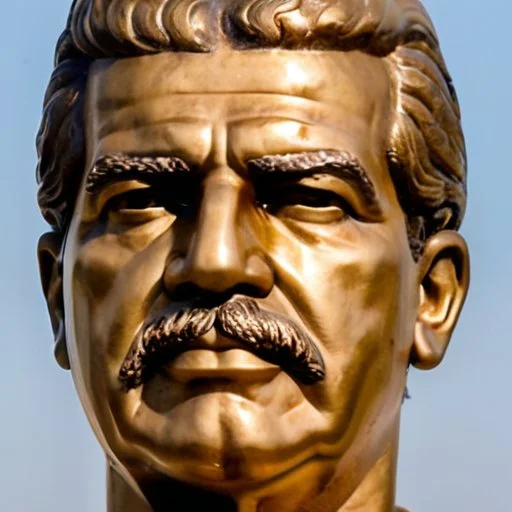
Saddam Hussein was a complex and multifaceted figure, driven by a mix of ideology, ambition, and paranoia. Born in Tikrit, Iraq, Saddam was drawn to the Ba'ath party at an early age, where he was influenced by the pan-Arab nationalist ideology of Gamal Abdel Nasser.
Saddam's early life was marked by poverty and hardship, which instilled in him a sense of determination and ruthlessness. He quickly rose through the ranks of the Ba'ath party, using his cunning and intelligence to eliminate rivals and consolidate power.
Throughout his presidency, Saddam cultivated a cult of personality, presenting himself as a strong and benevolent leader. However, behind this façade lay a ruthless dictator, willing to use torture, murder, and mass killing to maintain power.
The fall of Saddam Hussein's regime had significant economic implications for Iraq and the wider Middle East. The subsequent occupation and reconstruction effort led to a massive influx of foreign investment and aid, leading to a boom in construction and infrastructure development.
However, the legacy of Saddam's regime has also had lasting impacts on Iraq's economy. The destruction of infrastructure and oil facilities during the Gulf War and 2003 invasion led to a decline in oil production, which has only recently begun to recover.
The rise of ISIS in 2014 further exacerbated economic instability, with the group's control of oil fields and infrastructure leading to a decline in government revenue and a rise in corruption.