


On May 12, 1998, a pivotal moment in Indonesian history unfolded as four university students were brutally shot by security forces at Trisakti University in Jakarta, sparking a wave of nationwide protests and ultimately leading to the downfall of President Suharto's three-decade-long regime.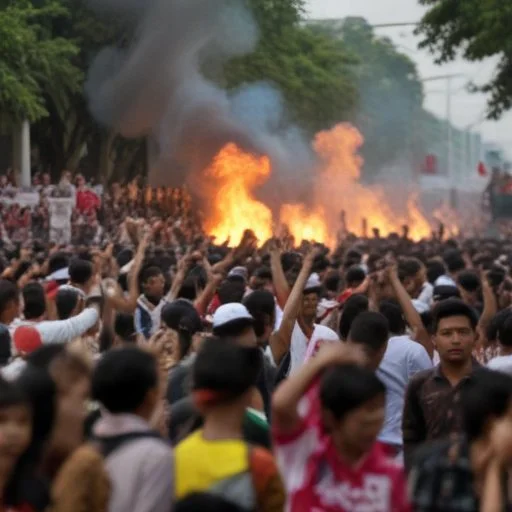
In the late 1990s, Indonesia was grappling with severe economic crisis, corruption, and political stagnation under Suharto's authoritarian rule. University students, who had long been at the forefront of Indonesia's pro-democracy movement, were becoming increasingly restless, demanding reforms and greater political freedoms.
As students at Trisakti University gathered to protest against the government's handling of the economy, they were met with a wall of riot police and armed forces. In a tragic and brutal display of force, four students – Elang Mulia Lesmana, Hendri Saparini, Heri Hartanto, and Hafidin Royan – were shot and killed, igniting a powder keg of outrage and resistance.
News of the shootings spread like wildfire, triggering widespread rioting and protests across Jakarta and beyond. The usually placid Indonesian streets were now awash with anger and defiance, as ordinary citizens, students, and workers joined forces to demand Suharto's resignation. The city was plunged into chaos, with burning buildings, looted shops, and clashes between protesters and security forces.
As the protests intensified, Suharto's grip on power began to slip. On May 21, 1998, in a stunning turn of events, the President announced his resignation, marking the end of an era and paving the way for democratic reforms in Indonesia. The Trisakti shootings had become a catalyst for change, and the nation was poised to embark on a new journey towards freedom and democracy.
The Trisakti shootings had a profound impact on Indonesian society, galvanizing a sense of nationwide unity and solidarity. The event sparked a cultural awakening, with artists, writers, and musicians inspired to create works that reflected the struggle for democracy and human rights. The protests also marked a significant shift in the country's power dynamics, as students, women, and marginalized groups began to assert their voices in the political arena.
The Trisakti shootings and subsequent protests led to a significant overhaul of Indonesia's political landscape, paving the way for democratic elections, the decentralization of power, and the strengthening of human rights institutions. The event also marked a turning point in Indonesia's economic development, as the country began to transition towards a more open and accountable market economy.
Today, the Trisakti University shootings are remembered as a pivotal moment in Indonesia's struggle for democracy and human rights. The event serves as a powerful reminder of the sacrifices made by those who fought for freedom and the importance of continued vigilance in protecting the nation's hard-won reforms.
The Trisakti University shootings had a profound impact on Indonesian culture, inspiring a new wave of artistic expression and creativity. The event sparked a sense of national pride and unity, as Indonesians from all walks of life came together to demand change. In the aftermath of the shootings, a plethora of songs, poems, and plays emerged, capturing the spirit of resistance and defiance that defined the era.
In the world of music, the Trisakti shootings inspired a new generation of musicians to create songs that reflected the struggle for democracy and human rights. The event also saw a resurgence of interest in traditional Indonesian music, as artists sought to reclaim their cultural heritage and express their identity.
The Trisakti shootings also had a significant impact on Indonesian literature, with many writers and poets drawing inspiration from the event. The shootings sparked a new wave of literary creativity, as writers sought to capture the spirit of the times and express their hopes and dreams for a better future.

Amien Rais, a prominent Indonesian politician and leader of the Reformasi movement, played a crucial role in the aftermath of the Trisakti University shootings. As the head of the Muhammadiyah organization, Rais was a key figure in the opposition to President Suharto's regime, and his leadership helped galvanize the pro-democracy movement.
Rais's charismatic leadership and negotiating skills were instrumental in bringing together disparate groups and forging a united front against the government. His efforts helped to ensure a peaceful transition of power and paved the way for democratic elections in 1999.
Today, Amien Rais is remembered as a hero of the Reformasi era, his bravery and vision inspiring a new generation of Indonesians to continue the fight for democracy and human rights.
The Trisakti University shootings marked a turning point in Indonesia's economic development, as the country began to transition towards a more open and accountable market economy. The event led to a period of rapid economic reform, as the government sought to address the economic grievances that had fueled the protests.
The International Monetary Fund (IMF) played a key role in shaping Indonesia's economic reforms, providing financial assistance and guidance to the government. The IMF's intervention helped to stabilize the economy and pave the way for a period of rapid economic growth, which saw Indonesia's GDP rise by over 5% per annum between 1999 and 2004.
The economic reforms also led to a significant increase in foreign investment, as investors took advantage of Indonesia's new business-friendly climate. The event marked a significant shift in Indonesia's economic trajectory, as the country began to emerge as a major player in the global economy.

The Trisakti University shootings marked a significant shift in the balance of power in Indonesian politics, as the event exposed the weaknesses of President Suharto's regime and empowered opposition groups. The shootings led to a period of intense political maneuvering, as opposition leaders sought to capitalize on the government's vulnerability.
The event also saw a significant increase in student activism, as university students across Indonesia became more politicized and began to demand greater reforms. The student movement played a key role in shaping the political agenda, pushing for greater democratization and accountability.
The Trisakti shootings also led to a significant realignment of political forces, as traditional allies of the Suharto regime began to defect and opposition groups gained strength. The event marked a turning point in Indonesian politics, as the country began to transition towards a more democratic and accountable system.
In the days and weeks that followed the Trisakti University shootings, Indonesia was gripped by chaos and uncertainty. Protests and riots broke out across the country, as demonstrators demanded justice and accountability for the deaths of the four students.
The government, led by President Suharto, struggled to contain the unrest, deploying troops and riot police to quell the protests. However, the move only fueled further anger and resentment, as protesters saw the government's actions as a further example of its disregard for human life.
As the situation spiralled out of control, international pressure mounted on the Indonesian government to reform and democratize. The Trisakti shootings had sparked a chain reaction of events that would ultimately lead to the downfall of the Suharto regime and the beginning of a new era of democratic reform in Indonesia.