


On a fateful day in 1740, four powerful European states – France, Prussia, Bavaria, and Saxony – collectively rejected the Pragmatic Sanction, a decree meant to secure Maria Theresa's inheritance of the Habsburg throne. This bold move marked the beginning of the War of the Austrian Succession, a global conflict that would ravage Europe for nine years and reorder the continent's balance of power.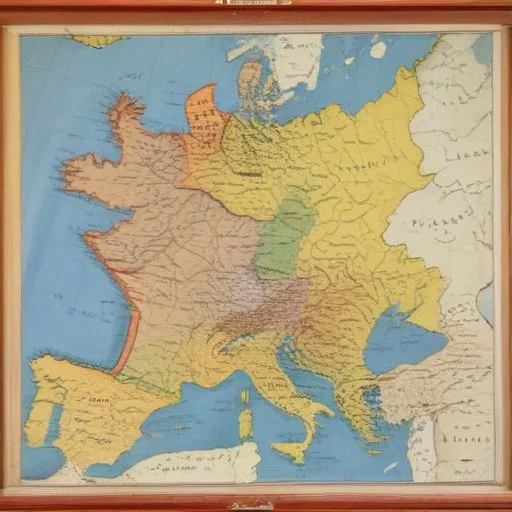
In the early 18th century, the Habsburg Empire, once a formidable force, was struggling to maintain its grip on power. The dynasty's fortunes had been dwindling due to a combination of internal strife, external pressures, and a series of strategic blunders. The Pragmatic Sanction, issued by Emperor Charles VI in 1738, was an attempt to ensure a smooth transition of power to his daughter, Maria Theresa. However, the treaty's provisions were seen as an affront to the interests of neighboring states, who sensed an opportunity to exploit the Habsburg Empire's weakness.
The War of the Austrian Succession was a complex and multifaceted conflict that involved numerous battles, alliances, and shifts in power. Here are some key milestones:
The War of the Austrian Succession had far-reaching consequences for Europe's political landscape:
In conclusion, the War of the Austrian Succession was a pivotal moment in European history, marked by the bravery and cunning of its key actors, and the far-reaching consequences of their actions. As we reflect on this tumultuous period, we are reminded that the pursuit of power and the fate of empires are often intertwined in the complex tapestry of human history.
The War of the Austrian Succession was not just a conflict between European powers, but a complex web of alliances, rivalries, and strategic calculations that shaped the course of history. In the early stages of the war, Britain and Hanover formed an alliance with Austria, aiming to counterbalance Prussia's growing influence. This alliance was crucial, as it allowed Austria to focus on its eastern front, while Britain and Hanover tied down Prussian forces in the west.
Meanwhile, France, despite its initial reluctance to engage in the conflict, eventually joined the fray, seeking to exploit the Habsburg Empire's weakness and expand its own territory. The French army, however, was plagued by internal divisions and strategic blunders, which hindered its ability to make a decisive impact on the war.

King Frederick II of Prussia: The Rise of a Military Genius
Frederick II, also known as Frederick the Great, was a master strategist and military commander who transformed Prussia into a major European power. Born in 1712, Frederick was educated in the art of warfare and statecraft, and he quickly demonstrated his prowess on the battlefield.
Facing the mighty Habsburg Empire, Frederick employed unconventional tactics, such as rapid mobilization, decisive battles, and clever diplomacy, to outmaneuver his opponents. His military campaigns, although often brutal and devastating, earned him the respect and admiration of his contemporaries.
The War of the Austrian Succession: A Comparative Analysis of Military Strategies
The war saw a clash of different military strategies, with Austria, Prussia, and France employing distinct approaches to achieve their objectives. Austria, with its vast territory and resources, relied on a more traditional, defensive strategy, aiming to protect its borders and wait for opportunities to strike back.
In contrast, Prussia, with its smaller but highly efficient army, adopted a more aggressive, mobile strategy, seeking to exploit Austria's weakness and capture key territories. France, meanwhile, vacillated between these two approaches, ultimately failing to find a cohesive strategy.

The Geopolitical Context of the War of the Austrian Succession
The early 18th century was a time of significant geopolitical shifts in Europe. The rise of Prussia and the decline of the Habsburg Empire created a power vacuum, which various states sought to fill. The War of the Austrian Succession was a struggle for dominance, with each party seeking to expand its territory, influence, and prestige.
The conflict also highlighted the importance of strategic alliances, as European powers formed coalitions to counterbalance each other's influence. This complex web of alliances and rivalries would shape European politics for centuries to come.
The Economic Impact of the War of the Austrian Succession
The war had a profound impact on the European economy, as trade and commerce were severely disrupted by the conflict. The massive armies and navies required to fight the war drained the treasuries of the participating states, leading to increased taxation, inflation, and economic stagnation.
Furthermore, the war disrupted the global supply chain, causing shortages of essential goods and services. The subsequent Treaty of Aix-la-Chapelle, while bringing an end to the war, also led to a period of economic reconstruction and readjustment.