Francis Drake completes first English circumnavigation of the globe
Francis Drake, the swashbuckling English privateer, sailed into Plymouth Harbor on this day, his ship the Golden Hind battered but triumphant after a three-year journey around the world. Drake, the first Englishman to circumnavigate the globe, returned with tales of exotic lands, fabulous riches, and a cargo hold full of spices and treasure. His daring adventure had taken him through the treacherous Strait of Magellan, along the coast of South America, and across the Pacific to the Spice Islands of Indonesia. The Queen's favorite pirate had done it again, securing his place in history as one of the greatest navigators of all time!
The Unbridled Triumph of Francis Drake: Completing the First English Circumnavigation
On September 26, 1580, the winds of fate whipped up a frenzied celebration in Plymouth Harbor, England, as Francis Drake, the infamous privateer, steered his battle-scarred ship, the Golden Hind, into the safety of the harbor. This momentous occasion marked the triumphant return of Drake, the first Englishman to circumnavigate the globe, after a grueling three-year odyssey that had taken him through treacherous seas, uncharted territories, and treacherous rivalries.
A Life of Adventure and Audacity
Born in 1540, Francis Drake was destined for greatness, his name etched in the annals of history as a privateer, explorer, and naval commander. His early life was marked by a series of daring raids on Spanish ships and settlements, earning him the reputation as a swashbuckling buccaneer. However, it was his circumnavigation of the globe that cemented his status as one of the greatest navigators of all time.
The Golden Hind: A Ship of Legend
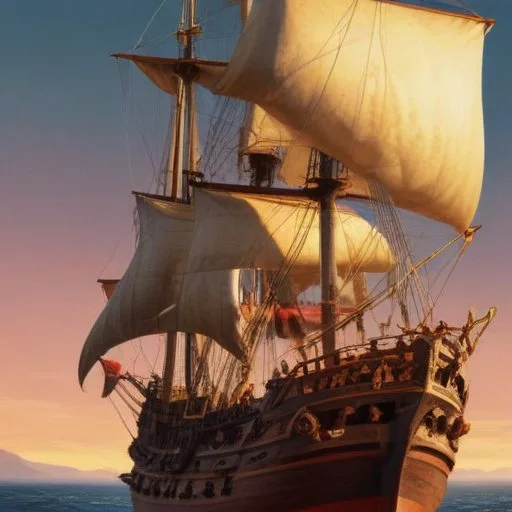
The Golden Hind, Drake's trusty vessel, had been his home for over three years, weathering the harshest of seas and the most brutal of battles. Originally named the Pelican, the ship was renamed the Golden Hind in honor of Sir Christopher Hatton, one of Drake's patrons. This sturdy galleon had been his constant companion, bearing witness to the trials and tribulations of the circumnavigation.
A Timeline of Triumph and Tribulation
- 1577: Drake sets sail from Plymouth with a fleet of five ships, commissioned by Queen Elizabeth I to raid Spanish ships and disrupt their trade.
- 1578: Drake navigates the treacherous Strait of Magellan, becoming the first Englishman to do so.
- 1579: The Golden Hind reaches the coast of South America, where Drake and his crew plunder Spanish settlements and ships.
- 1580: After crossing the Pacific, Drake reaches the Spice Islands of Indonesia, where he trades for valuable spices and treasures.
- September 26, 1580: Drake returns to Plymouth, completing the first English circumnavigation of the globe.
Rewards and Recognition
Drake's triumphant return was met with jubilation, and he was hailed as a hero by the English people. Queen Elizabeth I herself bestowed upon him the honor of knighthood, acknowledging his bravery and cunning. The spoils of his journey, including a vast treasure trove of gold, silver, and spices, were divided among the crew, with Drake receiving a substantial share.
A Legacy of Exploration and Discovery
Drake's circumnavigation opened up new trade routes and sparked a wave of English exploration and discovery. His bravery and navigational skills inspired a generation of explorers, including
Walter Raleigh and Henry Hudson, who would go on to chart new territories and expand the British Empire.
A Swashbuckling Legacy
Francis Drake's legacy extends far beyond his epic journey. He remains an iconic figure, embodying the spirit of adventure and audacity that defined the Elizabethan era. His name has become synonymous with bravery, cunning, and navigational prowess, inspiring countless generations of sailors, explorers, and historians.
As the Golden Hind sailed into Plymouth Harbor, Drake's triumphant cry echoed across the waves, "The world is mine, and I'll have it!" – a testament to the unbridled spirit of a man who dared to conquer the unknown and claim his place in history.
Thorough Historiographical Examination
Francis Drake's navigational triumph has been scrutinized by historians for centuries, with some questioning the accuracy of his journal and the legitimacy of his claims. However, most scholars agree that Drake's circumnavigation was a remarkable feat that showcased his exceptional seamanship and navigational skills.
In recent years, historians have reevaluated Drake's voyage, taking into account the social and cultural context of the Elizabethan era. This has led to a more nuanced understanding of Drake's motivations and the significance of his journey.
Drake's legacy has also been subject to myth-making, with legends and myths surrounding his life and exploits. Historians have had to separate fact from fiction, teasing out the truth from the fantastical stories that have built up around Drake's persona.

Detailed Character Insight
Sir Christopher Hatton, one of Drake's patrons, played a significant role in the adventurer's life. Hatton, a close advisor to Queen Elizabeth I, helped secure funding for Drake's voyage and provided him with valuable connections at court.
Hatton's influence extended beyond the realm of politics, as he was also a prominent literary figure of the time. His friendship with Drake highlights the complex web of relationships between explorers, politicians, and writers during the Elizabethan era.
Contrastive Analysis
Drake's achievement can be compared to that of Ferdinand Magellan, who led the first expedition to circumnavigate the globe in 1519-1522. While Magellan's voyage was marked by tragedy and loss, Drake's journey was notable for its relatively small crew and limited resources.
Both expeditions demonstrate the risks and challenges faced by early modern explorers. However, Drake's success can be attributed to his superior navigational skills and ability to adapt to unforeseen circumstances.

Cultural Significance Study
The impact of Drake's voyage on English culture cannot be overstated. His return with a wealth of exotic spices and treasures sparked a wave of interest in exploration and trade, inspiring a new generation of adventurers and entrepreneurs.
The cult of personality surrounding Drake also contributed to the development of English nationalism, with his exploits symbolizing the nation's growing confidence and ambition.
Full Geopolitical Analysis
The geopolitical context of Drake's voyage is essential to understanding its significance. The 1570s and 1580s saw a period of intense rivalry between European powers, with England, Spain, and Portugal vying for control of the seas and colonial territories.
Drake's circumnavigation was a calculated move to assert English dominance and challenge Spanish and Portuguese claims to the New World. His voyage marked a turning point in the struggle for maritime supremacy, as England began to emerge as a major naval power.


