


The Franco-Prussian War, a pivotal conflict that ravaged the European landscape in the late 19th century, is renowned for its far-reaching consequences, which reshaped the continental balance of power and paved the way for a unified Germany.Marked by the dramatic duel between French and Prussian forces, this six-month war was a testament to the machinations of European diplomacy and the unyielding pursuit of national interests.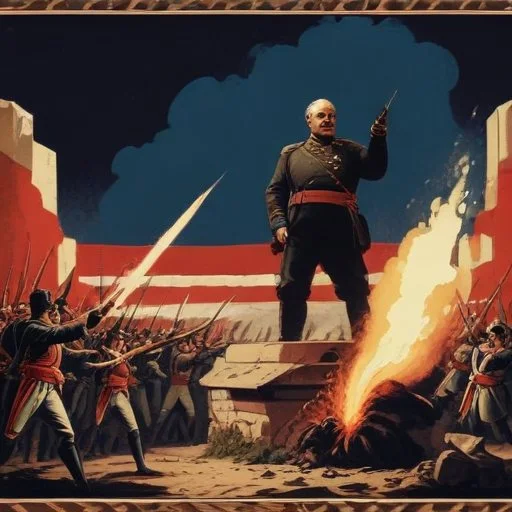
In the aftermath of the Crimean War, Prussia emerged as a burgeoning power, its military prowess and economic might quietly growing in the shadows of European politics. Under the sagacious leadership of Otto von Bismarck, Prussia began to assert its dominance, seeking to unify the disparate German states and challenge the established order. France, led by Napoleon III, wary of Prussia's growing influence, chose to confront this nascent threat, thereby igniting the flames of war.
The Franco-Prussian War's conclusion had profound consequences, as the Treaty of Frankfurt imposed harsh terms on France, including a crippling indemnity and the cession of Alsace and Lorraine to Germany. This decisive victory solidified Prussia's position as the dominant German power, paving the way for German unification under Bismarck's guidance.
The war's aftermath witnessed a surge in nationalist sentiment across Europe, as the Prussian model of militarism and authoritarianism was emulated by other nations. This era of heightened nationalism would ultimately contribute to the tensions leading up to World War I.
The Franco-Prussian War remains a source of national shame for France, with the defeat of Napoleon III and the loss of territory still evoking strong emotions. In contrast, Prussia's triumph was hailed as a national triumph, cementing Bismarck's reputation as the architect of German unity.
"We do not want to, we do not dare, we cannot surrender." — Napoleon III, in a letter to his wife, Empress Eugénie, as French forces teetered on the brink of collapse.
The Franco-Prussian War shares striking parallels with the American Civil War, as both conflicts pitted industrializing nations against agricultural powers, with the former emerging victorious. This dichotomy highlights the growing importance of industrialization and modernization in shaping the outcome of modern wars.
Diaries and letters from soldiers on both sides of the conflict reveal the brutal conditions, fear, and uncertainty that characterized this war. These intimate accounts humanize the conflict, offering a poignant reminder of the devastating consequences of war on individual lives.
The Franco-Prussian War's reverberations continued to echo through the 20th century, as the complex system of alliances and rivalries forged during this period laid the groundwork for the outbreak of World War I. The war's outcome also fueled the ascendancy of Germany as a major world power, setting the stage for the tumultuous events that would unfold in the following century.
Bismarck's rise to prominence was fueled by his cunning diplomacy and strategic genius. He skillfully manipulated alliances, playing on the rivalries between European powers to further Prussia's interests. His bold vision for a unified Germany was matched only by his ability to execute it, often through clever tactical maneuvers that left opponents bewildered.
Bismarck's leadership style was marked by a unique blend of charisma and pragmatism. He was a master of brinkmanship, often pushing his opponents to the edge of conflict before deftly pulling back to negotiate favorable terms. This calculating approach earned him the respect and fear of his contemporaries.
Despite his reputation for ruthlessness, Bismarck was a complex figure, driven by a deep sense of patriotism and a desire to elevate Prussia's status in European politics. His legacy would forever be tied to the Franco-Prussian War, a conflict that cemented his reputation as one of history's greatest statesmen.

The parallels between the Franco-Prussian War and the American Civil War are striking. Both conflicts pitted industrializing nations against agricultural powers, with the former emerging victorious. The Prussian army's modernization and industrial might mirrored the Union's advantages in the American Civil War.
In both conflicts, the industrializing nation leveraged its economic and military prowess to overwhelm its opponent. The Prussian army's use of railroads, telegraphs, and modern artillery echoed the Union's deployment of similar technologies during the American Civil War.
Despite these similarities, the two conflicts were fought for fundamentally different reasons. The American Civil War was a struggle to preserve the Union and end slavery, while the Franco-Prussian War was a calculated bid for regional dominance and national unity. These distinctions highlight the complex and multifaceted nature of modern warfare.
The Franco-Prussian War's aftermath witnessed a surge in nationalist sentiment across Europe. The Prussian model of militarism and authoritarianism was emulated by other nations, as they sought to emulate its success.
This wave of nationalism was fueled by the perceived need for national unity and strength in an increasingly competitive European landscape. As nations vied for dominance, the borders of Europe were redrawn, and new alliances were forged.
The war's legacy continued to shape European politics in the decades that followed. The rise of nationalist sentiment contributed to the tensions leading up to World War I, as European powers continued to prioritize national interests over collective security.

The Treaty of Frankfurt imposed a crippling indemnity on France, totaling five billion francs. This staggering sum would haunt the French economy for years to come, limiting its ability to invest in critical infrastructure and industry.
The loss of Alsace and Lorraine, both industrial and agricultural powerhouses, further exacerbated France's economic woes. The region's coal and iron ore deposits had fueled France's industrial growth, and their loss dealt a significant blow to the nation's economic prospects.
The war's economic impact was felt far beyond France's borders, as the global economy struggled to recover from the shock of the conflict. The rise of Germany and the decline of France would have far-reaching consequences for the European economy in the decades that followed.
Historians have long debated the causes and consequences of the Franco-Prussian War. Traditional interpretations emphasize the role of nationalism and militarism in the conflict's outbreak.
However, recent scholarship has challenged this narrative, highlighting the complex interplay of diplomatic, economic, and cultural factors that contributed to the war. This more nuanced approach has shed new light on the motivations of key actors, including Otto von Bismarck and Napoleon III.
As historians continue to reexamine the Franco-Prussian War, new insights into the conflict's significance and legacy are emerging. This ongoing reinterpretation highlights the dynamic nature of historical inquiry and the importance of continued scholarship in deepening our understanding of the past.