


The Siege of Paris, a grueling and devastating episode in the Franco-Prussian War, is etched in history as one of the most tragic and consequential events of the 19th century. Lasting from September 1870 to January 1871, this brutal siege brought the French capital to its knees, forcing the government to surrender and humiliatively accept an armistice.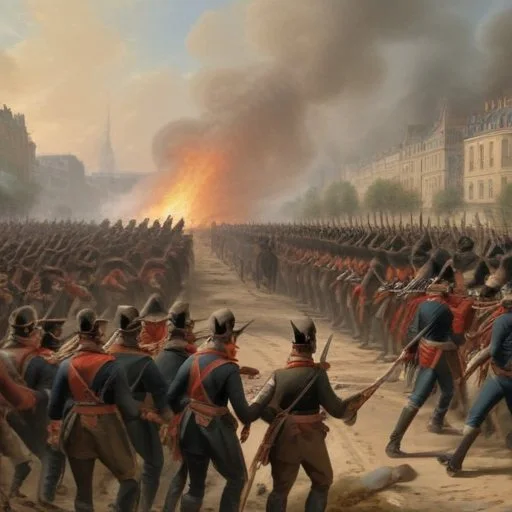
In the years leading up to the Franco-Prussian War, tensions between France and Prussia had been simmering. The rise of Prussian Chancellor Otto von Bismarck and the unification of German states under his leadership created a sense of unease among European powers. France, determined to maintain its dominance, found itself increasingly isolated and vulnerable to Prussian aggression.
| Date | Event |
|---|---|
| September 1870 | Prussian forces surround Paris, cutting off food and supply lines. |
| October 1870 | French attempts to break the siege fail, and the city begins to starve. |
| December 1870 | Conditions in Paris deteriorate, with thousands dying from starvation and disease. |
| January 28, 1871 | The French government surrenders, and an armistice is signed, ending the siege. |
The Siege of Paris marked a crushing defeat for France, resulting in the loss of Alsace-Lorraine to Prussia and a humiliating peace treaty. The war redrew the map of Europe, establishing Prussia as a dominant force and paving the way for the rise of Germany as a major power.
The siege had a profound impact on Parisian society, leading to widespread poverty, starvation, and disease. The city's cultural and artistic scene was devastated, with many of its iconic landmarks and institutions destroyed or damaged. The siege also spurred a new era of urban planning and development in Paris, as the city sought to rebuild and modernize.
"The Franco-Prussian War will be a mere episode in the history of the world, but the Siege of Paris will be remembered as one of the most heroic struggles of modern times." - General Louis Trochu
The Siege of Paris bears striking similarities to other epic sieges throughout history, such as the Siege of Vienna and the Siege of Leningrad. Each of these events shares a common thread – the determination and resilience of a besieged people in the face of overwhelming odds.
One of the most poignant accounts of the siege comes from the diary of a young French soldier, who wrote: "We are surrounded, cut off from the world, and starving. But we will not give up. We will fight on, for Paris, for France, and for our very lives."
The Siege of Paris and the Franco-Prussian War as a whole had far-reaching consequences for European politics and diplomacy. The war established the German Empire as a major power, and set the stage for the complex system of alliances that would ultimately lead to World War I.

Despite the devastating consequences of the siege, the people of Paris emerged from the rubble with a renewed sense of purpose and determination. The siege became a rallying cry for French resistance and a testament to the indomitable human spirit.
The Siege of Paris also had a profound impact on the city's cultural landscape. With many iconic landmarks and institutions destroyed or damaged, the city's artistic and intellectual community was left reeling. The siege led to a new era of urban planning and development, with architects and designers working to rebuild and modernize the city. The Eiffel Tower, built for the 1889 World's Fair, became a symbol of Parisian resilience and determination.
The siege also spurred a new wave of artistic expression, as artists sought to capture the horrors and heroism of the siege. Painters like Édouard Manet and Pierre-Auguste Renoir created powerful works that reflected the city's struggles and triumphs. Writers like Gustave Flaubert and Émile Zola wrote novels and essays that captured the essence of the siege and its impact on French society.
General Helmuth von Moltke, the brilliant strategist behind the Prussian army's victory, was a complex figure with a deep understanding of military tactics. Born in 1800, Moltke was a seasoned military leader who had fought in several wars, including the Danish War and the Austro-Prussian War. His innovative use of railroads and telegraphs to mobilize troops and coordinate attacks revolutionized modern warfare.
Despite his military prowess, Moltke was a humble and reserved individual who shunned the spotlight. His personal letters and diaries reveal a thoughtful and introspective individual who struggled with the moral implications of war.The Siege of Paris was a brutal and devastating episode in the Franco-Prussian War, but it was also a culmination of decades of rising tensions between France and Prussia. The roots of the conflict lay in the shifting balance of power in Europe, as Prussia's Chancellor Otto von Bismarck sought to unify the German states under Prussian leadership.
The war was sparked by a series of diplomatic crises and military mobilizations, as France and Prussia vied for dominance. The siege was the climax of this conflict, as Prussian forces encircled Paris and starved the city into submission.
The Siege of Paris bears striking similarities to other epic sieges throughout history, such as the Siege of Vienna in 1529 and the Siege of Leningrad during World War II. Each of these events shares a common thread – the determination and resilience of a besieged people in the face of overwhelming odds.
Just as the Siege of Vienna marked a turning point in European history, the Siege of Paris marked a new era of European politics and diplomacy. The siege also shares parallels with the Siege of Leningrad, which lasted for 872 days during World War II and became a symbol of Soviet resistance and determination.The Siege of Paris marked a significant turning point in the development of modern warfare, as both French and Prussian forces employed new technologies to wage war. The Prussian army's innovative use of railroads and telegraphs to mobilize troops and coordinate attacks revolutionized modern warfare.
The siege also saw the introduction of new military tactics, including the use of trenches and artillery bombardments. These tactics would become hallmarks of modern warfare, as armies on both sides of World War I and World War II employed similar strategies to devastating effect.