


The Articles of Capitulation of Quebec, signed on September 18, 1759, marked a pivotal moment in the French and Indian War, a global conflict that reshaped the destiny of North America. This pivotal event saw the surrender of Quebec City, the capital of New France, to British forces, forever altering the balance of power in the region.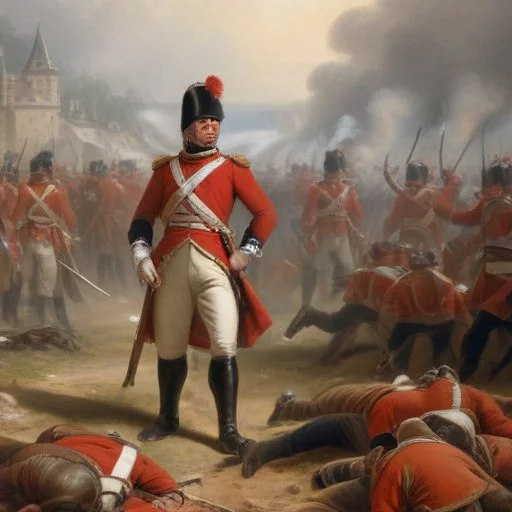
The French and Indian War was a culmination of decades-long tensions between British and French colonizers, native tribes, and European powers. The war was fought on multiple fronts, from the Ohio River Valley to the Great Lakes, and from Nova Scotia to Louisiana. The contest for control of the continent had reached a boiling point, with Quebec City, the strategic key to New France, becoming the focal point of the conflict.
On September 13, 1759, British General James Wolfe and French General Louis-Joseph de Montcalm clashed on the Plains of Abraham, just outside the walls of Quebec City. The battle was a testament to the military prowess of both commanders. Montcalm, a master of defensive warfare, had fortified the city, while Wolfe, a bold and cunning strategist, sought to outmaneuver him. As the British troops emerged from the early morning fog, the French defenses were breached, and a fierce battle ensued.
As the battle raged on, Montcalm fell mortally wounded, and the French army retreated in disarray. With Quebec City on the brink of collapse, French Governor Pierre de Vaudreuil was left with no choice but to surrender. On September 18, 1759, he signed the Articles of Capitulation, relinquishing control of the city to the British.
The Articles of Capitulation outlined the terms of the surrender, including the evacuation of French troops, the surrender of arms and supplies, and the provision of safe passage for French citizens. The British, in turn, agreed to respect the rights and properties of the French inhabitants and to maintain order in the city.
The surrender of Quebec City marked a decisive shift in the balance of power, paving the way for British dominance in North America. The Treaty of Paris (1763), which ended the French and Indian War, ceded control of Canada to Britain, sealing the fate of New France. The Articles of Capitulation of Quebec served as a testament to the bravery and strategic brilliance of the British forces and cemented Quebec City's place as a symbol of Canadian history and identity.
The Articles of Capitulation of Quebec are a testament to the complex and often tumultuous history of North America. This pivotal event serves as a reminder of the bravery, strategic brilliance, and sacrifice of those who fought for control of the continent, shaping the course of history for generations to come.
The French and Indian War was not just a regional conflict, but a global struggle for power that involved multiple European powers and their Native American allies. The war was fought on multiple fronts, from the Ohio River Valley to the Great Lakes, and from Nova Scotia to Louisiana. The British, French, and Spanish Empires were all vying for control of the continent, making it a complex and multifaceted conflict.
The war was also marked by a series of brutal and devastating campaigns, including the expulsion of the Acadians from Nova Scotia and the destruction of Native American villages. The war was fought with a level of ferocity and cruelty that was unprecedented in North American history, leaving deep scars on the continent and its people.
In the end, the British emerged victorious, but at great cost. The war had drained their treasury and left them deeply in debt. The Treaty of Paris, which ended the war, ceded control of Canada to Britain, setting the stage for the American Revolution and the eventual formation of the United States.

General James Wolfe was a complex and contradictory figure, known for his bravery and strategic genius, but also for his flaws and personal contradictions. Born into a military family, Wolfe was destined for greatness from an early age. He saw action in several major battles, including the Battle of Dettingen, where he was wounded in 1743.
Wolfe's greatest achievement came at the Battle of the Plains of Abraham, where he led the British forces to victory against overwhelming odds. However, his triumph was short-lived, as he was mortally wounded in the battle and died shortly thereafter. Wolfe's legacy has endured, and he remains one of the most celebrated military leaders in British history.
The Articles of Capitulation of Quebec had a profound impact on the cultural identity of Quebec and Canada as a whole. The surrender of Quebec City marked a turning point in Canadian history, shaping the country's cultural heritage and identity.
The French influence on Quebec's culture, language, and architecture was significant, and the British conquest of the city marked the beginning of a new era of British dominance. However, the French cultural legacy endured, and Quebec retained its unique cultural identity, shaped by its history, language, and traditions.

The French and Indian War was a pivotal moment in the history of North America, marking a shift in the balance of power between the British and French Empires. The war was fought over control of the continent, and the British victory paved the way for their eventual dominance.
The Treaty of Paris, which ended the war, ceded control of Canada to Britain, setting the stage for the American Revolution and the eventual formation of the United States. The war also marked the beginning of a new era of British colonial expansion, which would shape the course of North American history for centuries to come.
The French and Indian War was not just a regional conflict, but a global struggle for power that involved multiple European powers and their Native American allies. The war was fought on multiple fronts, from the Ohio River Valley to the Great Lakes, and from Nova Scotia to Louisiana.
The war was also marked by a series of complex and shifting alliances between European powers and Native American tribes. The British, French, and Spanish Empires were all vying for control of the continent, making it a complex and multifaceted conflict.