


The French Revolution, a tumultuous period of radical social and political change, reached a pivotal moment on September 21, 1792, when the National Convention, a newly formed governing body, boldly declared the end of the 1,000-year-old monarchy. This watershed moment marked the birth of the First French Republic, sealing the fate of King Louis XVI and sending shockwaves throughout Europe.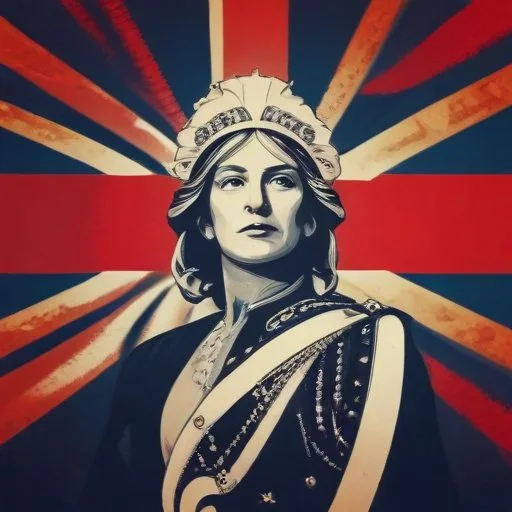
The French Revolution, sparked by the financial crisis and social unrest of the late 18th century, had been gaining momentum since 1789. The Estates-General, a representative assembly, had been convened to address the country's financial woes, but it soon became a catalyst for revolutionary fervor. The National Assembly, a radical faction within the Estates-General, adopted the Declaration of the Rights of Man and of the Citizen, echoing the libertarian ideals of the Enlightenment.
In 1792, the National Convention, a new legislative body, was elected to replace the National Assembly. Comprised of radical deputies, including Maximilien Robespierre, Georges Danton, and Pierre Vergniaud, the Convention was determined to purge France of its monarchical past and establish a republic. Fueled by patriotic zeal and a desire for swift reform, these deputies sought to create a new, more equal society.
On September 21, 1792, the National Convention convened to debate the fate of King Louis XVI. With a majority of 691 votes to 283, the deputies declared the monarchy abolished, marking the end of an era. The Convention's president, Pierre Vergniaud, proclaimed, "The people have spoken, and the monarchy is no more!"
The abolition of the monarchy had far-reaching cultural and social implications. The fall of the aristocracy led to the rise of a new, more egalitarian society, where social mobility was no longer bound by birthright. The arts, literature, and philosophy flourished, as creatives and intellectuals seized the opportunity to express themselves freely.
While many hailed the abolition of the monarchy as a triumph of liberty, others condemned the move as an act of regicide. The execution of King Louis XVI in January 1793 would further polarize public opinion, sparking a Reign of Terror that would leave an indelible mark on French history.
The National Convention's bold declaration on September 21, 1792, marked a turning point in French history, paving the way for the rise of modern democracy and the shaping of the country's future. As we reflect on this pivotal moment, we are reminded of the power of the people to shape their own destiny, and the enduring legacy of the French Revolution.
The abolition of the monarchy in France was not an isolated event. Similar movements were brewing across Europe, inspired by the ideals of the Enlightenment and the American Revolution. The French Revolution's influence can be seen in the Batavian Revolution in the Netherlands, the Peninsular War in Spain, and the Polish-Lithuanian Commonwealth's struggle for independence. These uprisings shared a common goal: to overthrow absolute monarchies and establish more representative forms of government.
In comparison to these contemporaneous revolutions, the French Revolution was marked by its radicalism and violence. While other revolutions sought to reform existing systems, the French Revolution sought to completely dismantle the old regime and create a new, more egalitarian society. This radical approach would have far-reaching consequences, inspiring future revolutions and shaping the course of modern history.

Maximilien Robespierre: The Incorruptible
As one of the leading figures of the National Convention, Maximilien Robespierre played a crucial role in the abolition of the monarchy. This radical deputy from Arras was known for his unwavering commitment to the principles of liberty, equality, and fraternity. His fiery oratory skills and unrelenting passion for reform earned him the nickname "The Incorruptible."
Robespierre's influence extended beyond the Convention's walls. He was a powerful voice in the Jacobin Club, a radical faction that advocated for the execution of King Louis XVI and the establishment of a republic. His zealous pursuit of virtue and his belief in the people's sovereignty would eventually lead to his downfall, but his legacy as a champion of the French Revolution remains unparalleled.
The abolition of the monarchy had a profound impact on French art and literature. The fall of the aristocracy led to a shift in patronage, allowing artists and writers to explore new themes and styles. The rise of Romanticism and Neoclassicism can be attributed to the Revolution's emphasis on reason, liberty, and individualism.
Writers such as Victor Hugo and François-René de Chateaubriand drew inspiration from the tumultuous events surrounding the Revolution. Their works, infused with themes of freedom, justice, and the human condition, would go on to shape French literary history.

The French Revolution's ideologues were deeply influenced by the philosophies of Jean-Jacques Rousseau, Montesquieu, and Voltaire. The Declaration of the Rights of Man and of the Citizen, adopted by the National Assembly in 1789, echoed the Enlightenment's emphasis on reason, individualism, and the social contract.
The Revolution's radical ideals, however, went beyond the Enlightenment's emphasis on reform. The sans-culottes' demand for direct democracy, the Jacobins' advocacy for the execution of the king, and the Convention's establishment of a republic all reflected a deeper commitment to the principles of liberty, equality, and fraternity.
The French Revolution's impact on European geopolitics was immediate and profound. The fall of the French monarchy sent shockwaves throughout the continent, inspiring similar revolutions and reform movements. The establishment of the First French Republic marked a significant shift in the balance of power, as European monarchies scrambled to respond to the rise of republicanism.
The Revolution's influence extended beyond Europe, as the French Republic's diplomatic corps actively sought to export its revolutionary ideals to other nations. This led to a period of intense international diplomatic maneuvering, as European powers sought to contain the spread of revolutionary fervor.