


On a fateful day in May 1980, General Chun Doohwan, a decorated military officer, seized control of the South Korean government, marking a pivotal moment in the country's turbulent history. This brazen coup d'etat was orchestrated to suppress the growing wave of student demonstrations against the authoritarian regime, and it would have far-reaching consequences for the nation.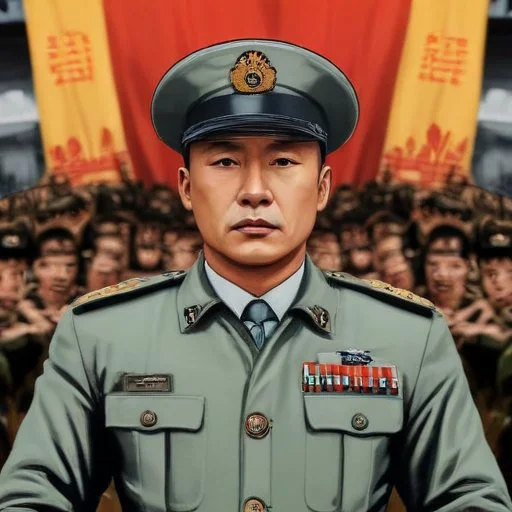
In the months leading up to the coup, South Korea was simmering with discontent. Student protests, sparked by the assassination of President Park Chung-hee, had been gaining momentum, with demands for democratic reforms and an end to authoritarian rule. As the demonstrations intensified, General Chun saw an opportunity to capitalize on the chaos and consolidate power.
In the early hours of May 17, 1980, General Chun's troops stormed key government buildings, seized control of the media, and arrested opposition leaders. Declaring martial law, he suspended the constitution, dissolved the National Assembly, and imposed a curfew. The once-vibrant streets of Seoul were now empty, as the military patrolled the capital, quashing any dissent.
The coup and subsequent martial law had devastating consequences for South Korea. The nation was plunged into darkness, as freedom of speech and assembly were curtailed. Human rights abuses were rampant, and the once-thriving economy began to stagnate. The international community condemned the military takeover, imposing sanctions on the regime.
General Chun's coup and martial law left an indelible mark on South Korea's history. The trauma of that period continues to haunt the nation, with many still seeking justice for the victims of the regime's brutality. Despite his later conviction and pardon for treason, General Chun's actions remain a dark stain on South Korea's democratic fabric.
The General Chun's coup serves as a stark reminder of the fragility of democracy and the dangers of unchecked power. It also highlights the bravery and resilience of the South Korean people, who continued to fight for their rights, even in the face of overwhelming oppression. As we reflect on this pivotal moment in history, we are reminded of the importance of protecting democratic principles and upholding human rights.
General Chun Doohwan's early life was marked by poverty and hardship. Born in 1931, he grew up in a rural town in South Korea, where his family struggled to make ends meet. Despite these challenges, Chun's natural leadership abilities and determination earned him a spot at the Korean Military Academy, where he graduated at the top of his class.
Chun's military career was marked by rapid advancement, and he quickly rose through the ranks. He served in the Vietnam War, where he was decorated for bravery and earned the respect of his comrades. However, his growing ambition and desire for power soon led him to become embroiled in politics.

The geopolitical context of the 1970s and 1980s played a significant role in General Chun's rise to power. The Cold War was at its peak, and the United States was heavily invested in maintaining a strong anti-communist presence in South Korea. The assassination of President Park Chung-hee had created a power vacuum, and the US saw Chun as a reliable partner to maintain stability in the region.
The international community was also distracted by the Iran hostage crisis and the Soviet invasion of Afghanistan, which created an opportunity for Chun to seize power without significant opposition. The subsequent martial law and human rights abuses were largely overlooked by the international community, which was more concerned with containing the spread of communism.
The economic impact of General Chun's coup was devastating for South Korea. The country's economy, which had been growing rapidly in the 1960s and 1970s, began to stagnate. Foreign investment dried up, and trade sanctions were imposed by the international community.
However, Chun's regime also implemented a series of economic reforms, which aimed to stimulate growth and development. The government invested heavily in infrastructure, and the construction industry experienced a boom. The regime also implemented policies to attract foreign investment, which helped to stabilize the economy.

The cultural impact of General Chun's coup was profound and far-reaching. The regime's crackdown on dissent and opposition led to a stifling of creativity and artistic expression. Many artists, writers, and musicians were arrested, tortured, or forced into exile.
However, the coup also led to a surge in anti-authoritarian and pro-democracy activism. The regime's brutality sparked a wave of protests, demonstrations, and underground movements, which continued to challenge the regime's authority throughout the 1980s.
General Chun's coup highlights the dangers of unchecked power and the importance of institutional checks and balances. The regime's ability to suspend the constitution and impose martial law with impunity raised serious questions about the accountability of those in power.
The coup also underscores the need for strong democratic institutions and a robust judiciary to protect individual rights and freedoms. The regime's human rights abuses and suppression of dissent were only possible due to the weakness of South Korea's democratic institutions at the time.