


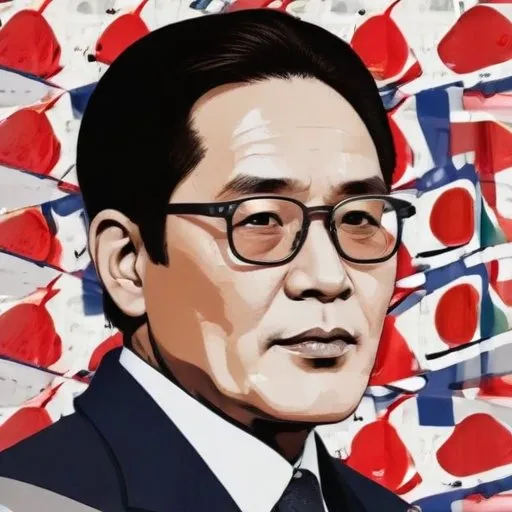
The 4th President of South Korea, who served from 1979 to 1980, is known for his brief but significant tenure following the assassination of President Park Chung-hee, and his attempts to reform the government. He played a crucial role in South Korea's transition to democracy.
Choi Kyuhah, a man of many hats, is best known for his brief yet tumultuous tenure as the fourth President of South Korea, marking a critical juncture in the country's modern history. From 1979 to 1980, Choi navigated the treacherous landscape of Korean politics, attempting to bring democratic reforms to a nation still reeling from the authoritarian rule of his predecessor, Park Chung-hee.
Born on July 16, 1919, in Wonjumyeon, Wonju, Gangwon Province, South Korea, Choi was part of the yangban, Korea's aristocratic class. His grandfather had been a scholar at the prestigious Sungkyunkwan University. Choi's educational trajectory was marked by a strong fascination with English language and literature, earning diplomas from Kyunggi High School and the Tokyo Higher Normal School (now Tokyo University of Education). A brief stint as a teacher at the Taiky Public Junior High School preceded his journey to Manchukuo, where he studied at the Taid Academy. In 1943, Choi graduated and went on to become a professor at the Keij Normal School.
Choi's foray into politics began with his appointment as Ambassador to Malaysia from 1964 to 1967. He then served as Foreign Minister from 1967 to 1971 and Prime Minister from 1975 to 1979. Following Park Chung-hee's assassination in 1979, Choi assumed the role of Acting President, as the prime minister stood next in line for the presidency under the Yushin Constitution.
Choi's presidency was marked by promises of democratic reforms and a new constitution to replace the authoritarian Yushin Constitution. In December 1979, he became the sole candidate in an election, winning the remaining term as President. However, his tenure was short-lived, as Major General Chun Doo-hwan and his allies staged a coup d'état in December 1979. Choi's government was gradually dismantled, and by April 1980, he was forced to resign.
Choi Kyuhah's presidency, though brief, was a crucial moment in South Korea's transition towards democracy. His promises of reform and openness, though ultimately unsuccessful, paved the way for future generations of Korean leaders. Today, Choi's legacy serves as a reminder of the struggles and sacrifices made in the pursuit of democratic ideals.
95 Years Old
A South Korean general and politician who served as the 5th President of South Korea, known for his military coup and subsequent authoritarian rule. He's infamous for his role in the Gwangju Democratization Movement's brutal suppression.
93 Years Old
South Korea's first democratically elected president, known for his role in the country's transition to democracy and his key role in the 1988 Seoul Olympics. He's also infamous for his involvement in a military coup and human rights abuses.
98 Years Old
The 7th President of South Korea, a key figure in the country's democratization, known for his efforts to reform the government and economy. He's also remembered for his "New Economy" plan and anti-corruption initiatives.
Born in 1924
A South Korean politician and Nobel laureate who served as the country's 8th president, known for his Sunshine Policy towards North Korea and efforts to promote democracy and human rights. He is a symbol of South Korea's transition from dictatorship to democracy.
79 Years Old
A South Korean soldier-turned-politician who served as the country's 9th President, known for his progressive reforms and efforts to reduce corruption. He's also remembered for his tragic death by suicide in 2009.
84 Years Old
South Korea's first businessman president, known for his economic reforms and infrastructure projects, particularly the Four Major Rivers Project. He was also involved in a corruption scandal that led to his imprisonment.
74 Years Old
The first female president of South Korea, serving from 2013 to 2017, known for her efforts to improve relations with North Korea and her subsequent impeachment and imprisonment for corruption.
73 Years Old
The 19th President of South Korea, a key figure in the country's efforts to reconcile with North Korea, known for his progressive policies and Nobel Peace Prize nomination.
