


On January 19, 1946, General Douglas MacArthur, the Supreme Commander for the Allied Powers, took a landmark step towards bringing to justice those responsible for Japan's wartime atrocities. By establishing the International Military Tribunal for the Far East (IMTFE) in Tokyo, MacArthur set the stage for one of the most significant war crimes trials in history, marking a crucial milestone in the pursuit of accountability and justice in the aftermath of World War II.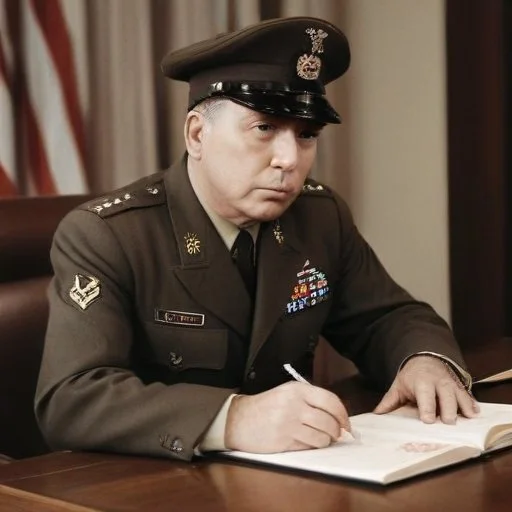
The IMTFE was tasked with prosecuting Japanese leaders for crimes against humanity, war crimes, and conspiracy. The Tribunal's creation was a direct response to the numerous atrocities committed by the Japanese military during the war, including the Nanking Massacre, the Bataan Death March, and the forced labor camps.
The IMTFE's proceedings and verdicts had far-reaching consequences, including:
The IMTFE's impact extended beyond the courtroom, shaping Japanese society and culture in the following ways:
The IMTFE's legacy is not without controversy, with some criticizing the Tribunal for:
The International Military Tribunal for the Far East's establishment marked a crucial step towards holding accountable those responsible for wartime atrocities. As a precursor to modern international tribunals, the IMTFE's legacy continues to influence the pursuit of justice and accountability in the face of humanity's darkest crimes.
As the President of the IMTFE, Justice William Webb played a pivotal role in shaping the Tribunal's proceedings. Born in New South Wales, Australia, in 1887, Webb was a distinguished jurist who had served in various positions, including as a judge and a prosecutor. His vast experience and strong sense of justice made him an ideal candidate to preside over the IMTFE.
Webb's unwavering commitment to upholding the principles of justice was evident in his rigorous approach to the Tribunal's proceedings. He ensured that the trial was conducted fairly and that the defendants were given a chance to present their cases. Webb's leadership played a significant role in establishing the IMTFE as a beacon of accountability and justice.
The establishment of the IMTFE was not only a response to Japan's wartime atrocities but also a reflection of the shifting global landscape in the aftermath of World War II. The Allied Powers, led by the United States, were determined to reshape the world order and promote democracy and human rights.
The IMTFE was, in part, a product of this new geopolitical reality. It marked a significant departure from the traditional practice of victor's justice, where the victorious powers imposed their will on the vanquished. Instead, the IMTFE represented a bold experiment in international cooperation and the pursuit of accountability.
The IMTFE's proceedings and verdicts had a profound impact on Japanese society and culture. The Tribunal's focus on accountability and justice helped to create a sense of national introspection and regret for Japan's wartime actions.
In the years following the IMTFE, Japan underwent a process of democratization and reconstruction. The Tribunal's influence can be seen in the country's post-war constitution, which enshrines the principles of human rights and the rule of law.
The IMTFE also had a significant impact on Japanese popular culture, inspiring numerous films, books, and documentaries that examined Japan's wartime past and the Tribunal's proceedings.
The IMTFE has been the subject of much historiographical debate and analysis. Some historians have praised the Tribunal as a pioneering effort in the pursuit of international justice, while others have criticized it as an example of victor's justice.
Recent scholarship has sought to reexamine the IMTFE's legacy, highlighting its significance as a precursor to modern international tribunals and its impact on the development of international law.
Despite these debates, the IMTFE remains an important chapter in the history of international justice, offering valuable insights into the challenges and complexities of holding accountable those responsible for wartime atrocities.
The IMTFE's documentation of Japanese atrocities provides a chilling glimpse into the scale and brutality of Japan's wartime actions. The Tribunal's evidence, including testimonies, records, and photographs, paints a devastating picture of the suffering inflicted on millions of people.
One of the most significant documents produced by the IMTFE is the Charter of the International Military Tribunal for the Far East, which outlines the Tribunal's objectives and jurisdiction. This document serves as a powerful symbol of the Allied Powers' commitment to accountability and justice.