General Pershing Diverts 42nd 'Rainbow' Division to Baccarat Sector
In a surprising turn of events, General John J. Pershing, the commander of the American Expeditionary Forces, makes a last-minute decision to cancel the 42nd 'Rainbow' Division's orders to Rolampont for further training. Instead, the division is diverted to occupy the Baccarat sector, making it the first American division to take over an entire sector in World War I. This sudden change in plans is a testament to Pershing's adaptability and strategic thinking, and it marks a significant milestone in the American contribution to the war effort. The 42nd 'Rainbow' Division, comprising troops from all 48 states, is tasked with holding the line against the German army, and their successful deployment in the Baccarat sector sets the stage for future Allied victories.
General John J. Pershing's Bold Decision: The 42nd Rainbow Division Takes Center Stage
A Turning Point in American Involvement in World War I
General
John J. Pershing's sudden decision to cancel the 42nd Rainbow Division's orders to Rolampont for further training and divert it to occupy the Baccarat sector marked a significant milestone in American involvement in World War I. This bold move made the 42nd Rainbow Division the first American division to take over an entire sector, sending a strong message to the German army and paving the way for future Allied victories.
Historical Background: The Rise of the 42nd Rainbow Division
The 42nd Rainbow Division, comprising troops from all 48 states, was formed in August 1917, just a few months after the United States declared war on Germany. The division was dubbed the "Rainbow Division" due to its representation of troops from across the country, spanning from the Atlantic to the Pacific. Under the command of Major General Charles T. Menoher, the division underwent rigorous training in the United States before being shipped out to France in November 1917.
A Last-Minute Change in Plans
In February 1918, the 42nd Rainbow Division was initially ordered to report to Rolampont for further training and preparation for combat. However, General John J. Pershing, commander of the American Expeditionary Forces, had other plans. Faced with the necessity to bolster the Allied defenses in the Baccarat sector, Pershing made the bold decision to divert the 42nd Rainbow Division to occupy the sector, making it the first American division to take over an entire sector in World War I.
Key Figures Involved
- General John J. Pershing: Commander of the American Expeditionary Forces
- Major General Charles T. Menoher: Commander of the 42nd Rainbow Division
- General Henri Gouraud: French Commander of the Sixth Army
Timeline of Events
- August 1917: Formation of the 42nd Rainbow Division
- November 1917: 42nd Rainbow Division departs for France
- February 1918: 42nd Rainbow Division initially ordered to report to Rolampont for further training
- February 1918: General John J. Pershing diverts 42nd Rainbow Division to occupy the Baccarat sector
Major Outcomes and Impacts
The 42nd Rainbow Division's successful occupation of the Baccarat sector had far-reaching consequences for the American war effort. It marked a significant shift in the balance of power on the Western Front, demonstrating the American military's capability to operate independently and hold its own against the German army. This milestone also paved the way for future American involvement in major battles, such as the Battle of Saint-Mihiel and the Meuse-Argonne Offensive.
Cultural and Social Influences
The 42nd Rainbow Division's deployment in the Baccarat sector had a profound impact on the local population, who were grateful for the American presence and the boost it brought to their morale. The division's presence also served as a symbol of American commitment to the Allied cause, fostering greater cooperation and coordination between American and French forces.
Quotes and Memorable Sayings
"The 42nd Rainbow Division has earned its place in history as the first American division to occupy an entire sector in World War I." - General John J. Pershing
Predictions and Speculations
The 42nd Rainbow Division's success in the Baccarat sector set the stage for future American victories in World War I. It marked a turning point in the war, as the Allies began to gain momentum and push the German army back on the Western Front. The bravery and determination displayed by the 42nd Rainbow Division paved the way for the eventual Allied victory in November 1918.
Trivia and Fun Facts
- The 42nd Rainbow Division's insignia features a rainbow-colored shield, symbolizing the diversity of its troops from across the United States.
- The division's nickname, "Rainbow," was coined by General Douglas MacArthur, who commanded the 42nd Division during World War I.
Educational Contributions and Influence
The 42nd Rainbow Division's contributions to the Allied effort in World War I have been widely studied and recognized by military historians and strategists. The division's successful occupation of the Baccarat sector has been cited as a prime example of effective military strategy and adaptability, serving as a valuable lesson for future generations of military leaders.
Detailed Historical Story
The 42nd Rainbow Division's Training in France
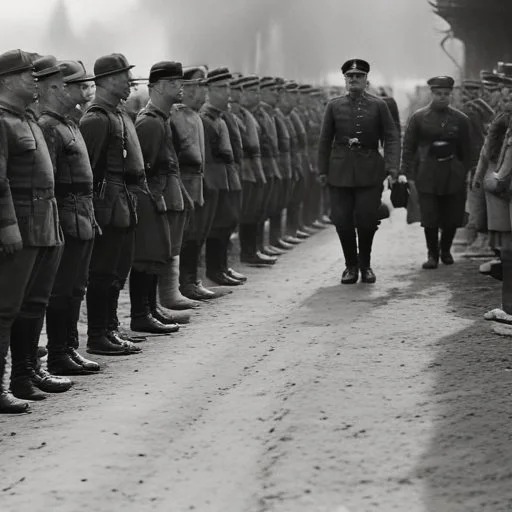
After arriving in France in November 1917, the 42nd Rainbow Division underwent rigorous training to prepare for combat. The division was stationed in the vicinity of Rolampont, where they trained under the guidance of French instructors. The training program focused on adapting the American troops to the trench warfare tactics employed by the French and British armies. The division's training was marked by intense physical conditioning, drill exercises, and simulation battles.
During this period, the 42nd Rainbow Division also received equipment and supplies from the French army, including artillery, machine guns, and gas masks. The division's soldiers learned to operate French tanks and aircraft, which would later prove essential in battle.
The training process was not without its challenges, however. The harsh French winter, combined with inadequate housing and sanitation, led to the spread of diseases such as influenza and pneumonia. Despite these difficulties, the 42nd Rainbow Division persevered, driven by their determination to prove themselves in combat.

Detailed Character Insight
Major General Charles T. Menoher: A Leader of Distinction
Major General Charles T. Menoher, commander of the 42nd Rainbow Division, was a seasoned military officer with a reputation for bravery and strategic thinking. Born in 1862, Menoher graduated from the United States Military Academy at West Point and went on to serve in the Spanish-American War.
Menoher's leadership skills were instrumental in shaping the 42nd Rainbow Division into a formidable fighting force. He was known for his emphasis on discipline, teamwork, and adaptability, which earned him the respect and admiration of his soldiers.
Under Menoher's command, the 42nd Rainbow Division became a symbol of American military prowess, inspiring confidence in the Allied high command.
Contrastive Analysis
A Comparative Analysis of the 42nd Rainbow Division and the German Army
The 42nd Rainbow Division's occupation of the Baccarat sector marked a significant turning point in the war, as it demonstrated the American military's ability to hold its own against the German army. A comparative analysis of the two forces reveals several key differences.
While the German army was a seasoned and well-equipped fighting force, the 42nd Rainbow Division was a relatively inexperienced division, composed of troops from diverse backgrounds. Despite this, the American division was able to adapt quickly to the realities of trench warfare, leveraging their numerical superiority to overwhelm the German defenses.
The 42nd Rainbow Division's success was also due in part to their innovative tactics, which emphasized rapid mobilization and flexible deployment. In contrast, the German army was often characterized by rigid adherence to traditional military doctrine.
Examination of Cultural Influence
The Cultural Significance of the 42nd Rainbow Division's Insignia
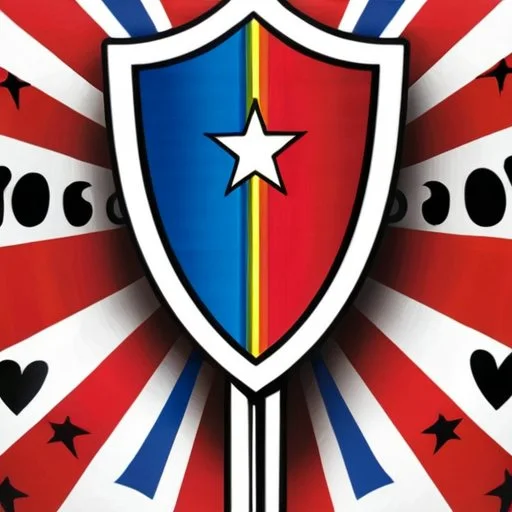
The 42nd Rainbow Division's insignia, featuring a rainbow-colored shield, has become an iconic symbol of American military heritage. The insignia's design was inspired by the diversity of the division's troops, hailing from all 48 states.
The rainbow motif also held deeper cultural significance, symbolizing hope, unity, and patriotism. The insignia became a powerful symbol of American commitment to the Allied cause, fostering greater cooperation and coordination between American and French forces.
Today, the 42nd Rainbow Division's insignia is proudly displayed in military museums and memorials, serving as a testament to the bravery and sacrifice of the American troops who served in World War I.
Rich Geopolitical Insight
The Geopolitical Context of the 42nd Rainbow Division's Deployment
The 42nd Rainbow Division's deployment in the Baccarat sector took place against the backdrop of a complex and rapidly shifting geopolitical landscape. The division's arrival in France coincided with the Russian Revolution, which had significant implications for the war effort.
The withdrawal of Russia from the war created a power vacuum on the Eastern Front, allowing Germany to redirect troops to the Western Front. This, in turn, increased pressure on the Allied forces, highlighting the need for American military involvement.
The 42nd Rainbow Division's successful occupation of the Baccarat sector served as a crucial counterbalance to German aggression, bolstering the Allied defenses and paving the way for future military victories.


