


On January 16, 1547, Grand Duke Ivan IV of Muscovy etched his name in the annals of Russian history by declaring himself the first Tsar of Russia, thereby ushering in a new era of imperial power and grandeur. This pivotal moment marked the abolition of the 264-year-old Grand Duchy of Moscow, paving the way for the Tsardom of Russia to emerge as a dominant force in Eastern Europe.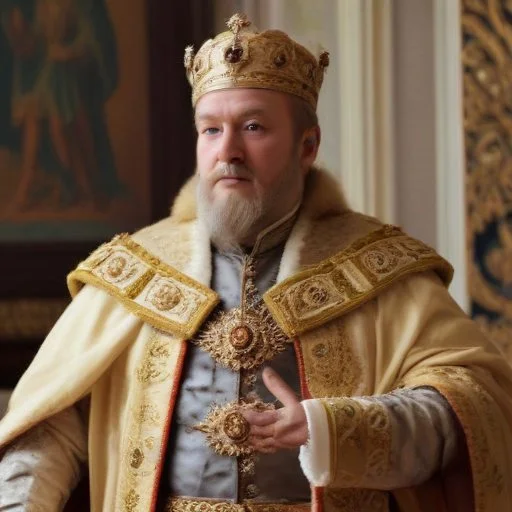
Ivan IV, also known as Ivan the Terrible, was a master strategist and ambitious leader who orchestrated this monumental shift in Russian history. As the Grand Duke of Moscow, he had witnessed the fragmentation of the region and the constant threat from neighboring states. Ivan IV was resolute in his quest for power and reform, and he saw the need for a stronger, more centralized authority to consolidate his dominion.
The Grand Duchy of Moscow, established in 1328, had long been the dominant power in the region. However, with the decline of the Golden Horde in the 14th century, the Duchy faced numerous challenges, including the rise of neighboring states like Lithuania and the Teutonic Knights. The need for a stronger, more unified state was apparent, and Ivan IV saw an opportunity to fill this void.
In the years leading up to his coronation as Tsar, Ivan IV undertook a series of bold military campaigns to expand his territories and consolidate his power. He annexed the Khanates of Kazan, Astrakhan, and Sibir, effectively incorporating vast swaths of land into his dominion. These conquests not only strengthened his military but also provided access to new trade routes and resources.
Ivan IV's ascension to the throne as the first Tsar of Russia had far-reaching consequences, both domestically and internationally. The establishment of the Tsardom of Russia marked a new era of imperial power, cementing Russia's position as a dominant force in Eastern Europe. The Tsardom also facilitated the growth of a strong, centralized state, paving the way for future tsars to consolidate their power and expand their territories.
The coronation of Ivan IV as Tsar also had significant cultural and social implications. The adoption of the title "Tsar" was a deliberate attempt to associate himself with the Byzantine Empire, emphasizing Russia's imperial ambitions. The establishment of the Tsardom also led to the development of a more centralized administrative system, which in turn facilitated the growth of a strong, educated bureaucracy.
As the first Tsar of Russia, Ivan IV left an indelible mark on Russian history, shaping the course of the nation's development for centuries to come. His imperial ambition, strategic prowess, and reformist zeal ensured that his legacy would endure, inspiring future generations of Russian leaders to strive for greatness.
Ivan IV's early life played a significant role in shaping his imperial ambitions. Born in 1530, he was the grandson of Ivan III, who had unified the warring city-states of Moscow. Ivan IV's childhood was marked by intrigue and power struggles, as nobles and boyars vied for control of the throne. This turbulent environment instilled in him a strong sense of diplomacy and strategic thinking, which he would later utilize to expand his dominion.
As a young ruler, Ivan IV was known for his impulsive nature and fiery temper. However, he also possessed a calculating mind, often using diplomacy and cunning to achieve his goals. This dichotomy of traits earned him the sobriquet "the Terrible," as he was both feared and respected by his contemporaries.

The decline of the Golden Horde in the 14th century created a power vacuum in Eastern Europe, which Ivan IV sought to fill. The Grand Duchy of Moscow, established in 1328, had become a fragmented and weakened state, vulnerable to external threats. Ivan IV's coronation as Tsar marked a significant shift in the regional balance of power, as Russia began to assert its dominance over neighboring states.
The geopolitical context of 16th-century Eastern Europe was marked by the rise of powerful empires, including the Ottoman Empire to the south and the Holy Roman Empire to the west. Ivan IV's successful military campaigns and strategic alliances enabled Russia to maintain its sovereignty and even expand its borders, despite being surrounded by powerful rivals.
The adoption of the title "Tsar" by Ivan IV was a deliberate attempt to associate himself with the Byzantine Empire, emphasizing Russia's imperial ambitions. This cultural borrowing had significant implications, as it introduced Byzantine artistic and architectural influences into Russian culture.
The establishment of the Tsardom also led to the development of a distinct Russian identity, which was separate from its Eastern European neighbors. Ivan IV's reign saw a flourishing of cultural and literary achievements, including the works of Maximus the Greek and the establishment of the Printing Office in Moscow.
Historians have long debated the significance of Ivan IV's coronation as Tsar, with some viewing it as a pivotal moment in Russian history and others seeing it as a mere formality. The Soviet historian, Mikhail Pokrovsky, argued that Ivan IV's reign marked the beginning of a centralized Russian state, while the American historian, Edward Keenan, contended that the Tsardom was a continuation of the Grand Duchy of Moscow.
The historiographical perspectives on Ivan IV's reign highlight the complexities and nuances of Russian history, demonstrating that the past is often subject to multiple interpretations and reinterpretations.
Ivan IV's military conquests and strategic alliances had significant economic implications, as they provided access to new trade routes and resources. The annexation of the Khanates of Kazan, Astrakhan, and Sibir enabled Russia to control the Volga River, a vital trade artery, and to tap into the riches of Siberia.
The establishment of the Tsardom also led to the growth of a strong, centralized state, which facilitated the development of a more efficient taxation system and a standardized currency. These economic reforms enabled Ivan IV to finance his military campaigns and to invest in infrastructure projects, such as the construction of roads and bridges.